
 (Source Instagram) Mumbai, (IANS) Actress Karisma Kapoor took to her social media account to share a glimpse from her recent exclusive roundtable attended by Her Majesty Queen Rania Al Abdullah, further describing the experience as an ‘honour and privilege’. Karisma took to her social media account to post a group photograph from the private gathering, which saw a select group of successful women from different walks of life for a discussion on women’s empowerment, leadership. In the picture shared by Karisma, the actress is seen dressed in a soft yellow traditional ensemble, standing alongside Queen Rania Al Abdullah. Sharing the image, Karisma wrote, “It was an honour and privilege to be part of a private roundtable in the esteemed presence of Her Majesty Queen Rania Al Abdullah alongside such inspiring women engaging in heartfelt dialogue on women’s empowerment, leadership and the future.” She added, “Moments like these are a powerful reminder that when women come together with purpose, honesty and vision they don’t just shape conversations they help shape the future for the next generation. Grateful to have been part of something so meaningful.” Talking about Karisma Kapoor's Bollywood journey, the actress made her Bollywood debut with “Prem Qaidi” in 1991 and went on to become one of the leading stars of the 90s era of Bollywood. She delivered several hits including “Raja Hindustani”, “Dil To Pagal Hai”, “Biwi No.1”, “Hero No.1”, “Coolie No.1”, “Saajan Chale Sasural” and “Judwaa”. Apart from commercial projects, Karisma also earned immense critical acclaim for her powerpack performances in “Fiza”, “Zubeidaa” and “Shakti: The Power”. She had also won the National Film Award for Best Supporting Actress for “Dil To Pagal Hai”.On the personal front, Karisma married now late businessman Sanjay Kapur in 2003, post which she took a quick sabbatical from work. The couple has two children, daughter Samaira and son Kiaan. After a decade of marriage, Karisma and Sanjay went seperate ways and were granted divorce in 2016. Karisma Kapoor 'honoured' to be a part of a round table attended by Queen of Jordan | MorungExpress | morungexpress.com |
Karisma Kapoor 'honoured' to be a part of a round table attended by Queen of Jordan (2026-02-27T13:42:00+05:30)

Grandparenting tells us much about our history. It’s important to preserve these stories (2025-11-03T13:00:00+05:30)
Liz Allen, Australian National University; Alexandra Dellios, Australian National University; Emily Gallagher, Australian National University; Francesco Ricatti, Australian National University; Nathalie Nguyen, Monash University, and Tanya Evans, Macquarie UniversityGrandparents can play a fundamental role in families, yet they have often been overlooked in Australian history. Grandparents and grand friends make significant contributions to helping share the load of caring for children. Important cultural exchanges and friendships can develop with intergenerational relationships. Languages, cooking and history are often imparted from grand friends. Grand friends are also increasingly being seen as part of the solution to housing affordability. Our preliminary data show that generations of Australians have benefited from grandparenting far beyond its economic value. Reflecting on the contributions of grandparenting to the nation might even offer new ways to engage with current debates around immigration. Modern grandparentingGrandparenthood as a specific role for the parents of parents is a relatively modern concept, linked to the changing value of children in society since the 18th century. The 20th century saw significant transformations in age structures and kinship networks in countries like Australia. Lower fertility rates, falling child mortality, and longer life expectancy were all major contributors. It was also a period when children acquired greater emotional and social value. No-fault divorce, which came into effect in Australia in 1975, allowed grandparents to apply for a parenting order to spend time with their grandchildren. This in turn led to new public conversations about the rights of grandparents. In more recent times, there has been a rise in grandparenting self-help books and a wave of grandparent-themed memoirs and anthologies. With an ageing population comes greater potential for grandparenting. Grandparents help fill shortcomings of the welfare system through childcare and financial support. Inequalities emerge where grandparents are unable to provide support because of resources, conflict and distance. Much of the demographic conversations about an ageing population neglect to consider the riches that come with grandparent and grand-friend relationships. There are reported health and social benefits to those providing such support. Running alongside the stories of grandparenting is a rich tapestry of migration histories. Nearly half the Australian population has a parent born overseas, and 41% of people aged 65 and over were born overseas. Their histories help understand Australia’s national identity and nation building in the postwar era. Social media abounds with heartwarming stories of modern grandparenting and grand-friend relationships that help maintain and strengthen cultural links. The Yiayia preparing homecooked meals for her young neighbours. A nonna and her granddaughter taking social media by storm through simply sharing the everyday. The comedy group of old school friends using their intergenerational cultural roots to connect. These relationships and stories reflect broader social and cultural connections. Many of us have stories of how grandparents shaped our lives directly through our own interactions or indirectly through our parents. Good and bad. Generations of grandparentingIn April 2025 we asked 2,000 adults in Australia about their experiences of and attitudes toward grandparenting. Around three-quarters of the grandparents we interviewed told us they had provided care for their grandchildren at some stage. Most of these grandparents provide help at least once a month (65%) and are generally (70%) aged 65 and over. Both parents and grandparents report strong contentment in the level of help provided (84% and 80%, respectively). Many also believe this is support that shouldn’t be paid for by parents or the government. For the first time, we know three generations of grandparenting details. Almost six in ten (58%) adults said they had been cared for by their grandparents when they were growing up. Parents similarly (56%) now rely on the help of grandparenting to raise their children. When asked about how participants’ parents had been grandparented, just under half (46%) couldn’t respond. Most had never had conversations about grandparenting with their own parents. Time means we may lose the opportunity to have these vital conversations of historical grandparenting and how it has changed over time. While most of the people we spoke with (73%) said grandparents were an important source of help with childcare, slightly more (77%) believed grandparents were vital to imparting and learning culture. Grandparents help build and maintain vital connections from the past and help lay the path for the future, especially through culture. Keeping our stories aliveWe’re embarking on writing the first history of grandparenting in Australia. As a multidisciplinary team with a strong commitment to inclusive and collaborative research, we’re working to create a living history of grandparenting in Australia since the second world war. As part of the project, we’ll be conducting interviews with people of Italian, Greek, Vietnamese, English and other backgrounds to find out more about the histories of grandparenting in Australia. We’re also building a guide to conducting oral histories with grandparents. You can receive updates on the project by registering at grandparentsaustralia.net While we recognise grandparenting can be a source of love and care, it can equally be associated with sadness, inequality and trauma. One grandchild, whose parents were refugees from Vietnam, remembered that
Without important conversations about grandparenting we may lose the opportunity to preserve and understand the stories of family, caregiving and culture that are part of our national and transnational history. Liz Allen, Demographer, POLIS Centre for Social Policy Research, Australian National University; Alexandra Dellios, Lecturer in Heritage and Museum Studies, Australian National University; Emily Gallagher, Historian and Research Editor, National Centre of Biography, Australian National University; Francesco Ricatti, Associate Professor, Italian Studies, Australian National University; Nathalie Nguyen, Professor of history, Monash University, and Tanya Evans, Professor in History, Macquarie University This article is republished from The Conversation under a Creative Commons license. Read the original article. |

Unlikely Animals Snuggling Together at the Denver Zoo Have Melted the Internet with Their Cuteness (2025-09-22T12:30:00+05:30)
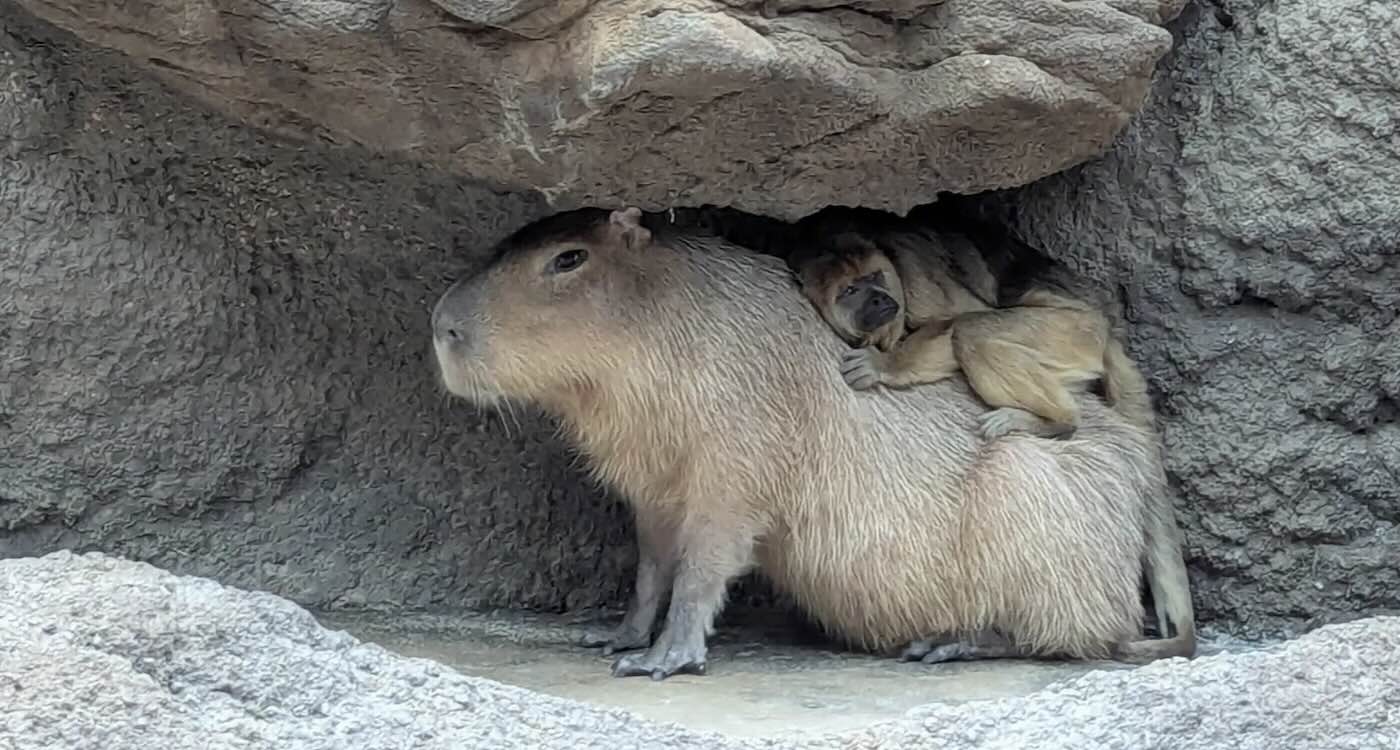 Capybara and howler monkey snuggling –Courtesy of the Denver Zoo Capybara and howler monkey snuggling –Courtesy of the Denver Zoo22-09-2025, We could all learn a few things from the animal world. This week’s lesson comes courtesy of a capybara and a howler monkey, two animals you would not expect to see together in close contact in the wild. The world’s largest rodent, capybaras are typically found in marshy grasslands and swamps. Howler monkeys spend most of their time in trees, living in the dense canopies of the Central and South American forests. But captivity in the Denver Zoo has given this unlikely pair a chance to get acquainted. ‘Baya’, the 16-year-old monkey was visited by 6-year-old ‘Rebecca’ of the very docile capybara species. The two, in real life, share geographic locations in the southern hemisphere. Currently, a Denver Zoo exhibit features Baya and Rebecca as the only females in an enclosure filled with other male animals, so, the females have looked past their differences and everything else that might divide them. Instead, Rebecca and Baya have become best friends, spending tons of time cuddling together and piggybacking across their enclosure. “I think Baya just really finds Rebecca as a comforting friend,” Jessica Newell, the Denver Zoo’s assistant curator of Tropical Discovery told Axios Denver. 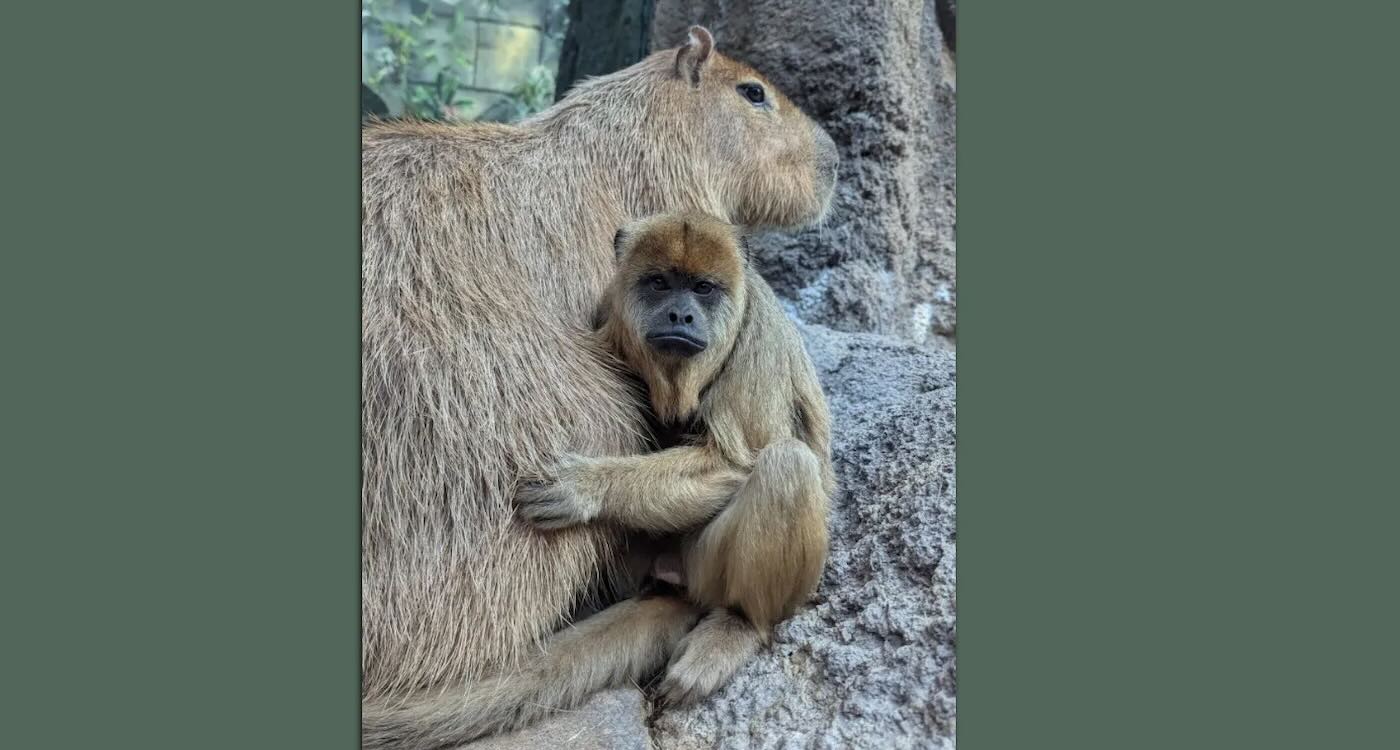 “Rebecca’s pretty calm, and Baya’s able to go to her for comfort. They are very content with each other.” The furry, golden-haired roommates have captivated the attention of spectators at the zoo and others beyond its walls. Pictures of the animals in various snuggling poses were posted to social media recently and the images have been spreading joy across the internet ever since. “Animals can teach us a lot,” a Facebook commenter named Maureen wrote. “Love one another. We are all in this together.” “We humans could take a page from their playbook,” added Ann, another Facebook commenter. “Kindness. Sharing. Mutual respect. Once again, love is re-imagined through nature.” Unlikely Animals Snuggling Together at the Denver Zoo Have Melted the Internet with Their Cuteness |
Power of Internet Reunites Minneapolis Woman With Refugee She’d Given $100 to, Decades Ago (2025-07-30T11:32:00+05:30)
 Samaritan Tracy Peck (left) and Ayda Zugay (right) 23-years ago, a cash gift of $100 from a generous American aboard an airline flight inspired hope in a pair of young women fleeing the former-Yugoslavia during the country’s collapse. After two decades, they wanted to find the mysterious woman again, but they only knew her first name—Tracy. Now, after some amateur sleuthing and their internet post going viral, their longing has turned into a reunion that left both women in tears. Ayda Zugay was 12-years old in 1999, when she and her sister Vanja Contino fled the war sparked by the collapse of the Soviet Union. Aboard a Northwest Airlines flight, an American tennis coach, seeing their plight, slipped them an envelope. In it were a pair of dangly earrings, $100, and a letter that read “I am so sorry that the bombing of your country has caused you and your family problems. I hope your stay in America is a safe and happy one for you. A friend from the plane—Tracy ❤️” For years, that was the end of the story. Both prospering in America, Ayda and Vanja currently live in Boston and Connecticut. But Ayda would never forget the kindness shown by Tracy, nor lose hope that one day the sisters would be able to say thank-you in person. Meanwhile, Tracy Peck, the Minneapolis tennis coach, was 70 years young, and working as a massage therapist. Recently she was alerted by a barrage of texts and phone calls that she had been the subject of a national news story. Zugay was looking for her, and Catherine Shoichet, writing for CNN, shared her intention with the world. But the decisive moment in the search came when the refugee advocacy group, Refugees International, tweeted a 2-minute video of Zugay explaining her desire to find Tracy. The tearful reunion That tweet drew the attention of one of Peck’s daughters, and Susan Allen, a tennis coach colleague. The reason for Tracy’s presence on the flight that fateful day was because she had gotten the opportunity to travel to Paris in 1999 to watch the French Open. Allen, who helped organized that very trip, reckoned a little bit of evidence would be needed to prove, and so contacted another tennis friend who had been on that same flight, and who just so happened to keep in a scrapbook the receipt from the flight from Amsterdam to Minneapolis on May 31st, along with a team photo, which was the same date that Zugay recalled. Then, Allen opened a group chat with Zugay and Tracy Peck, posting the images as proof that at last, Zugay’s 23-year search was over.  Samaritan Tracy Peck (left) and Ayda Zugay (right) Samaritan Tracy Peck (left) and Ayda Zugay (right)A Zoom call was scheduled with her and her sister, and suddenly on their computer screens appeared the same smiling face, albeit with a few more tears, from 23 years before. “Hello beautiful ladies!” Peck exclaimed, to which Zugay replied, “It’s been more than 20 years,” now fully-able to communicate in English, when before she could only manage hand signals. They shared many things, including how they used the $100 to last through the whole summer eating pancake mix. “You know those huge doors that they have in old places across the world? It felt like that big, heavy door just got shut. And I’m finally able to move forward and thrive… And it just makes me so happy,” Zugay said. “Thank you for reminding me to be strong.” They hope to meet in person soon, after further video calls led to catching up, the introduction of Vanja’s daughters, and more. Peck already had 5 children, but today she always counts the total as 7. Power of Internet Reunites Minneapolis Woman With Refugee She’d Given $100 to, Decades Ago |
English Couple Quit Their Jobs to Travel Four Years Around the World in a Van Becoming Social Media Stars (2025-06-26T11:10:00+05:30)
 Chris and Marianne’s camper van – credit, SWNS A couple who quit their jobs and sold all their belongings to travel in a campervan has completed an epic four-year adventure around the world. Along with avoiding their work at Britain’s National Health Service just months before pandemic controls started, they amassed a huge following on social media through their YouTube channel Tread The Globe.  Chris and Marianne’s campervan in front of Mount Fuji – credit, SWNS Chris and Marianne Fisher set off on their journey in January 2020 in a 20-year-old Fiat Ducato campervan called “Trudy” with 40,000 miles which they bought for about $21,000 two years earlier. The pair said they realized they needed ‘to live for now,’ so they sold everything inside their 6-bedroom property in Telford, England, and rented it out to help pay for their journey. In total, the couple in their mid-50s traveled 67,000 miles and visited 29 countries logging 28 million YouTube views and 180,000 subscribers. “I think when you’re sitting at a desk looking out of the window and there’s a brick wall, whether it’s a weekend away or… a whole craziness like we’ve done, I would encourage anyone to just go out,” said Marianne. “If you’ve got something that’s stopping you, a fear, message me and I will put you straight.” “It’s been phenomenal. Different places, different cultures—everybody’s given us a warm welcome around the world.” After leaving Telford, Chris and Marianne crossed Europe before arriving in Turkey just in time for COVID-19 lockdowns. The pair settled on becoming Turkish residents for 18 months before making the decision to ship the van to South Carolina and drive across the United States. Arriving in San Francisco, the couple headed to Vancouver at the start of a loop around Alaska. They swam in the Arctic Ocean after driving 1,000 miles along a dirt road called the Dempster Highway which leads to the most northerly road point of Canada. The pair then crossed back into the US, and drove part of Route 66 into California then down into Mexico. After a few months of exploring, the pair shipped the campervan from LA to Japan. They stayed for 3 months in the Land of the Rising Sun, then jumped on a car ferry to South Korea but got something like ‘traveler’s block,’ that left them unable to decide where to go next. 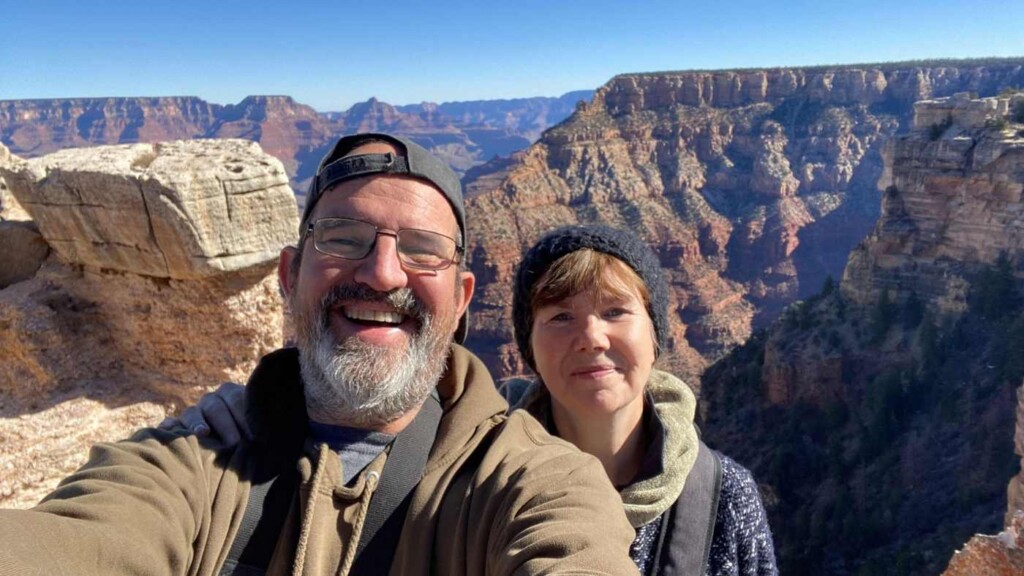 Chris and Marianne at the Grand Canyon – credit, SWNS 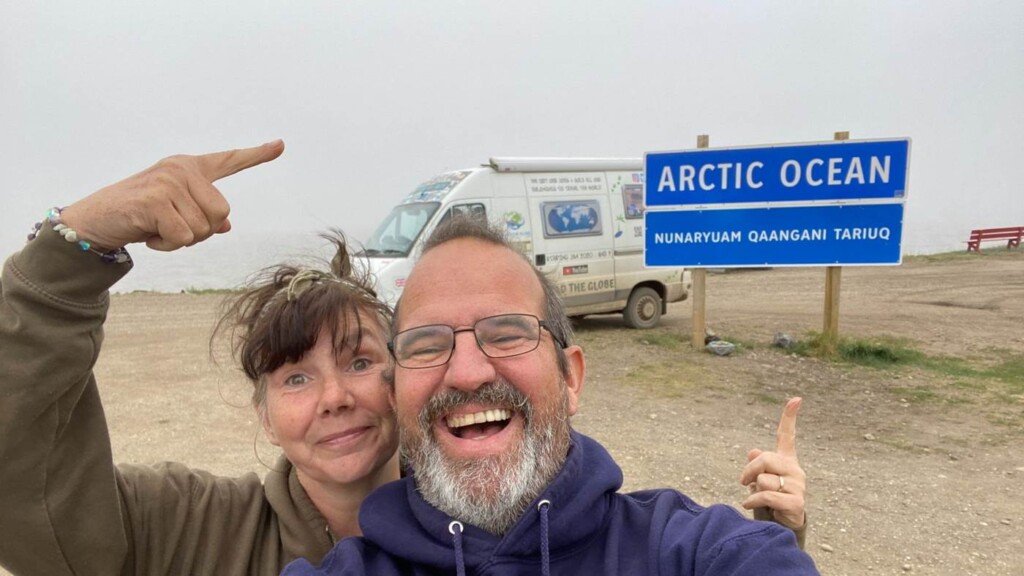 Refused a visa for China, Chris and Marianne toured Malaysia and Thailand before visiting India and Pakistan. Originally they planned to ship the campervan to Saudi Arabia via Karachi, but were told that the country doesn’t allow right-hand drive vehicles. Instead, the pair went to South Africa to tour a new continent. They headed north through Mozambique, Zimbabwe, and Botswana before finally taking one last ferry home from Durban after four and a half years of traveling and living in their van. “We had the mad idea to see if we could wild camp in Las Vegas and see a show, and we managed to stick in a hotel car park and then went to a show and Cirque du Soleil,” said Chris, picking out some brief highlights in a conversation with British media company SWNS. “We drove past Mount Fuji. Passed the Taj Mahal in India, and the nature of seeing elephants walk in front of your van in Kruger National Park and having leopards and lions walking around was fantastic.” In early September, more than 100 people lined the streets of Telford when they arrived back in their van. The couple said they were ‘overwhelmed’ with the support they had received and are already planning their next adventure. YOU MAY ALSO LIKE: Couple Converts 40-Foot School Bus into Gorgeous Home for Working and Travel–LOOK INSIDE “I really feel if we do nothing else in our life, we’ve done something fantastic,” said Marianne. “We’re so happy to be home and see such a warm welcome on a rainy day—and so sad that this adventure’s over, but there’s going to be more.” 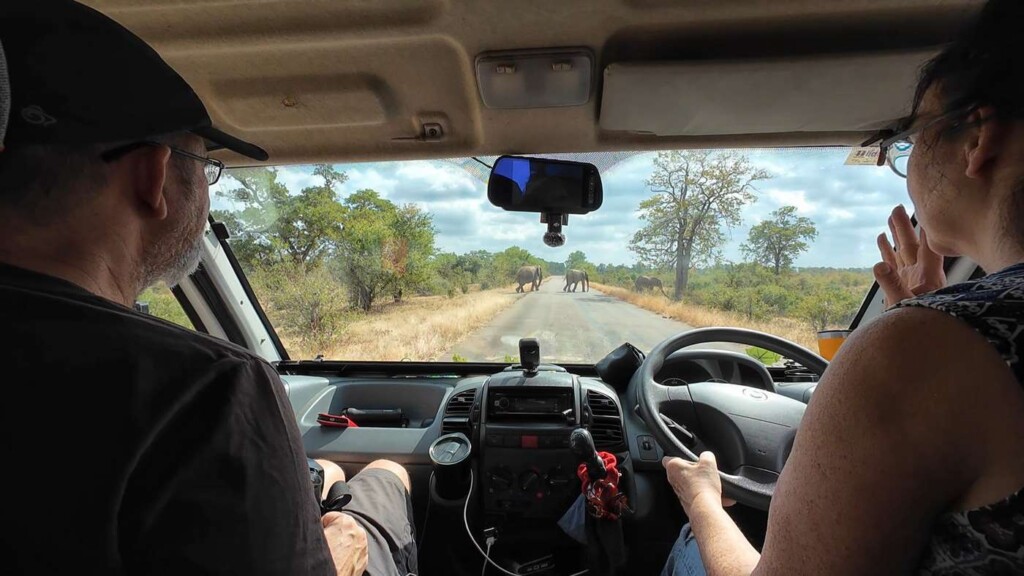 Chris and Marianne on safari in their van – credit, SWNS When the couple purchased their van, it had approximately 40,000 miles on the odometer. But, now after their trip around the world, the pair say Trudy has racked up more than 137,000 miles, not including 24,000 at sea. “We’ve always loved travel and planned when we retired one day that we would go and spend our retirement traveling,” Chris added “You get to that point in life where you realize you’re not going to live forever.” Through their Tread The Globe channel, the couple documented their trip online and soon built up a legion of followers and fans as they tried to live on £27 a day.“There’s a real impact and it feels really nice that we’re giving positivity because we’re just about showing the world is a beautiful place.” English Couple Quit Their Jobs to Travel Four Years Around the World in a Van Becoming Social Media Stars |

This Guy Created a Social Media Project for His Love of Dogs – and it Has Now Saved Dozens of Pups (2025-06-14T12:25:00+05:30)
 Before Matt Nelson had millions of online followers and subscribers, he was just a guy who loved dogs; three years later, he has used his love of canine companions to save the lives of dozens of pups. When Nelson was just a freshman in college, he started a “We Rate Dogs” Twitter account so he could post pictures of cute dogs and rate them on a 10/10 scale. That being said, Nelson has given every single dog on his channel a 10/10 rating – “because they’re all better than perfect.” “Dogs have always been a part of my life,” Nelson told GoFundMe. “When I was a bored college freshman and wanted to start a new thing, I knew that most people shared this love of dogs with me, so why not create an account that embraced that?” Since starting with several thousand followers, his Twitter account has accumulated 8 million subscribers. Some people might settle for internet fame, but as Nelson became more and more familiar with canine friends, he found an opportunity to use his passion project for good. “In mid-2016, there were four dog – three pugs and an older yellow lab –who always dressed up for the holidays,” says Nelson. “Their owner would make a whole backdrop and dress them up, and she sent me a photo for every holiday. “Then, I learned that one of them needed a doggie wheelchair. I think he was 12 years old and struggling a little bit. It was $400 or $500 for the wheelchair, so his owner started a GoFundMe.” Since Nelson figured that his followers were familiar with the sweet pups, he shared the crowdfunding campaign in hopes of helping to raise money for the the wheelchair. Within hours, their followers donated enough money to meet the crowdfunding goal. Inspired by his followers’ dedication, Nelson continued to share GoFundMe campaigns for the pups on his page – and every single time, his followers helped the campaigns to meet their goals. “These were dogs that people weren’t familiar with until they read their stories, but they just attached themselves to it and raised the money,” said Nelson. “In that first year, we shared one with a goal of over $10k – so this was the post where I thought, ‘If we don’t make it, it’s okay’ – but within 24 hours, that goal was hit.” In 2017, Nelson committed to consistently sharing canine-related crowdfunding goals. To date, he has helped 88 different campaigns meet their goals, raising over $552,000 in donations. “I’d like to think that if anyone else had this audience, they would do the same. Hopefully I’ve taken it and done the best I’ve could with it, but it’s been wild for sure,” said Nelson. “If you believe in a cause, I’m sure a quick Google search can get you to where that cause is being elevated. And if you’re really invested in it, you can find a way to get it done.” |
Woman Who Fell 60-feet Down a Mountain Was Saved by What3words Location App (2024-12-06T12:14:00+05:30)
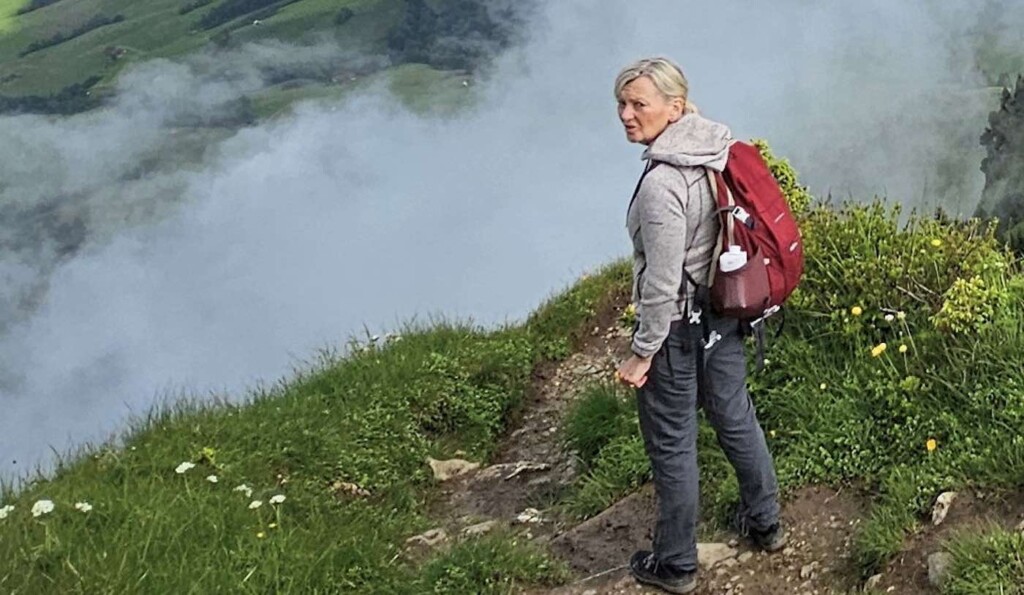 Sarah Robert in the Alps – SWNS Sarah Robert in the Alps – SWNSA hiker says he was able to help save his aunt’s life because he had the what3words app on his phone. Ed Farnworth was hiking in Switzerland and his 59-year-old Aunt Sarah when she fell 60-feet down a mountain and suffered serious injuries. The two were in the woods, far away from flat ground, and there were no landmarks for Ed to tell the emergency services where they were. Luckily, he remembered he had the what3words app on his phone which provides users with a unique three-word code that reveals their precise location. The emergency personnel knew all about what3words—and the address ///crabmeat.hers.froze showed them the exact spot where Sarah landed. The 31-year-old hiker from Manchester, England, regularly visits his auntie who now lives in Switzerland and hikes often. They had both researched the trail beforehand. “The weather was great and we were having an amazing day,” recalled Ed. “I was leading the way in front of her on our decent down the mountain when I turned around and saw she had started to lose her balance. “She was very close to the edge and started to fall, she had a backpack on, so her balance was all out of sync. “She tumbled over the edge and from then on, she didn’t stop tumbling down. She was hysterical, shouting my name and shouting help. Ed saw Sarah hitting her head on a tree extremely hard. “It was a dense whack and then she stopped making any noise. “I lost sight of her as I tried to make my way down to her, I’d never dealt with anything like this before. I found her on her front unconscious, I thought that she was dead at this point. “She had a huge cut in her forehead, an open wound and her face was purple already. Her arm was badly broken, and she was covered in blood.” Ed knew he had to remain calm and call for help, but panicked that he had no idea where they were—until he remembered the what3words app. 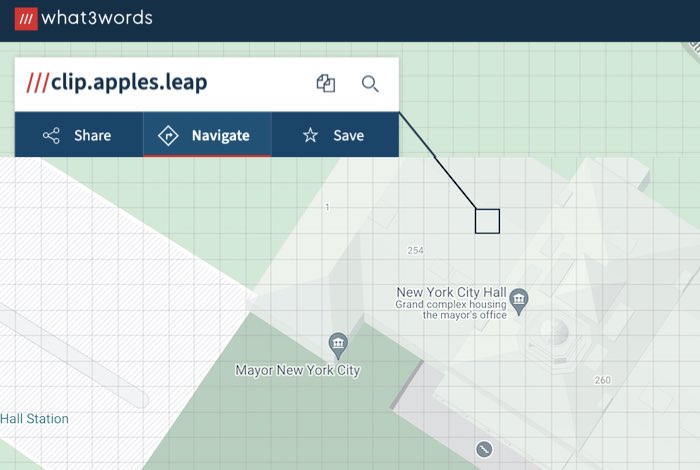 What3words app screenshot What3words app screenshot“I had downloaded what3words a few years ago, I remember downloading it because I go on all these hiking trips, I had genuinely forgotten about it. Looking back, Ed says the free app saved Sarah’s life as It only took 25 minutes for the helicopter to find the pair. While waiting, Sarah was revived and started saying she was cold. “She was visibly concussed, she didn’t know who I was to start with, and she was asking me the same question over and over. “She was crying out for her husband and daughter, and she still can’t remember a thing from what happened.” Without the app, Ed would have had to potentially leave to find help or shout for help, both of which could have made my Sarah even more distressed. “It sped the whole process up and stopped any further injuries occurring, I am super super grateful that I had that app.” Sarah suffered a broken arm, gashed forehead, and was severely concussed in the fall. Her face was completely misshapen and she remained in hospital for over a week, finally going home in a neck brace, with a metal plate in her arm. Sarah still remains passionate about hiking, and Ed wants to make sure every hiker is aware of how important it is to download What3words, which divides the world into 10ft squares—each one named by a unique combination of three words.  what3words what3words“People having the app is reassuring to me,” said Ed. “I’m taking a group of people from work hiking tomorrow and I’ll make sure they all have what3words.” The app addresses are accepted by over 4,800 dispatchers who answer 911 calls in the US. Emergency services in the UK are recommending the free app, because “it saves lives.” What3words is also integrated into the navigation systems of many Mercedes-Benz, Jaguar, Land Rover, Subaru and Mitsubishi vehicles in the US, making it easy for drivers to enter the 3-word addresses straight into their car’s navigation system. Sarah Robert still has no recollection of the fall itself, but is thankful for the outcome. “What3words helped speed up the whole process for which I am extremely grateful. Without it, I don’t see how I would have got the help I needed and things may have ended much worse.“I had never heard of or used the app before my nephew explained it to me, but I’m so thankful he did.” Woman Who Fell 60-feet Down a Mountain Was Saved by What3words Location App
|
22-Year-old Who Stopped Global Cyberattack Donates His Reward to Charity (2024-05-07T12:19:00+05:30)
 A British youth who was awarded $10,000 for accidentally stopping an international cyberattack has just announced that he will be donating the cash to charity and education. The 22-year-old, who goes by the pseudonym MalwareTech, shut down the spread of the malicious online program by activating the “kill-switch” last week after the cyberattack was reported in over 100 countries. Organizations worldwide were infected by the malicious ransomware known as “WannaCry” – a program that encrypts the users files and holds them for ransom. If the user does not pay the several hundred dollar ransom in bitcoin on time, then all of the data and files stored on the computer are deleted. The National Health Organization, FedEx, Telefonica, and Nissan are all examples of corporate giants who were affected by the malware in addition to hospitals and businesses worldwide. When MalwareTech and his friends heard of the epidemic, they started investigating the malware’s code. The 22-year-old Brit then found an unregistered domain name in the source of the code that acted as an “abort” button for the malware. When he registered the domain name, the attack ceased. Though he has preferred to keep his identity anonymous, MalwareTech has been flooded with praise since reports of his deed spread online. HackerOne, an organization that rewards online security techs for detecting and defecting bugs and malware, offered the hero a $10,000 reward. “So @Hacker0x01 have awarded me a $10,000 bounty for the ‘kill-switch’. I plan on splitting it between to-be-decided charities and education,” says MalwareTech. “By education I mean I plan to purchase [information security] based books to give to students who cannot afford them themselves.” However, since sources have leaked that MalwareTech is a surfer who adores pizza, UK-based food delivery service Just Eat offered the youth free pizza for a year – which he says he is more prone towards accepting. Though it sounds like the plot of a James Bond movie, the virus was a ransomware program that was being held by the U.S. government before it was leaked this weekend by an organization of hackers known as Shadow Brokers. The program was being stockpiled by the National Security Agency as a means of weaponizing it, should the need arise. Microsoft, who discovered the malware one month prior, released a security patch immediately afterwards to protect their clients’ computers from the virus. However, since many organizations had not yet updated their systems, their computers were left vulnerable to the ransomware. Though Microsoft later berated the US government for harboring such dangerous programs, the company said that they have since been working to ensure that customers are properly able to recover from the incident.“We take every single cyberattack on a Windows system seriously, and we’ve been working around the clock since Friday to help all our customers who have been affected by this incident,” Microsoft President Brad Smith announced on Friday. “This included a decision to take additional steps to assist users with older systems that are no longer supported. Clearly, responding to this attack and helping those affected needs to be our most immediate priority.” 22-Year-old Who Stopped Global Cyberattack Donates His Reward to Charity - Good News Network |
Cyber warfare is key priority for Israel (2023-03-10T14:10:00+05:30)
 Cyber warfare may sound like something out of science fiction, but it is an increasingly important aspect of modern conflict. It refers essentially to politically-motivated hacking; one nation-state penetrating another's computers or networks for sabotage or espionage purposes. William J Lynn, the US Deputy Secretary of Defence, has said that the Pentagon has "formally recognised cyberspace as a new domain in warfare", equally important to military operations as "land, sea, air and space". Against this backdrop, it should come as no surprise that the Israeli military has made cyber warfare a key priority for the next five years. The military intelligence chief, Major General Aviv Kochavi, is reported to have allocated a £320m budget to the cyber programme. According to Yedioth Ahronoth, a leading Israeli newspaper, the state is facing a shortage of "cyber-combat troops" for its Intelligence Corps Unit 2000, and is planning to recruit from the Jewish Diaspora. The newspaper quotes a top officer at the Manpower Directorate: "It has become clear that the demand for soldiers in this field is growing, which is why we're searching for solutions not only in Israel but abroad as well." Military sources have dismissed the idea that they are searching for cyber-warriors abroad, noting that every Israeli 18 year old is conscripted to three years of military service, giving the army a large pool to choose from. While dismissing the foreign recruitment idea as "far-fetched", Major General Isaac Ben Israel, one of the country's leading experts in cyber warfare, confirmed that "cyber readiness is one of the new pillars in our plan, including both defence and offence". It is generally acknowledged that General Israel was the mastermind behind a 2007 air strike that destroyed a Syrian nuclear facility. The attack was only possible because Syrian air defence systems were hacked and disabled minutes beforehand. Nor was this the only cyber-attack aimed at nuclear programmes in recent years. In 2010, the Stuxnet computer worm targeted the Iranian nuclear programme, in what was widely thought to be a joint US-Israeli attack. One of the appeals of cyber war is that it is difficult to find definitive proof of responsibility. Given that Israel currently sees Iran and its nuclear programme as its biggest threat, it seems obvious that Iran will be the main target of Israel's beefed-up cyber operation. It is a means of waging war without the economic costs and loss of life associated with a physical conflict. And Iran is well aware of the threat. Since the Stuxnet attack, the country has been concentrating on improving its cyber capabilities. While Iran still can't match the US or Israel, US security sources have said they are surprised at how quickly the government in Tehran has developed its capability. General Israel was explicit that cyberspace is another area of conflict with Tehran: "Our closest enemy is Iran, which declared a year and a half ago that it had created a cyber command whose goal was to fight Israel and the US." No doubt the drums of war with Iran will continue to beat in Tel Aviv, particularly if Netanyahu is re-elected next year, as looks likely. But even if he does not manage to garner the necessary support to launch an all out assault on Iran, it is worth remembering that air strikes are not the only way of waging war or attacking a nuclear facility.The views expressed in this article belong to the author and do not necessarily reflect the editorial policy of Middle East Monitor. Source: https://www.middleeastmonitor.com/, Image: https://pixabay.com/illustrations/cyber-security-internet-protection-3400723/ |
How social media can assist designers in brand building (2016-05-13T12:03:00+05:30)
 By Gautam Gupta, Up until a few years ago, name and fame for a fashion designer meant playing the publicity game. You either needed pushy PR agents to get you and your garments featured in newspapers and tabloids or had to participate in fashion shows and exhibitions on a regular basis. Times have changed now — I’m not saying the aforementioned are not needed any more — my point is that there has been huge transformation of the fashion scene these days thanks to social media. As we all know, communication through online modes has a wider, more effective reach. Seeing these trends, international brands and designers have started using sites like Twitter, Facebook and YouTube to promote their labels. Now, a designer can easily create his own website or twitter account or upload a work-related video on Youtube and ask family, friends, acquaintances and prospective clients to “like” the page, follow him on twitter or see his video respectively. This helped prospective clients or a target group become aware about the latest happenings and launches regarding the designer’s brand. Yes, everyone knows about this revolution but there are certain facts that I would like to share which will explain the reach and the scope of social media. International labels realised the potential of social media much earlier so they have a legion of followers on Facebbok — Converse has more than 36 lakh, Zara has over 18 lakh and Louis Vuitton has about 13 lakh. Since our domestic brands had a late start, Shoppers’ Stop has 4 lakh, Westside has about 1.5 lakh and Sabysachi has more than a lakh followers. Yes, these pages are advertised and there is a possibility of lot of fake or dubious accounts in their name but talking from my personal experience on my page, there are some good leads too. Indian brands and designers may have lesser numbers as of now, but there is an overall acceptance that social media marketing will be an important part of the marketing and branding strategy in the future. The Fashion Design Council of India (FDCI) had a Twitter party right before the fashion week that was a huge hit. Also, take for example the case of luxe brand, Burberry, that released its spring summer collection’12 on Instagram and Twitter and did a live streaming of its show on YouTube. A lot of fashion weeks are also being uploaded on YouTube, if not live streamed. After every show there are pictures uploaded and then what follows are comments and feedback which are extremely critical. Clearly, social media gives a brand a podium to narrate its history, design philosophy, new product line, offers, trends, share behind-the-scene pictures at a very negligible cost. It is like your website on a mass platform which you can edit at will. The major advantages of social media is that lot of feedback and opinions can be procured, myths about pricing and quality can be broken and so on. With the integration of all social media platforms and mobile applications, its scope will further become a force to reckon with. (The writer is a Delhi-based fashion designer). Source: mydigitalfc.com, Image: flickr.com
Social Secrets (2015-06-08T10:40:00+05:30)

By Shaku Selvakumar: Confessional apps are the next face of social media which take expression and news to the next level: Imagine you could say anything you wished and get away with it. Imagine you had no one to place any kind of censorship, social, work, or otherwise. With LinkedIn, there is a bonafide record of you. Much of what you place on the site can be easily cross-checked and referenced. You are also very aware of appropriate behaviour. What you like, what you comment on, what you write, or endorse appear on the newsfeed for all to see. With Facebook, it’s a little more relaxed. Your tone relaxes. You can be less informal and your social self is more evident. Your friends, where you go, how you party are all rich fodder for someone who is gathering social data and deciding how to market their wares to you. Moving on to Twitter, your tone changes once again and there is some scope for anonymity. While with LinkedIn and Facebook you have connections and friends, Twitter is for followers who may or may not be connected or friendly. With Twitter, there is more scope for curiosity, interest and volatility. As quickly as we jumped into the social bandwagon with multiple accounts on numerous channels, sharing everything from bands, books, clothes and relationships, there is an equal and opposite trend that has coexisted in parallel. Paying a privacy price: As more hackers easily infiltrate accounts, Pew Research has some alarming facts. At least 21 per cent of internet users have had an email or social networking account compromised or taken over by someone else without permission. About 13 per cent have experienced trouble in a relationship between them and a family member or a friend because of something the user posted online. About 12 per cent have been stalked or harassed online. About 11 per cent have had important personal information stolen such as their social security number, credit card, or bank account information. Also, about 6 per cent have been the victim of an online scam and lost money. About 6 per cent have had their reputation damaged because of something that happened online. And about 4 per cent have been led into physical danger because of something that happened online. Unsigned and anonymous: Anonymity has its benefits, whether to initiate a heated dialogue on a sporting event or to weigh in on a political stand or to jump into a religious debate. Initially it started with multiple email and social accounts that would allow folks to troll sites, leave comments, many times unprovoked and nasty. According to Pew Research, most internet users would like to be anonymous online at least occasionally, but many think it is not possible to be completely anonymous online. New findings in a national survey show that 86 per cent of internet users have taken steps online to remove or mask their digital footprints — ranging from clearing cookies to encrypting their email, from avoiding using their name to using virtual networks that mask their IP address. About 55 per cent of internet users have taken steps to avoid observation by specific people, organisations, or the government. The dark web or the hidden web has provided a forum for users who don’t wish to be observed. Sending encrypted messages and using secret chat platforms ensure that their identity is not invaded. Trading secrets made easy: As the line blurs between protecting identity, reckless social sharing and spurred by the quick hit of instant popularity, more social apps are cashing on the “confessional” trend. Forget all the intricate planning that goes into catfishing, with the advent of new apps like Secret, Whisper and YikYak, it looks like anyone can easily “out” someone. The new trend that takes a leaf out of our reality TV shows and gives us a starring role, can start a scandal anywhere. It could be your own secret, or not. Unsubstantiated rumours or malicious gossip. It could just be venting. But the next face of social clearly has moved beyond the tried and tested wall. Secret and Whisper can connect people anonymously to share information anonymously. While YikYak calls itself a local bulletin for your area that pushes you the latest information, it is used widely in colleges and has been blamed for being the source of much cyber bullying. Confessional apps are the next face of social media where the audience can take expression and news to the next level. The problem is that without any accountability or social responsibility, it can very easily degenerate into a spectator sport where each secret or whisper or yak has to be louder than the one before. (Shaku Selvakumar is a US-based marketing and digital communications expert; and founder of Coeuredge, a digital experience company) Source: mydigitalfc.com, Reference-Image: flickr.com
|
Mahesh Bhatt approaches police over fake Facebook account (2014-10-09T17:31:00+05:30)
![[mahesh.jpg]](https://farm8.staticflickr.com/7109/7127922011_0f16830300_z.jpg)
Bollywood filmmaker Mahesh Bhatt has approached the Mumbai police over a fake Facebook account bearing his name.
Filmmaker Mahesh Bhatt has warned his fans against a fake Facebook account created under his name and says that he will approach the police. “WARNING: Someone is running a fake Facebook Account under my name and misleading people. I am reporting the matter to Mumbai Police,” tweeted the director of “Zakhm”. A few months back, his daughter Alia Bhatt, who made her acting debut in 2012 with Karan Johar’s “Student of the Year”, had to also go through the trouble of clarifying that she has no account on Facebook. Mahesh Bhatt might not have an account on the popular social networking site, but he actively shares his opinions on Twitter and is followed by celebrities like Juhi Chawla, Sudhir Mishra and Madhur Bhandarkar. Source: Article, Image: flickr.com
|
Facebook to change policy after father's emotional plea (2014-10-09T04:11:00+05:30)

7 Feb 2014: Facebook has announced that it will review the way it handles 'memorial' pages of users who have passed away, after receiving a heartfelt plea from a father who lost his son in 2012. John Berlin contacted the social network service to request a video of his son, Jesse, who died at the age of 21. To coincide with its tenth anniversary, Facebook this week offered a Look Back feature to users, allowing them to watch video highlights of their time on the site. Hoping to see a video package for his son, Berlin petitioned the company with a message that swiftly gathered support from across the internet. Berlin's appeal, addressed to Facebook founder Mark Zuckerberg, prompted the social network to create a bespoke video from the 21-year-old guitarist's page and public posts. The emotional plea, in which the Missouri resident pauses several times to stop his tears, was posted to YouTube and has received over 1.8 million views. "You ever do something crazy because you just don't know what to do anymore?" Berlin says in the video, "Well, that's what I'm doing right now... I'm asking my friends to share this video, and their friends to share it and so on and so forth and maybe somebody will see it that counts. I know it is a shot in the dark but I don't care." Facebook's existing policy is to disable accounts of people who have died to ensure that deceased users' details are not used in advertising, and that their friends and relatives don't receive reminders on their birthday. The site has a dedicated 'Memorialisation Request' page that allows family members to alert the site when a family member has passed away. The site requires people to send evidence of a family member's death, such as a link to an obituary or news article, to prevent abuse. A representative of Facebook said that following the incident, the social network will review the way accounts of people who have died are handled. "This experience reinforced to us that there's more Facebook can do to help people celebrate and commemorate the lives of people they have lost," a spokeswoman told the BBC. "We'll have more to share in the coming weeks and months." For further concise, balanced comment and analysis on the week's news, try The Week magazine. Subscribe today and get 6 issues completely free. Source: The Week UK
|

Facebook testing new feature to stop users from believing joke stories (2014-10-07T10:41:00+05:30)

18 August 2014, Facebook is testing a new feature aimed at stopping users from actually believing jokes and stories on satirical websites like The Onion, The Independent reported. If a user from those selected for the trial click-through to a piece from The Onion and then revisit Facebook, the related stories that show beneath the link when users return would then feature a tag marking it out as satire. Ars Technica quoted a Facebook spokesperson who spoke to the site, as saying, the social network was running a small test, which showed the text '[Satire]' in front of links to satirical articles in the related articles unit in News Feed according to the report. He added this was because Facebook received feedback that people wanted a clearer way to distinguish satirical articles from others in these units. According the spokesperson, the test had been happening for over a month. He did not say whether the tag would be used on content from different websites, according to the statement. The tag is not picked up by other sites like The Onion's BuzzFeed parody Clickhole. Another site often mistaken for real news is The New Yorker's Borowitz Report. Many users take The Onion articles seriously as revealed by the kind of responses collected by Literally Unbelievable, a blog of comments outraged by the site's stories. Readers recently had trouble distinguishing stories like a 9,600-mile roller coaster or Middle East bombings exposing the earth's mantle as unbelievable. People living in Chicago, Illinois and Louisville, Kentucky could have found the social network's new feature helpful to nail the "purge" hoaxes based off the popular horror movie "The Purge" and its recent sequel, news site hngn.com reported. A fictional story about teenagers killing 112 people in one night posted on satirical website Cream Bmp Daily went viral on Twitter. The site posted other purges in Detroit and Jacksonville, Florida for 15 August. The site's disclaimer on its About page clarifies that the content is "for entertainment purposes only." The city of Louisville took the 15 August purge reports more seriously. Police announced criminal proceedings against anyone who posted threatening messages on social media before that night, KSDK.com reported. Spokesman for Louisville mayor Greg Fischer said one lesson was that people really needed to be careful about what they said on social media. He added the government took every threat seriously. Source: Article, Image: flickr.com
|