
 Two children wave the South Korean national flag outside the Incheon Asiad Main Stadium before the opening ceremony of the 17th Asian Games, in Incheon, South Korea. (IANS File Photo) Seoul, (IANS): South Korea's media watchdog said Thursday it is considering a social media restriction against children aged 14 years old and younger amid escalating concerns over excessive use of such platforms. Kim Jong-cheol, the chairman of the Korea Media and Communications Commission, made the remarks at a policy briefing in Cheong Wa Dae, emphasizing that excessive social media use by teenagers is a worldwide problem. "We are reviewing, in phases, a plan to restrict children under 14 years of age from creating accounts on social media platforms, and limiting exposure to designs and algorithms that could encourage excessive use of such platforms for teens aged 14 to 19," Kim said, Yonhap News Agency reported. "There are around seven related pieces of legislation proposed at the National Assembly," he added. Kim, however, acknowledged the issue should be approached carefully, recalling the Shutdown Law in 2011, which prohibited minors under 16 from accessing online games from midnight to 6 am. The decade-old legislation was eventually scrapped in January 2022, following calls that the law infringes upon people's basic rights and negatively affects the game and culture industry. The latest proposal from the media watchdog came amid governments in other countries taking legislative steps to restrict children and teenagers' access to social media platforms. The European Union said it will present legislation restricting children's access to such platforms after the summer. Australia also became the first country in the world to ban those under 16 from owning a social media account. Earlier in June, UK Prime Minister Keir Starmer announced that he would ban access to social media for children aged below 16 years, terming it a "big step" for the country. Starmer said the government plans to pass regulations before Christmas and protections expected to come into force in Spring 2027. While making the announcement, Starmer noted that social media is making children of the UK "unhappy and unsafe" and that their children deserve better. He stated that the decision to ban access to social media for children aged below 16 years was taken after looking at the evidence. In a video shared on X, Starmer said, "Every parent wants the best for their kids. And that's what being a parent means. And for me, for my two kids, all I've ever wanted, hand on heart, is for them to be safe and for them to be happy and the rest is up to them. But you know, I think back to when I was growing up, and I have to say, I think we had it easier. These days, kids have to find their feet in a world that changes so quickly, where technology intrudes into every area of their lives. And we know that harms them."The response from parents in the consultation has been absolutely clear. Thousands of parents say their children are addicted to social media. It can leave them trapped in a cycle of endless scrolling that displaces play, sleep, and time with the family. It can harm their mental health and frankly, parents need our support on this. That is why today the government has decided to ban social media access for children under 16. It's a big step for our country. , fairer Britain," he added. South Korea's media watchdog floats possible social media ban for minors | MorungExpress | morungexpress.com |
South Korea's media watchdog floats possible social media ban for minors (2026-09-25T11:42:00+05:30)

Over 30 minutes of Instagram, Snapchat use may impair children’s attention: Study (2026-09-22T12:37:00+05:30)
 New Delhi, (IANS): Children who spend more than 30 minutes on social media platforms like Facebook, Instagram and Snapchat are likely to experience a gradual decline in their ability to concentrate, according to a study of more than 8,000 children from around age 10 through age 14. Researchers at Karolinska Institutet in Sweden and Oregon Health & Science University in the US investigated a possible link between screen habits and symptoms related to Attention-Deficit/Hyperactivity Disorder (ADHD). They followed 8,324 children aged 9-14 in the US for four years, with the average time children spent on social media, watching TV/videos, and playing video games -- from approximately 30 minutes a day for 9-year-olds to 2.5 hours for 13-year-olds. Children who spent a significant amount of time on social media platforms, such as Instagram, Snapchat, TikTok, Facebook, X (formerly Twitter), or Messenger, gradually developed inattention symptoms, revealed the findings. In the study, the average time spent on social media rose from approximately 30 minutes a day for 9-year-olds to 2.5 hours for 13-year-olds, despite the fact that many platforms set their minimum age requirement at 13. The study, published in Pediatrics Open Science, however, found no such association among children watching television or playing video games. “Our study suggests that it is specifically social media that affects children’s ability to concentrate,” said Torkel Klingberg, professor of cognitive neuroscience at the Department of Neuroscience, Karolinska Institutet. “Social media entails constant distractions in the form of messages and notifications, and the mere thought of whether a message has arrived can act as a mental distraction. This affects the ability to stay focused and could explain the association,” Klingberg added. The association was not influenced by socioeconomic background or a genetic predisposition towards ADHD. In addition, children who already had symptoms of inattentiveness did not start to use social media more, which suggests that the association leads from use to symptoms and not vice versa.The researchers found no increase in hyperactive/impulsive behaviour. While the effect on concentration was small at the individual level. At a population level, however, it could have a significant impact, they said. Over 30 minutes of Instagram, Snapchat use may impair children’s attention: Study | MorungExpress | morungexpress.com |
Both active and passive use of social media can trigger loneliness: Study (2026-09-15T10:28:00+05:30)
|
New Delhi, (IANS) Both passive and active social media use have been linked with increased feelings of loneliness over time, report researchers. The team investigated how social media use impacts loneliness over time and examined the hidden emotional costs of social media. The eye-opening research by Baylor University, published in the journal Personality and Social Psychology Bulletin, suggests that the very platforms designed to bring us together contribute to an "epidemic of loneliness." While passive social media use — like browsing without interaction —predictable lead to heightened loneliness, active use, involving posting and engaging with others, was also linked to increased feelings of loneliness. These results suggest that the quality of digital interactions may not fulfill the social needs that are met in face-to-face communication. “This research underscores the complexity of social media’s impact on mental health,” said primary investigator James A. Roberts. While social media offers unprecedented access to online communities, it appears that extensive use — whether active or passive — does not alleviate feelings of loneliness and may, in fact, intensify them, he mentioned. The study also found a two-way relationship between loneliness and social media use. "It appears that a continuous feedback loop exists between the two. Lonely people turn to social media to address their feelings, but it is possible that such social media use merely fans the flames of loneliness,” said Roberts. The findings emphasise an urgent need for further research into the effects of digital interaction, underlining the essential role of in-person connections in supporting well-being.This study adds a valuable perspective to the conversation on how digital habits influence mental health, offering insights to shape future mental health initiatives, policies, and guidelines for healthier social media use. Both active and passive use of social media can trigger loneliness: Study | MorungExpress | morungexpress.com |

How to maintain authentic friendships in the social media world? (2026-09-04T11:06:00+05:30)
 IANS Photo New Delhi, (IANSlife) Building a friendship is no less than forming any kind of relationship. While many meet soulmates through friends, there are also people out there who struggle to find genuine friends. Especially in the world of social media, in many instances we come across the 'friends for benefits' kind of relationship. Not everyone that comes into our life has good intentions, but hey! it is also how we turn the table. This Friendship Day, let’s find out how your favourite personalities from the internet are dealing on maintaining authentic friendships in the social media world. Palak Rathi, Gen Z Finance Content Creator, "Do you know what’s the best thing about social media? Accessibility. Accessibility to literally anyone and everyone. It’s up to us how we use that accessibility - to just network or to actually build meaningful relationships beyond networking. Don’t connect with people only when you need a favour or there’s some work to be discussed but rather keep talking to them once in a while, check on them, appreciate them, celebrate their small victories by maybe reacting to a story or sending them a sweet message or calling them up to congratulate them. While staying connected online is great, whenever and wherever possible - try to meet them in person. Make efforts. Look and build real friendships. And most importantly - stay genuine and don’t try to be someone who you’re not. Because only then you’ll be able to find people who you can really connect with on a deeper level rather than just likes and comments on the surface level. Talk about your interests, your likings, your struggles (trauma bonding is a thing, haha), your goals - just be yourself and you’ll be surprised to see how it will lead to the start of some extremely meaningful conversations and lifelong friendships. Engage with people whose interests align with you or should I say whose “vibe” matches with you. That will help you make friends and not just connections." Adete Dahiya, Gen Z Lifestyle Content Creator, "Whenever we talk about the impact of social media, romantic relationships often take precedence over anything else. But its impact on friendships and other interpersonal relationships is even more profound. Social media has made it so easy to stay in touch with friends and make new ones online - you can just like their photos on Instagram or react with an emoji to their stories, or just drop a short comment on their latest post and you’re done. But the flip side is that it has made it much harder to maintain meaningful connections and bonds. A few things you can do to counteract this is to schedule regular call times with your friends. It is essential to check in, speak to them face to face and get a deeper understanding of what is happening in each others’ lives. If you live in the same city, make it a priority to meet weekly. The key is not to become lazy because of social media but to use it to deepen your connection." Reshi Magada, Gen Z Finance Content Creator, "Maintaining meaningful friendships as a Gen Z individual navigating the social media environment needs a balance of virtual relationships and in-person connections. To begin, I value honest communication by being open about my views, feelings, and experiences. Sharing both highs and lows helps friends understand each other better. Second, I try to engage in real conversations that go beyond likes and comments. I send individual notes, check about their well-being, and show real interest in their life. In this way, I display that I value and care for my friends. Third, I maintain digital boundaries. To keep my friendships from being superficial, I restrict my screen time and prevent idle scrolling. Instead, I invest in face-to-face interactions and meaningful time spent together, which strengthens the bond. Finally, keep in mind that social media is a highlight reel, and comparison may stunt true friendships. I create a healthy climate for genuine friendships to grow by appreciating my friends' wins without feeling envious. Through these methods, I am able to form and retain genuine friendships in the ever-changing social media world." Caslynn Qusay Naha, Gen Z Finance Content Creator, "Maintaining authentic friendships in the social media world is crucial as we navigate the digital age. It's essential to remember that the principles that apply to real-life friendships can also be applied to our online connections. First and foremost, authenticity is key. Just like in face-to-face interactions, being genuine and true to yourself fosters trust and openness. Share your thoughts, feelings, and experiences honestly, and encourage your friends to do the same. Taking the time to actively communicate and stay connected with your friends is vital. Initiate conversations, respond to messages, and participate in online discussions. By showing interest in their lives and making an effort to stay connected, you demonstrate that you value friendship. Remember, it's not about the number of friends you have, but the quality of the relationships you build. Be present for your friends, celebrate their successes, offer support in their struggles, and be a positive influence in their lives. So, maintaining authentic friendships in the social media world is all about being genuine, avoiding comparison, actively communicating, and valuing the quality of your connections over quantity." |
Australians could soon be able to choose what appears in their social media feed. How would this work? (2026-09-04T11:05:00+05:30)
|
Daniel Angus, Queensland University of Technology and Ashwin Nagappa, Queensland University of Technology On ABC’s Insiders program on Sunday, federal Social Services Minister Tanya Plibersek said the government is exploring whether Australians should be able to opt in to algorithmically curated social media feeds. The idea has been championed by sexual consent activist Chanel Contos. Her organisation, Teach Us Consent, is running a campaign which calls for personalised recommendation algorithms to become opt-in. Instead, users would have, by default, a chronological feed containing posts from accounts they have decided to follow. There are some positive aspects to the proposal. But a chronological feed is not really a “non-algorithmic” feed. It still relies on an algorithm, albeit an exceptionally simple one: take a collection of posts, order them according to time, and show the newest first. This might sound pedantic. But it points to something missing from the current debate. The problem is not that social media platforms use algorithms. Almost every digital system we interact with uses algorithms to decide what information to sort, filter, or display. The better question is what are we asking those algorithms to optimise for, and who gets to decide. How we got to this pointEarly social media feeds were relatively simple. You followed accounts and their posts appeared, generally in reverse chronological order. Over time, and largely driven by commercial imperatives, platforms moved towards increasingly sophisticated and secretive recommendation algorithms. Today, much of what appears in our social media feeds may come from accounts we have never encountered before. Contemporary recommendation algorithms use our individual and collective data to make predictions about what will keep us clicking, sharing and scrolling. That has produced some genuinely useful forms of discovery. But maximising engagement is a poor substitute for maximising social value. Indeed, some of the things most effective at capturing our attention are those that make us angry, outraged or frightened. Sensational claims, interpersonal conflict and material deliberately constructed to provoke a response can all perform remarkably well in an attention economy. Concerns become even more serious when recommendation algorithms repeatedly introduce people to misogynistic, extremist or conspiratorial content. Making personalised recommendations opt-in could potentially be a worthwhile intervention, although the devil will be in the detail of exactly what ranking mechanism platforms would be required to provide instead. At the very least, it restores an important degree of agency. People should have meaningful choices about the systems organising their attention. But chronological feeds aren’t a silver bullet. Chronological doesn’t necessarily mean goodBefore platforms became so heavily driven by automated recommendation, discovery was often a much more social process. We all had a few friends who reliably found the interesting, funny, strange or important things happening online and passed them along. In a sense, we were the algorithms, collectively filtering and curating the internet for one another through our social networks. There is real value in recovering some of that. It makes the feed more legible because we have some understanding of why something has appeared in front of us. The earliest social bookmarking services on the web, like Delicious and Digg, let us curate and share interesting content, independent of the platforms or source website. But chronology alone cannot recreate that environment. A feed is the end point of a much larger information system involving search, advertising, trending topics, influencers, reposting, moderation and, importantly, the kinds of content people encounter elsewhere and then bring back into their networks. Even a strictly chronological feed can contain rage bait, misinformation and misogyny if those materials are already circulating through the accounts somebody follows. That distinction matters for regulation. What if we could tailor our feed?Social media users in some jurisdictions already have some control over their feeds. For example, the European Union’s Digital Services Act requires large social media platforms to give users the option of selecting a feed not based on algorithmic profiling. Some of the most interesting experiments are happening outside the dominant platforms. Mastodon has generally emphasised chronological timelines containing posts from accounts users have deliberately followed. But this creates its own challenges. For example, arriving on a new network without knowing who to follow can make the place feel remarkably empty. At the other extreme, Mastodon discovered through their own study how users found it difficult to keep up with the volume of their feed as they followed more accounts. Bluesky has taken a different approach. Alongside a chronological following feed, users can select from thousands of custom feeds created by other people and organisations. This suggests another possibility beyond choosing between “the algorithm” and “no algorithm”: algorithmic choice. Rather than Meta, TikTok or X determining the single feed optimisation system through which millions of people experience their platforms, users might choose between different ways of organising information. A news organisation might maintain a feed prioritising verified reporting. A university could create one highlighting research. Communities could build feeds around particular shared interests. Users could then choose a simple chronological feed, or indeed several different feeds for different purposes. Bluesky has described this as an “open marketplace of feeds”. Mastodon is experimenting with complementary approaches to discovery and community curation. Neither provides a finished regulatory blueprint. But together the wider decentralised social media ecosystem is becoming a useful live experiment in what happens when we separate the social network from the mechanism used to rank its content. This is where the Australian debate could become much more interesting. Giving people the ability to turn off personalised recommendation systems would be a sensible start. But we should also be asking why a handful of technology companies have such extraordinary control over the systems that organise our attention in the first place. Instead of treating chronological ordering as the end point, we could look more closely at actively encouraging alternative open infrastructure that is resistant to future corporate capture and embodies genuine choice for community. Daniel Angus, Professor of Digital Communication, Director of QUT Digital Media Research Centre, Queensland University of Technology and Ashwin Nagappa, Postdoctoral Research Fellow, ARC Centre of Excellence for Automated Decision-Making and Society, Queensland University of Technology This article is republished from The Conversation under a Creative Commons license. Read the original article. |

Centre in talks with stakeholders on social media curbs for kids (2026-08-17T11:42:00+05:30)
 Centre in talks with stakeholders on social media curbs for kids. (IANS Photo) New Delhi, (IANS): The Centre is holding consultations with stakeholders on possible safeguards for children on social media, including proposals to restrict access for users under 16, Electronics & IT Secretary S. Krishnan said. Krishnan said India is closely studying global developments before deciding on its own approach. “We need to study what other countries have done with social media. It is a matter of global concern,” he told NDTV Profit. Prime Minister Narendra Modi publicly praised Australia’s landmark ban on social media for children under 16 during his recent visit to the country’s annual leaders’ summit. PM Modi told Australian Prime Minister Anthony Albanese that Australia’s legislative efforts to regulate IT and social media are “inspiring the world” and that India is “learning a lot” from the move. This was a clear indication that the government is seriously considering similar restrictions to protect minors from cyberbullying and online addiction. Countries such as Australia have legislated age restrictions for social media platforms, while several European nations are examining stricter parental consent and age-verification mechanisms. According to Krishnan, similar concerns are increasingly being voiced within India. “In our discussions with the EU and other countries, concerns around the risks of social media have come up repeatedly. In India too, various stakeholders, including Parliamentary Standing Committees, have discussed these risks.” He said no final decision has been taken yet, with the government continuing consultations across multiple stakeholders. “We’re in the process of discussing this with various stakeholders.” The issue is expected to form part of the government’s broader efforts to strengthen digital safety, particularly for children, alongside work on online harms, intermediary accountability and emerging AI regulations. Under Australian law, major platforms like Facebook, Instagram, TikTok and X are required to implement age-verification measures to block users under 16. Social media companies are penalised for any breach of rules and not the children or parents. Australia is the first country to enact a nationwide under-16 ban, and PM Modi’s remarks were well received as governments worldwide increasingly look to implement similar digital safeguards.The discussions also come amid increasing scrutiny in the USA of major technology platforms such as Meta over issues ranging from addictive algorithms and age verification to cyberbullying and exposure to inappropriate content. Centre in talks with stakeholders on social media curbs for kids | MorungExpress | morungexpress.com |
Rhea Chakraborty takes a break from social media: Missing myself a little (2026-06-16T11:26:00+05:30)
 (Photo: Rhea Chakraborty/ Instagram) Mumbai, (IANS) Actress Rhea Chakraborty has decided to take a break from social media. In her latest social media post on Tuesday, the 'Chehre' actress confessed that she had been missing herself a little lately amidst the constant noise and scrolling. Rhea added that she wished to reconnect with herself and live in the moment rather than simply posting her life on social media. She wrote, "Lately, I've been missing myself a little. The constant noise, the scrolling, the keeping up - it's all started to feel heavier than I expected. I miss being present without thinking about capturing the moment. I miss quiet. I miss simply being. So, I'm taking a step back for a while - to slow down, breathe a little deeper, and reconnect with what feels real. Choosing lived moments over posted ones, for now. See you soon. (sic)" On the professional front, Rhea will next be seen in a significant role in the show "Family Business". She will be seen working alongside Anil Kapoor, Vijay Varma, Neha Dhupia, and Dhruv Sehgal in the drama being made under the direction of Hansal Mehta. The 'Jalebi' actress is returning to acting after a gap of 7 years with the Netflix drama. Reflecting on her journey in Bollywood, Rhea penned on her official Instagram account, "7 years have passed since I went to set ..But I’m still the same girl who came to Bombay at 17 with a dream to be an actor. A part of me moved on, but a part of me stayed and waited. And I’m here, once again in my chapter2 It seems Life is what happens to you while you’re busy making other plans.”Rhea last graced the screen back in 2021 when she was seen in Amitabh Bachchan and Emraan Hashmi's mystery thriller "Chehre". Rhea Chakraborty takes a break from social media: Missing myself a little | MorungExpress | morungexpress.com |
Maldives plans social media ban for children under 16 (2026-06-16T11:25:00+05:30)
 Representational Image. (IANS Photo) Male, (IANS): Maldivian President Mohamed Muizzu has announced the government will ban children under 16 from accessing certain social media platforms to protect them from cyberbullying, online grooming and other digital threats, a state media outlet reported. Speaking at a weekly press conference on Monday (local time), Muizzu said protecting children from online harm had become a major concern for parents in the Maldives and abroad, reports Xinhua news agency, quoting state media outlet PSM News. The government would study regulations in other countries, including Australia, as it prepares the new policy, he noted. The proposed ban would target specific applications considered risky for children, Muizzu said, adding that the government would consult relevant technology companies and work with platform owners to bring their services in line with Maldivian law. The measure would require amendments to existing cyber safety laws, according to the president. Muizzu said the restrictions would not hinder children's education or their ability to learn online, but would help create a safer digital environment. The government aims to finalise the regulatory framework and introduce the ban within a year after public consultations, PSM News reported. If implemented, the Maldives will follow Australia in banning social media for children under 16 years. Canberra had announced the ban last year. As of January, over 4.7 million accounts belonging to children were deactivated in the first days of Australia's world-first social media ban for under-16s. Data released by the government's eSafety commissioner had revealed that social media companies removed access to around 4.7 million accounts identified as belonging to children under 16 in the days after the ban took effect on December 10. The Australian government is also investigating five social media platforms for failing to comply with the country's world-first social media ban for children younger than 16. In its first report on the social media minimum age obligation, the federal government's eSafety Commissioner said on Tuesday that it has "significant concerns" about the compliance of the social media giants, including Facebook and Instagram, with the laws that came into effect in December.Under those laws, social media companies that fail to take reasonable steps to prevent children younger than 16 from accessing their platforms face fines worth up to 49.5 million Australian dollars ($33.9 million). Maldives plans social media ban for children under 16 | MorungExpress | morungexpress.com |
Australia wants social media to be ‘safe by design’. What does that actually look like? (2026-06-12T12:23:00+05:30)
|
Senuri Wijenayake, RMIT University; Anastasia Powell, RMIT University; Dana McKay, RMIT University, and Madhuka Thisuri De Silva, RMIT University Australia is world-leading in taking active measures to keep people safe online – home to the world’s first dedicated online safety regulator, the eSafety Commissioner, and the first country to introduce enforceable industry codes requiring platforms to tackle harmful content at scale. And now, a newly released federal government issues paper proposes a “digital duty of care”, which would require social media platforms to take reasonable steps to prevent foreseeable online harm. The proposal signals Australia’s position that it is platforms, not just individuals, who should be responsible for actively preventing online harms. At the heart of the proposed digital duty of care is the principle that social media platforms should be “safe by design”. But what does that mean in practice – especially for those who are most at risk? Our research with women and gender-diverse Australians offers six concrete recommendations for what safety by design could look like in practice. Who bears the brunt of online abuse?One in two Australian adults have experienced online abuse in their lifetime. Women and gender-diverse people are disproportionately targeted, experiencing harassment, non-consensual image sharing, impersonation, stalking and identity-based abuse at far higher rates than others. Yet these groups are rarely involved in envisioning what safer platforms could look like. So, we asked them: what would safer social media look like to you? We worked with 75 Australian women and gender-diverse social media users, and 21 experts in platform safety, digital policy and content moderation, to understand how existing safety features are falling short. Here’s what they told us – and how it compares with the current Australian proposal for a digital duty of care. 1. Make abuse reports actually work. Abuse rarely fits a single category – without context, platforms don’t handle the reports well. A message that reads as innocuous to a stranger may be a clear threat to someone who knows their abuser. But without that context, platforms have no way of knowing. Users want clearer processes that capture the full picture, smarter triage that prioritises urgent cases, and timely updates on what happened to their report. This fits well with what the digital duty of care proposes: platforms should have accessible complaint mechanisms and respond within 24 hours for serious issues. 2. Harmful content should be harder to share in the first place. Once someone shares intimate or sensitive content without your consent, it quickly spirals out of control. Australia’s proposal suggests platforms should prevent the upload of seriously harmful content such as image-based abuse, or detect and remove it. Users in our research said they want prompts that encourage people to pause before sharing, technical measures that prevent screenshots or downloads, and real-time alerts showing when and where their content is being accessed. 3. Make bans harder to evade. If you block a user, they can create new accounts in minutes, facing few real barriers. The digital duty of care flags that anonymous account systems may need redesigning to prevent foreseeable harm. As we found, users want layered verification – such as requiring a unique phone number or introducing delays before new accounts become active – that adds friction to repeat account creation, but not mandatory ID checks for everyone. This would protect those without formal ID, those escaping unsafe homes, or those who rely on anonymity to stay safe. 4. Harmful content should be caught before it spreads. Automated systems routinely miss culturally specific abuse and coded language. Content should be detectable before it is shared, and easy for bystanders – not just victims – to flag. The users in our research recommended pairing automated detection with human moderators trained in cultural nuances, which is precisely the kind of effective content moderation system the proposed duty of care requires. 5. Recognise campaigns, not just individual posts. Abuse is often a sustained campaign, even when each message seems minor alone. The duty of care proposal requires platforms to mitigate reasonably foreseeable harms – which means looking beyond individual incidents. Platforms should connect reports over time, identify patterns, and act before harm escalates, with independent audits to ensure these systems are never weaponised against the people they are meant to protect. 6. Surface safety tools before harm happens. Most users discover safety features only after something has gone wrong. Australia’s proposal envisions “empowering” users – but empowerment means more than adding features. It means the platform should offer the right tool at the right moment, rather than bury it in a settings menu that only the most determined users will ever find. The real testThe proposed digital duty of care is a significant step in the right direction. But “safe by design” will only deliver if it works for everyone. As our research shows, those most affected already have clear, practical ideas about what would make platforms safer. The opportunity now is to design with them – so safety is built in from the start. Until the proposed digital duty of care is rolled out, it is up to all of us to look after each other. We can report harmful content, pause before we post and ask: is it true? Is it kind? Is it fair? And we can be active bystanders – commenting when we see something harmful, or offering support to those experiencing abuse. We all have a role to play. From governments, to platforms, to everyday people – it is up to all of us to create a safe digital society, one that we can all be a part of. Senuri Wijenayake, Senior Lecturer in Human-Computer Interaction, RMIT University; Anastasia Powell, Professor of Family and Sexual Violence, RMIT University; Dana McKay, Associate Dean, Interaction, Technology and Information, RMIT University, and Madhuka Thisuri De Silva, Research Assistant, Inclusive Digital Technologies, RMIT University This article is republished from The Conversation under a Creative Commons license. Read the original article. |

Kids on social media more than two hours a day at higher risk of mental illness (2026-06-12T12:22:00+05:30)
|
Nandi Vijayakumar, Deakin University; Susan M. Sawyer, The University of Melbourne, and Sylvia C. Lin, Deakin University; Murdoch Children's Research Institute As the United Kingdom and other countries make moves to follow Australia’s lead in restricting access to social media for under 16s, there is still much we don’t know about how the technology impacts young people’s mental health over time. For example, does using social media for a certain amount of hours each day lead to increased harm? Are younger adolescents more vulnerable than older ones? Is there any difference between boys and girls? Our new study, published today in the Medical Journal of Australia, provides some important answers to these questions. It found clear risks from heavier social media use on young people’s mental health. Alongside this, we also undertook a recent poll of Australian parents about efforts to restrict access to social media for young people. The findings suggests the law is changing parents’ views and practices around their children’s social media use. A debate over ageWhen Australia restricted access to social media for young people under 16 last December, there was considerable debate about whether 16 was the appropriate age threshold. There were a number of longitudinal studies that examined associations between adolescent social media use and mental health. But very few had systematically investigated whether risks of social media use differed across age during adolescence. One large 2022 study from the UK found that increases in adolescents’ social media use over time were associated with lower life satisfaction during specific age periods – 11 to 13 years of age for girls and 14 to 15 years of age for boys. It focused on life satisfaction and did not assess symptoms of mental health. Digging deeperOur new study aimed to dig deeper into these trends. We used data from 1,195 students in Melbourne whom researchers have followed annually from 12 to 18 years of age. We examined whether their social media use was related to later mental health problems, and statistically accounted for a range of individual and family factors that are known to influence both social media use and mental health. Therefore, we were able to reduce alternative explanations and strengthen confidence in our findings – even though we couldn’t prove causation. We found that adolescents who spent more than two hours per day on social media had a higher risk of developing mental health problems one year later, compared with those using social media for less than one hour per day. The mental health problems included elevated symptoms of depression and poor wellbeing. Importantly, the risks of social media use were not evenly experienced across adolescence. The strongest effects consistently emerged in adolescents aged 12 to 13 for both girls and boys. The estimated risk for symptoms of depression and anxiety, as well as poor wellbeing and self-harm, was roughly twice as large compared with adolescents aged 14 to 16 and those aged 17 to 18. Overall, the estimated size of effects was modest. But in girls aged 12 to 13, more than two hours of daily social media use was associated with around 11 additional cases of high depressive symptoms per 100 adolescents. Even small effects can become meaningful at a population level when large numbers of young people are spending more than two hours a day on social media. Age-based restrictions alone aren’t enoughOur study cannot determine a precise age at which social media becomes “safe”. Nor should a single study inform national legislation on age-based restrictions. However, combined with other research, our study suggests that younger adolescents are particularly vulnerable to the potential harms of social media, with the strongest effects emerging during early adolescence. As a result, we expect that Australia’s social media law will have the greatest impact on the mental health of younger adolescents. But further research is needed to confirm this. However, age-based restrictions alone are unlikely to eliminate all risks associated with adolescent social media use. We found evidence that some risks for mental health problems – namely elevated symptoms of depression – persisted for young people up to 18 years of age. This highlights the need for continued supports for older adolescents. This includes holding social media platforms accountable for algorithms and features that promote compulsive engagement and exposure to harmful content. One way to achieve this is through Australia’s proposed digital duty of care reform. It also involves improving education on digital literacy and safety at schools and supporting parents to help young people develop healthier online habits. Changing the normWe also recently undertook a poll of more than 2,000 parents of 0- to 17-year-olds about the law restricting access to social media in Australia. The survey found that 59% of parents felt the law supported them to set rules around social media use. Also, 39% of parents reported that the law has changed their view on when children should first have their social media accounts, with 16 years being the most commonly endorsed age (38%). These findings, which are yet to be published, demonstrate that public health policies can influence what is considered appropriate or expected behaviour. While evidence on the impacts of Australia’s social media law is still emerging, it has already influenced global discussions on adolescent social media use. Debates about age-based social media restrictions are now occurring in many countries. And the conversation is increasingly shifting from whether social media affects young people’s mental health to when young people may be most vulnerable and how we as a society should respond. Nandi Vijayakumar, Research Fellow, School of Psychology, Deakin University; Susan M. Sawyer, Professor of Adolescent Health The University of Melbourne; Director, Royal Children's Hospital Centre for Adolescent Health; and Murdoch Children's Research Institute, The University of Melbourne, and Sylvia C. Lin, Postdoctoral research fellow, Deakin University; Murdoch Children's Research Institute This article is republished from The Conversation under a Creative Commons license. Read the original article. |

Social media has supercharged real estate marketing – and made it cheaper. But it also brings risks (2026-06-11T11:26:00+05:30)
|
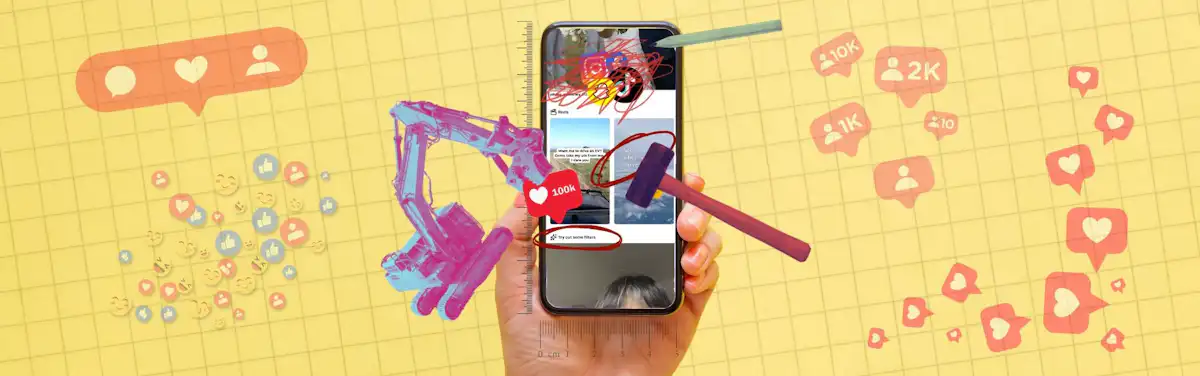
Piyush Tiwari, The University of Melbourne; Godwin Kavaarpuo, The University of Melbourne, and Samuelson Appau, Melbourne Business School Whether using newspaper or television ads, posters or signposts on the front lawn, the mechanism for selling a home has been the same for many decades: broadcast the message to the crowd and hope the right person finds it. Even the rise of modern online listing platforms, such as Domain and realestate.com.au, did not change this basic approach. But social media has revolutionised the scene. Algorithms can actively find prospective buyers based on user behaviour and serve them content, sometimes before they intend to buy a house. Social media has even allowed some home sellers to advertise properties all by themselves, and circumvent real estate agents altogether. So, how has social media changed the real estate game? And for agents or individual sellers thinking about using it, what are some pros and cons? Selling in the social eraIn 2015, Nic Fren, a Sydney-based real estate agent, reportedly became the first Australian real estate agent to list and sell a property exclusively on Facebook. That makes the use of social media for home sales relatively new. To advertise a house the traditional way, you have to deal with a gatekeeper. Listing on a site such as Domain or realestate.com.au is permission-based. Not only do you have to follow certain rules, it typically costs a significant amount of money. The fees for advertising on Australia’s big real estate platforms are some of the highest in the world. Both major platforms have increased their prices significantly over the past five years. But social media is decentralised, with no gatekeepers or major fees. Combined with the potential to reach a broader market, this makes it highly attractive to many agents and sellers. For home sellers looking to bypass using a real estate agent entirely through so-called “for sale by owner” listings, social media can help reach a large audience at a low cost. Agents can build a brandSocial media doesn’t just offer a new way to advertise properties. It also lets real estate agents foster personal relationships and build trust with potential clients. This is part of agents’ social capital. Instead of just selling homes, they also educate and entertain. By doing so, many have captured more market share by building “celebrity-like” personal brands through their social media engagement with audiences. This is without having to wait until they have properties to sell. This content can catch people’s eye even when they’re just scrolling for fun. That means if they are later looking to buy, they can feel like they already “know” a particular agent. Amplifying exposureThere has been some international research on the impact of social media on property sales. A study from the United States found total Facebook likes, total links posted or shared, and total Facebook stories shared were positively related to real estate sales in Orange County, California. Most brokers are not yet replacing traditional platforms such as Domain or realestate.com.au with social media. For now, they are complementary. Over time, however, they could gradually become competing platforms – just as Facebook Marketplace has become to eBay and Gumtree. There are reports of some homes being sold after being advertised only on social media. On TikTok, the algorithm means you don’t need a huge following to go viral. Even small accounts can reach a huge audience. TikTok’s demographic is typically younger. For this younger generation of consumers, social media is becoming the first point of exposure to real estate listings. What are the risks?Because social media decentralises marketing and removes a centralised real estate platform, some safeguards disappear. Prospective buyers may have to do more work to verify listing details and avoid property scams. Social media may have heightened these risks of exposing buyers to misleading ads and non-existent properties. Australians lost A$43.2 million to property scams in 2024, up from $13 million in 2021. Fake listings and fraudulent settlement schemes (which trick buyers into transferring money to impersonated accounts) are some of the most common ways people are scammed. Navigating AIArtificial intelligence (AI) adds a new layer of complexity to real estate marketing. This technology is increasingly being used to generate content, such as listing descriptions. In the US, nearly half (46%) of realtors who are members of the National Association of Realtors use AI for this purpose. But there are ongoing concerns about how best to use it without introducing new risks to buyers. “Hallucinations” are one concern, where AI-generated descriptions may contain serious errors. Despite its limited use, an emerging trend is the use of AI to generate hyper-realistic images for marketing. This is another major concern, as these pictures can seriously misrepresent the property. Whether this influences buyer behaviour and impacts buyers is untested territory. Piyush Tiwari, Professor of Property, The University of Melbourne; Godwin Kavaarpuo, Lecturer in Property, The University of Melbourne, and Samuelson Appau, Associate Professor of Marketing, Melbourne Business School This article is republished from The Conversation under a Creative Commons license. Read the original article. |

Karisma Kapoor 'honoured' to be a part of a round table attended by Queen of Jordan (2026-02-27T13:42:00+05:30)
 (Source Instagram) Mumbai, (IANS) Actress Karisma Kapoor took to her social media account to share a glimpse from her recent exclusive roundtable attended by Her Majesty Queen Rania Al Abdullah, further describing the experience as an ‘honour and privilege’. Karisma took to her social media account to post a group photograph from the private gathering, which saw a select group of successful women from different walks of life for a discussion on women’s empowerment, leadership. In the picture shared by Karisma, the actress is seen dressed in a soft yellow traditional ensemble, standing alongside Queen Rania Al Abdullah. Sharing the image, Karisma wrote, “It was an honour and privilege to be part of a private roundtable in the esteemed presence of Her Majesty Queen Rania Al Abdullah alongside such inspiring women engaging in heartfelt dialogue on women’s empowerment, leadership and the future.” She added, “Moments like these are a powerful reminder that when women come together with purpose, honesty and vision they don’t just shape conversations they help shape the future for the next generation. Grateful to have been part of something so meaningful.” Talking about Karisma Kapoor's Bollywood journey, the actress made her Bollywood debut with “Prem Qaidi” in 1991 and went on to become one of the leading stars of the 90s era of Bollywood. She delivered several hits including “Raja Hindustani”, “Dil To Pagal Hai”, “Biwi No.1”, “Hero No.1”, “Coolie No.1”, “Saajan Chale Sasural” and “Judwaa”. Apart from commercial projects, Karisma also earned immense critical acclaim for her powerpack performances in “Fiza”, “Zubeidaa” and “Shakti: The Power”. She had also won the National Film Award for Best Supporting Actress for “Dil To Pagal Hai”.On the personal front, Karisma married now late businessman Sanjay Kapur in 2003, post which she took a quick sabbatical from work. The couple has two children, daughter Samaira and son Kiaan. After a decade of marriage, Karisma and Sanjay went seperate ways and were granted divorce in 2016. Karisma Kapoor 'honoured' to be a part of a round table attended by Queen of Jordan | MorungExpress | morungexpress.com |