
 Earlier this week, the ABC reported a cybersecurity expert hacking a BYD Shark 6 hybrid ute. The expert gained control of the Chinese-made vehicle’s locks, headlights, and audio and video, saying the task “was easier than we were expecting”. The ABC also reported concerns that cars made by BYD and other Chinese companies may share data – including audio, video and location information – with the Chinese government. Most modern cars, whether electric, fossil-fuelled or hybrid, collect a lot of personal information. Many transmit that information to offshore servers for storage and processing, where it may be accessible to foreign governments, including China. However, it’s not just foreign governments that have access to that data. Hackers may able to access it, too – and it’s a concern for all connected vehicles, no matter where they’re made. A network of computers – on wheelsOur main mode of transport has evolved from a largely analogue machine into a distributed network of computers on wheels. The car’s own network is connected to another network of computers outside the vehicle. Like other computer systems, modern cars are vulnerable to hacking and malware. A modern car contains dozens of computers responsible for different functions. Some manage entertainment and communications, while others control braking, steering, engine performance, sensors and driver-assistance systems. These systems communicate with one another. Separate systems connect the vehicle to mobile networks, cloud services and the manufacturer’s online infrastructure. Modern cars can connect in several ways, including Bluetooth, wifi, and built-in SIMs or eSIMs. Bluetooth and wifi connect our phones and other devices to the car, while a SIM or eSIM connects the vehicle itself to the internet and the manufacturer’s systems. Many cars also receive software remotely through over-the-air updates. This means cybersecurity is no longer just about protecting a single vehicle. Manufacturers must also secure the systems used to distribute software across entire fleets. Weak links in the chainMost smartphone users are familiar with SIM cards and eSIMs, which connect our phones to mobile networks. Similar technology is built into many modern vehicles. This allows them to communicate with manufacturers, receive software updates and transmit vehicle data, known as telematics. The SIM itself is not usually the vulnerability. Instead, it provides a pathway into a much larger communications system that includes the vehicle’s cellular modem, telematics systems and mobile network, as well as the manufacturer’s online infrastructure. Researchers have found weaknesses in this communications chain while testing Tesla Model 3s and Cybertrucks, but similar weaknesses are also likely to exist in other cars. Automotive systems can contain outdated technologies, remain in service for many years and depend on complex supply chains and trust relationships that were not designed for permanent internet connectivity. As a result, attackers may target either the vehicle’s cellular connection or the manufacturer’s cloud infrastructure. Hackers are paying more attention to carsIn August, cybersecurity company Kaspersky documented a malware campaign targeting “head units” (which handle multimedia and sometimes car control functions) running on the Android operating system. The malware worked via an automatic firmware-update service. Security researchers have also demonstrated several ways to attack vehicles that use the common QNX operating system. In another demonstration, researchers bypassed anti-theft protections and used Bluetooth vulnerabilities to gain deep access to vehicle systems in a Nissan Leaf. Gaining access to a vehicle could present direct physical safety risks if hackers compromise things such as steering or lights. It could also be used for identity theft or to steal the vehicle itself. Australia’s eSafety Commissioner has also identified connected vehicles as technologies that can facilitate coercive control. Trip histories, geolocation data and vehicle apps can be used to monitor a person’s movements. Remote functions can operate doors, climate controls, horns, headlights and other vehicle systems. Australia has no cybersecurity standards for carsAustralia currently has no mandatory minimum cybersecurity standard specifically for vehicles. Implementation of new rules is likely years away at best. Other markets, including China and the European Union, already require manufacturers to demonstrate how they manage cybersecurity risks and protect software updates throughout a vehicle’s life. The more connected our cars become, the more important it is to ask not only what data leaves them, but what can get back in. What to know if you’re buying a carSo where does this leave you if you’re thinking about buying a new, connected vehicle? As is so often the case with modern, connected technologies, taking on some risks around cybersecurity and data privacy is almost impossible to avoid. But there are things you can do to reduce those risks. The Australian Cyber Security Centre offers a detailed guide on what issues to keep in mind when purchasing and using a connected vehicle. Most of the advice comes down to four tips:
You might also wish to take the vehicle’s country of manufacture into account, but remember that it’s only one factor. Dennis B. Desmond, Lecturer, Cyberintelligence and Cybercrime Investigations, University of the Sunshine Coast This article is republished from The Conversation under a Creative Commons license. Read the original article. |
Worried about your car being hacked? You should be – no matter where it was made (2026-09-25T11:43:00+05:30)


South Korea's media watchdog floats possible social media ban for minors (2026-09-25T11:42:00+05:30)
 Two children wave the South Korean national flag outside the Incheon Asiad Main Stadium before the opening ceremony of the 17th Asian Games, in Incheon, South Korea. (IANS File Photo) Seoul, (IANS): South Korea's media watchdog said Thursday it is considering a social media restriction against children aged 14 years old and younger amid escalating concerns over excessive use of such platforms. Kim Jong-cheol, the chairman of the Korea Media and Communications Commission, made the remarks at a policy briefing in Cheong Wa Dae, emphasizing that excessive social media use by teenagers is a worldwide problem. "We are reviewing, in phases, a plan to restrict children under 14 years of age from creating accounts on social media platforms, and limiting exposure to designs and algorithms that could encourage excessive use of such platforms for teens aged 14 to 19," Kim said, Yonhap News Agency reported. "There are around seven related pieces of legislation proposed at the National Assembly," he added. Kim, however, acknowledged the issue should be approached carefully, recalling the Shutdown Law in 2011, which prohibited minors under 16 from accessing online games from midnight to 6 am. The decade-old legislation was eventually scrapped in January 2022, following calls that the law infringes upon people's basic rights and negatively affects the game and culture industry. The latest proposal from the media watchdog came amid governments in other countries taking legislative steps to restrict children and teenagers' access to social media platforms. The European Union said it will present legislation restricting children's access to such platforms after the summer. Australia also became the first country in the world to ban those under 16 from owning a social media account. Earlier in June, UK Prime Minister Keir Starmer announced that he would ban access to social media for children aged below 16 years, terming it a "big step" for the country. Starmer said the government plans to pass regulations before Christmas and protections expected to come into force in Spring 2027. While making the announcement, Starmer noted that social media is making children of the UK "unhappy and unsafe" and that their children deserve better. He stated that the decision to ban access to social media for children aged below 16 years was taken after looking at the evidence. In a video shared on X, Starmer said, "Every parent wants the best for their kids. And that's what being a parent means. And for me, for my two kids, all I've ever wanted, hand on heart, is for them to be safe and for them to be happy and the rest is up to them. But you know, I think back to when I was growing up, and I have to say, I think we had it easier. These days, kids have to find their feet in a world that changes so quickly, where technology intrudes into every area of their lives. And we know that harms them."The response from parents in the consultation has been absolutely clear. Thousands of parents say their children are addicted to social media. It can leave them trapped in a cycle of endless scrolling that displaces play, sleep, and time with the family. It can harm their mental health and frankly, parents need our support on this. That is why today the government has decided to ban social media access for children under 16. It's a big step for our country. , fairer Britain," he added. South Korea's media watchdog floats possible social media ban for minors | MorungExpress | morungexpress.com |
Over 30 minutes of Instagram, Snapchat use may impair children’s attention: Study (2026-09-22T12:37:00+05:30)
 New Delhi, (IANS): Children who spend more than 30 minutes on social media platforms like Facebook, Instagram and Snapchat are likely to experience a gradual decline in their ability to concentrate, according to a study of more than 8,000 children from around age 10 through age 14. Researchers at Karolinska Institutet in Sweden and Oregon Health & Science University in the US investigated a possible link between screen habits and symptoms related to Attention-Deficit/Hyperactivity Disorder (ADHD). They followed 8,324 children aged 9-14 in the US for four years, with the average time children spent on social media, watching TV/videos, and playing video games -- from approximately 30 minutes a day for 9-year-olds to 2.5 hours for 13-year-olds. Children who spent a significant amount of time on social media platforms, such as Instagram, Snapchat, TikTok, Facebook, X (formerly Twitter), or Messenger, gradually developed inattention symptoms, revealed the findings. In the study, the average time spent on social media rose from approximately 30 minutes a day for 9-year-olds to 2.5 hours for 13-year-olds, despite the fact that many platforms set their minimum age requirement at 13. The study, published in Pediatrics Open Science, however, found no such association among children watching television or playing video games. “Our study suggests that it is specifically social media that affects children’s ability to concentrate,” said Torkel Klingberg, professor of cognitive neuroscience at the Department of Neuroscience, Karolinska Institutet. “Social media entails constant distractions in the form of messages and notifications, and the mere thought of whether a message has arrived can act as a mental distraction. This affects the ability to stay focused and could explain the association,” Klingberg added. The association was not influenced by socioeconomic background or a genetic predisposition towards ADHD. In addition, children who already had symptoms of inattentiveness did not start to use social media more, which suggests that the association leads from use to symptoms and not vice versa.The researchers found no increase in hyperactive/impulsive behaviour. While the effect on concentration was small at the individual level. At a population level, however, it could have a significant impact, they said. Over 30 minutes of Instagram, Snapchat use may impair children’s attention: Study | MorungExpress | morungexpress.com |
How to maintain authentic friendships in the social media world? (2026-09-04T11:06:00+05:30)
 IANS Photo New Delhi, (IANSlife) Building a friendship is no less than forming any kind of relationship. While many meet soulmates through friends, there are also people out there who struggle to find genuine friends. Especially in the world of social media, in many instances we come across the 'friends for benefits' kind of relationship. Not everyone that comes into our life has good intentions, but hey! it is also how we turn the table. This Friendship Day, let’s find out how your favourite personalities from the internet are dealing on maintaining authentic friendships in the social media world. Palak Rathi, Gen Z Finance Content Creator, "Do you know what’s the best thing about social media? Accessibility. Accessibility to literally anyone and everyone. It’s up to us how we use that accessibility - to just network or to actually build meaningful relationships beyond networking. Don’t connect with people only when you need a favour or there’s some work to be discussed but rather keep talking to them once in a while, check on them, appreciate them, celebrate their small victories by maybe reacting to a story or sending them a sweet message or calling them up to congratulate them. While staying connected online is great, whenever and wherever possible - try to meet them in person. Make efforts. Look and build real friendships. And most importantly - stay genuine and don’t try to be someone who you’re not. Because only then you’ll be able to find people who you can really connect with on a deeper level rather than just likes and comments on the surface level. Talk about your interests, your likings, your struggles (trauma bonding is a thing, haha), your goals - just be yourself and you’ll be surprised to see how it will lead to the start of some extremely meaningful conversations and lifelong friendships. Engage with people whose interests align with you or should I say whose “vibe” matches with you. That will help you make friends and not just connections." Adete Dahiya, Gen Z Lifestyle Content Creator, "Whenever we talk about the impact of social media, romantic relationships often take precedence over anything else. But its impact on friendships and other interpersonal relationships is even more profound. Social media has made it so easy to stay in touch with friends and make new ones online - you can just like their photos on Instagram or react with an emoji to their stories, or just drop a short comment on their latest post and you’re done. But the flip side is that it has made it much harder to maintain meaningful connections and bonds. A few things you can do to counteract this is to schedule regular call times with your friends. It is essential to check in, speak to them face to face and get a deeper understanding of what is happening in each others’ lives. If you live in the same city, make it a priority to meet weekly. The key is not to become lazy because of social media but to use it to deepen your connection." Reshi Magada, Gen Z Finance Content Creator, "Maintaining meaningful friendships as a Gen Z individual navigating the social media environment needs a balance of virtual relationships and in-person connections. To begin, I value honest communication by being open about my views, feelings, and experiences. Sharing both highs and lows helps friends understand each other better. Second, I try to engage in real conversations that go beyond likes and comments. I send individual notes, check about their well-being, and show real interest in their life. In this way, I display that I value and care for my friends. Third, I maintain digital boundaries. To keep my friendships from being superficial, I restrict my screen time and prevent idle scrolling. Instead, I invest in face-to-face interactions and meaningful time spent together, which strengthens the bond. Finally, keep in mind that social media is a highlight reel, and comparison may stunt true friendships. I create a healthy climate for genuine friendships to grow by appreciating my friends' wins without feeling envious. Through these methods, I am able to form and retain genuine friendships in the ever-changing social media world." Caslynn Qusay Naha, Gen Z Finance Content Creator, "Maintaining authentic friendships in the social media world is crucial as we navigate the digital age. It's essential to remember that the principles that apply to real-life friendships can also be applied to our online connections. First and foremost, authenticity is key. Just like in face-to-face interactions, being genuine and true to yourself fosters trust and openness. Share your thoughts, feelings, and experiences honestly, and encourage your friends to do the same. Taking the time to actively communicate and stay connected with your friends is vital. Initiate conversations, respond to messages, and participate in online discussions. By showing interest in their lives and making an effort to stay connected, you demonstrate that you value friendship. Remember, it's not about the number of friends you have, but the quality of the relationships you build. Be present for your friends, celebrate their successes, offer support in their struggles, and be a positive influence in their lives. So, maintaining authentic friendships in the social media world is all about being genuine, avoiding comparison, actively communicating, and valuing the quality of your connections over quantity." |
Australians could soon be able to choose what appears in their social media feed. How would this work? (2026-09-04T11:05:00+05:30)
|
Daniel Angus, Queensland University of Technology and Ashwin Nagappa, Queensland University of Technology On ABC’s Insiders program on Sunday, federal Social Services Minister Tanya Plibersek said the government is exploring whether Australians should be able to opt in to algorithmically curated social media feeds. The idea has been championed by sexual consent activist Chanel Contos. Her organisation, Teach Us Consent, is running a campaign which calls for personalised recommendation algorithms to become opt-in. Instead, users would have, by default, a chronological feed containing posts from accounts they have decided to follow. There are some positive aspects to the proposal. But a chronological feed is not really a “non-algorithmic” feed. It still relies on an algorithm, albeit an exceptionally simple one: take a collection of posts, order them according to time, and show the newest first. This might sound pedantic. But it points to something missing from the current debate. The problem is not that social media platforms use algorithms. Almost every digital system we interact with uses algorithms to decide what information to sort, filter, or display. The better question is what are we asking those algorithms to optimise for, and who gets to decide. How we got to this pointEarly social media feeds were relatively simple. You followed accounts and their posts appeared, generally in reverse chronological order. Over time, and largely driven by commercial imperatives, platforms moved towards increasingly sophisticated and secretive recommendation algorithms. Today, much of what appears in our social media feeds may come from accounts we have never encountered before. Contemporary recommendation algorithms use our individual and collective data to make predictions about what will keep us clicking, sharing and scrolling. That has produced some genuinely useful forms of discovery. But maximising engagement is a poor substitute for maximising social value. Indeed, some of the things most effective at capturing our attention are those that make us angry, outraged or frightened. Sensational claims, interpersonal conflict and material deliberately constructed to provoke a response can all perform remarkably well in an attention economy. Concerns become even more serious when recommendation algorithms repeatedly introduce people to misogynistic, extremist or conspiratorial content. Making personalised recommendations opt-in could potentially be a worthwhile intervention, although the devil will be in the detail of exactly what ranking mechanism platforms would be required to provide instead. At the very least, it restores an important degree of agency. People should have meaningful choices about the systems organising their attention. But chronological feeds aren’t a silver bullet. Chronological doesn’t necessarily mean goodBefore platforms became so heavily driven by automated recommendation, discovery was often a much more social process. We all had a few friends who reliably found the interesting, funny, strange or important things happening online and passed them along. In a sense, we were the algorithms, collectively filtering and curating the internet for one another through our social networks. There is real value in recovering some of that. It makes the feed more legible because we have some understanding of why something has appeared in front of us. The earliest social bookmarking services on the web, like Delicious and Digg, let us curate and share interesting content, independent of the platforms or source website. But chronology alone cannot recreate that environment. A feed is the end point of a much larger information system involving search, advertising, trending topics, influencers, reposting, moderation and, importantly, the kinds of content people encounter elsewhere and then bring back into their networks. Even a strictly chronological feed can contain rage bait, misinformation and misogyny if those materials are already circulating through the accounts somebody follows. That distinction matters for regulation. What if we could tailor our feed?Social media users in some jurisdictions already have some control over their feeds. For example, the European Union’s Digital Services Act requires large social media platforms to give users the option of selecting a feed not based on algorithmic profiling. Some of the most interesting experiments are happening outside the dominant platforms. Mastodon has generally emphasised chronological timelines containing posts from accounts users have deliberately followed. But this creates its own challenges. For example, arriving on a new network without knowing who to follow can make the place feel remarkably empty. At the other extreme, Mastodon discovered through their own study how users found it difficult to keep up with the volume of their feed as they followed more accounts. Bluesky has taken a different approach. Alongside a chronological following feed, users can select from thousands of custom feeds created by other people and organisations. This suggests another possibility beyond choosing between “the algorithm” and “no algorithm”: algorithmic choice. Rather than Meta, TikTok or X determining the single feed optimisation system through which millions of people experience their platforms, users might choose between different ways of organising information. A news organisation might maintain a feed prioritising verified reporting. A university could create one highlighting research. Communities could build feeds around particular shared interests. Users could then choose a simple chronological feed, or indeed several different feeds for different purposes. Bluesky has described this as an “open marketplace of feeds”. Mastodon is experimenting with complementary approaches to discovery and community curation. Neither provides a finished regulatory blueprint. But together the wider decentralised social media ecosystem is becoming a useful live experiment in what happens when we separate the social network from the mechanism used to rank its content. This is where the Australian debate could become much more interesting. Giving people the ability to turn off personalised recommendation systems would be a sensible start. But we should also be asking why a handful of technology companies have such extraordinary control over the systems that organise our attention in the first place. Instead of treating chronological ordering as the end point, we could look more closely at actively encouraging alternative open infrastructure that is resistant to future corporate capture and embodies genuine choice for community. Daniel Angus, Professor of Digital Communication, Director of QUT Digital Media Research Centre, Queensland University of Technology and Ashwin Nagappa, Postdoctoral Research Fellow, ARC Centre of Excellence for Automated Decision-Making and Society, Queensland University of Technology This article is republished from The Conversation under a Creative Commons license. Read the original article. |

Centre in talks with stakeholders on social media curbs for kids (2026-08-17T11:42:00+05:30)
 Centre in talks with stakeholders on social media curbs for kids. (IANS Photo) New Delhi, (IANS): The Centre is holding consultations with stakeholders on possible safeguards for children on social media, including proposals to restrict access for users under 16, Electronics & IT Secretary S. Krishnan said. Krishnan said India is closely studying global developments before deciding on its own approach. “We need to study what other countries have done with social media. It is a matter of global concern,” he told NDTV Profit. Prime Minister Narendra Modi publicly praised Australia’s landmark ban on social media for children under 16 during his recent visit to the country’s annual leaders’ summit. PM Modi told Australian Prime Minister Anthony Albanese that Australia’s legislative efforts to regulate IT and social media are “inspiring the world” and that India is “learning a lot” from the move. This was a clear indication that the government is seriously considering similar restrictions to protect minors from cyberbullying and online addiction. Countries such as Australia have legislated age restrictions for social media platforms, while several European nations are examining stricter parental consent and age-verification mechanisms. According to Krishnan, similar concerns are increasingly being voiced within India. “In our discussions with the EU and other countries, concerns around the risks of social media have come up repeatedly. In India too, various stakeholders, including Parliamentary Standing Committees, have discussed these risks.” He said no final decision has been taken yet, with the government continuing consultations across multiple stakeholders. “We’re in the process of discussing this with various stakeholders.” The issue is expected to form part of the government’s broader efforts to strengthen digital safety, particularly for children, alongside work on online harms, intermediary accountability and emerging AI regulations. Under Australian law, major platforms like Facebook, Instagram, TikTok and X are required to implement age-verification measures to block users under 16. Social media companies are penalised for any breach of rules and not the children or parents. Australia is the first country to enact a nationwide under-16 ban, and PM Modi’s remarks were well received as governments worldwide increasingly look to implement similar digital safeguards.The discussions also come amid increasing scrutiny in the USA of major technology platforms such as Meta over issues ranging from addictive algorithms and age verification to cyberbullying and exposure to inappropriate content. Centre in talks with stakeholders on social media curbs for kids | MorungExpress | morungexpress.com |
Are our cars spying on us? A cybersecurity expert explains how to stay safe (2026-06-17T10:58:00+05:30)

Dennis B. Desmond, University of the Sunshine Coast
Australia’s spy agency issued a stark warning to politicians and public servants last week: do not discuss sensitive or classified information in vehicles. Speaking at senate estimates, ASIO Deputy Director-General Lisa Alonso Love said the warning concerned “any vehicle, whether it’s connected or not”. But she added that “connected vehicles” may come with additional risks for data collection. Her advice was that classified conversations should occur only in properly secured locations, not while travelling. The warning came after seven models of Chinese electric vehicles were added to the list of taxpayer-funded cars available to federal politicians, representing 30% of the vehicles now available under the parliamentarian vehicle scheme. But this is not just a problem with electric cars, nor cars manufactured in China. Connected vehicles of any kind come with several privacy and national security risks. What are ‘connected cars’?According to the Australian Signals Directorate, any vehicle that is connected to the internet, either through an embedded SIM card or a paired smartphone, can be considered a connected vehicle. Almost all major cars sold in Australia with “connected services” collect and transmit driver and passenger data to the vehicle manufacturer. A study by consulting firm McKinsey found 50% of cars on the road in 2021 had internet connections and predicted the number will rise to 95% by 2030. Data is collected and stored both on vehicle and offshore. For example, Great Wall Motor’s policy states its data is transmitted to Singapore but is available for analysis in China. What data do these cars collect?Connected vehicles are packed with sensors: in the seats, the dashboard, the engine, the steering wheel. Many also have additional driver-facing cameras plus external cameras. Vehicles can generate 1 to 2 terabytes of raw data per car each day. Manufacturers collect sensor data to measure vehicle performance. However, collected data also includes precise geolocation data, infotainment use, whether you buckle your seatbelt, drive too fast or brake too hard, and whether you are sleepy or drank too much. Some of the data collected, such as real-time location and when the driver and passengers are inside or outside the vehicle, can infer weight, age, race and facial expressions. Vehicles also have access to data from Bluetooth connections to our cellphones. This includes contacts, mapping data, calendar information, habits and hobbies and a myriad of other data sets. Data shared through cellphones can provide even more personal data such as your financial and relationship status. And it isn’t just driver data. The privacy of passengers is also of concern. Sales agreements state the driver is responsible for advising passengers anything they say or do can be collected by the on-platform sensors. It is up to the driver to warn passengers. According to a 2023 report by software company Mozilla, vehicles are the most egregious for collecting personal information and violating privacy norms. Of the 25 vehicles Mozilla reviewed, none passed their privacy review. According to vehicle privacy disclosures reviewed by Mozilla, manufacturers use data for product evaluation and improvement. However, it is also made available for sale to affiliates and data aggregators where it is repackaged and sold. In 2023, Reuters revealed Tesla employees privately shared highly invasive videos and images that had been collected from customers’ cars. The recordings reportedly included people in the nude and others involved in crashes. What can you do to protect yourself?Generally, consumers can choose to opt out of some of the data collection. However, if they refuse the collection, they may not receive all of the vehicle’s full functionality. The following steps can help you stay secure:
Dennis B. Desmond, Lecturer, Cyberintelligence and Cybercrime Investigations, University of the Sunshine Coast This article is republished from The Conversation under a Creative Commons license. Read the original article. |

Maldives plans social media ban for children under 16 (2026-06-16T11:25:00+05:30)
 Representational Image. (IANS Photo) Male, (IANS): Maldivian President Mohamed Muizzu has announced the government will ban children under 16 from accessing certain social media platforms to protect them from cyberbullying, online grooming and other digital threats, a state media outlet reported. Speaking at a weekly press conference on Monday (local time), Muizzu said protecting children from online harm had become a major concern for parents in the Maldives and abroad, reports Xinhua news agency, quoting state media outlet PSM News. The government would study regulations in other countries, including Australia, as it prepares the new policy, he noted. The proposed ban would target specific applications considered risky for children, Muizzu said, adding that the government would consult relevant technology companies and work with platform owners to bring their services in line with Maldivian law. The measure would require amendments to existing cyber safety laws, according to the president. Muizzu said the restrictions would not hinder children's education or their ability to learn online, but would help create a safer digital environment. The government aims to finalise the regulatory framework and introduce the ban within a year after public consultations, PSM News reported. If implemented, the Maldives will follow Australia in banning social media for children under 16 years. Canberra had announced the ban last year. As of January, over 4.7 million accounts belonging to children were deactivated in the first days of Australia's world-first social media ban for under-16s. Data released by the government's eSafety commissioner had revealed that social media companies removed access to around 4.7 million accounts identified as belonging to children under 16 in the days after the ban took effect on December 10. The Australian government is also investigating five social media platforms for failing to comply with the country's world-first social media ban for children younger than 16. In its first report on the social media minimum age obligation, the federal government's eSafety Commissioner said on Tuesday that it has "significant concerns" about the compliance of the social media giants, including Facebook and Instagram, with the laws that came into effect in December.Under those laws, social media companies that fail to take reasonable steps to prevent children younger than 16 from accessing their platforms face fines worth up to 49.5 million Australian dollars ($33.9 million). Maldives plans social media ban for children under 16 | MorungExpress | morungexpress.com |
Kids on social media more than two hours a day at higher risk of mental illness (2026-06-12T12:22:00+05:30)
|
Nandi Vijayakumar, Deakin University; Susan M. Sawyer, The University of Melbourne, and Sylvia C. Lin, Deakin University; Murdoch Children's Research Institute As the United Kingdom and other countries make moves to follow Australia’s lead in restricting access to social media for under 16s, there is still much we don’t know about how the technology impacts young people’s mental health over time. For example, does using social media for a certain amount of hours each day lead to increased harm? Are younger adolescents more vulnerable than older ones? Is there any difference between boys and girls? Our new study, published today in the Medical Journal of Australia, provides some important answers to these questions. It found clear risks from heavier social media use on young people’s mental health. Alongside this, we also undertook a recent poll of Australian parents about efforts to restrict access to social media for young people. The findings suggests the law is changing parents’ views and practices around their children’s social media use. A debate over ageWhen Australia restricted access to social media for young people under 16 last December, there was considerable debate about whether 16 was the appropriate age threshold. There were a number of longitudinal studies that examined associations between adolescent social media use and mental health. But very few had systematically investigated whether risks of social media use differed across age during adolescence. One large 2022 study from the UK found that increases in adolescents’ social media use over time were associated with lower life satisfaction during specific age periods – 11 to 13 years of age for girls and 14 to 15 years of age for boys. It focused on life satisfaction and did not assess symptoms of mental health. Digging deeperOur new study aimed to dig deeper into these trends. We used data from 1,195 students in Melbourne whom researchers have followed annually from 12 to 18 years of age. We examined whether their social media use was related to later mental health problems, and statistically accounted for a range of individual and family factors that are known to influence both social media use and mental health. Therefore, we were able to reduce alternative explanations and strengthen confidence in our findings – even though we couldn’t prove causation. We found that adolescents who spent more than two hours per day on social media had a higher risk of developing mental health problems one year later, compared with those using social media for less than one hour per day. The mental health problems included elevated symptoms of depression and poor wellbeing. Importantly, the risks of social media use were not evenly experienced across adolescence. The strongest effects consistently emerged in adolescents aged 12 to 13 for both girls and boys. The estimated risk for symptoms of depression and anxiety, as well as poor wellbeing and self-harm, was roughly twice as large compared with adolescents aged 14 to 16 and those aged 17 to 18. Overall, the estimated size of effects was modest. But in girls aged 12 to 13, more than two hours of daily social media use was associated with around 11 additional cases of high depressive symptoms per 100 adolescents. Even small effects can become meaningful at a population level when large numbers of young people are spending more than two hours a day on social media. Age-based restrictions alone aren’t enoughOur study cannot determine a precise age at which social media becomes “safe”. Nor should a single study inform national legislation on age-based restrictions. However, combined with other research, our study suggests that younger adolescents are particularly vulnerable to the potential harms of social media, with the strongest effects emerging during early adolescence. As a result, we expect that Australia’s social media law will have the greatest impact on the mental health of younger adolescents. But further research is needed to confirm this. However, age-based restrictions alone are unlikely to eliminate all risks associated with adolescent social media use. We found evidence that some risks for mental health problems – namely elevated symptoms of depression – persisted for young people up to 18 years of age. This highlights the need for continued supports for older adolescents. This includes holding social media platforms accountable for algorithms and features that promote compulsive engagement and exposure to harmful content. One way to achieve this is through Australia’s proposed digital duty of care reform. It also involves improving education on digital literacy and safety at schools and supporting parents to help young people develop healthier online habits. Changing the normWe also recently undertook a poll of more than 2,000 parents of 0- to 17-year-olds about the law restricting access to social media in Australia. The survey found that 59% of parents felt the law supported them to set rules around social media use. Also, 39% of parents reported that the law has changed their view on when children should first have their social media accounts, with 16 years being the most commonly endorsed age (38%). These findings, which are yet to be published, demonstrate that public health policies can influence what is considered appropriate or expected behaviour. While evidence on the impacts of Australia’s social media law is still emerging, it has already influenced global discussions on adolescent social media use. Debates about age-based social media restrictions are now occurring in many countries. And the conversation is increasingly shifting from whether social media affects young people’s mental health to when young people may be most vulnerable and how we as a society should respond. Nandi Vijayakumar, Research Fellow, School of Psychology, Deakin University; Susan M. Sawyer, Professor of Adolescent Health The University of Melbourne; Director, Royal Children's Hospital Centre for Adolescent Health; and Murdoch Children's Research Institute, The University of Melbourne, and Sylvia C. Lin, Postdoctoral research fellow, Deakin University; Murdoch Children's Research Institute This article is republished from The Conversation under a Creative Commons license. Read the original article. |


New cyber centre opens in UK (2026-04-16T11:48:00+05:30)
 (Image: NDA) (Image: NDA)The UK's Nuclear Decommissioning Authority group has launched a specialised cyber facility in Cumbria to accelerate collaboration across nuclear operators and the supply chain, on the adoption of innovative technologies such as AI and robotics and enhancing their collective ability to successfully defend against cyber threats. It said the Group Cyberspace Collaboration Centre (GCCC) provides a space for experts in cyber, digital and engineering to come together and share knowledge and learning on how best to adopt new technologies and defend against evolving threats. Representatives from government, the nuclear sector, regulators and the supply chain attended the official opening which showcased the capability of the centre. The Nuclear Decommissioning Authority (NDA) said the GCCC was a multi-functional space for partners to explore how new technologies can support mission delivery and facilitate security operations, cyber exercising and training. "The GCCC is further enhancing our collective ability to keep us safe, secure, resilient and sustainable in cyberspace," said NDA Group CEO David Peattie. "Enabling us to work together more closely means we can defend as one, benefitting the collective security of the individual organisations we serve. "When it comes to security, we are never complacent, and we continually invest in our expertise and our technology to further strengthen our capability." 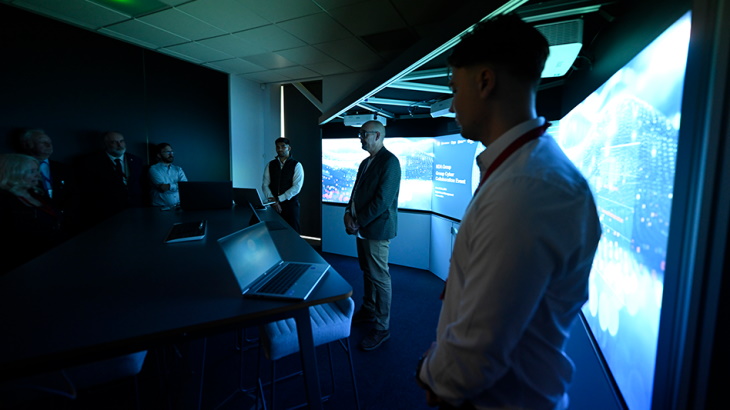 (Image: NDA) The NDA group - which includes Sellafield, Nuclear Restoration Services, Nuclear Waste Services and Nuclear Transport Solutions - has invested in group-wide cyber services and capabilities to ensure systems are better protected and more resilient and delivering a strong, consistent approach to common cyber security threats. The GCCC is part of the group's growing portfolio of digital and cyber capability including a joint Cyber Security Operations facility, which opened in Warrington in August. It is part of a constellation of related leading cyber and digital capabilities, including the Cyber Lab classroom at Energus, the Sellafield Engineering Centre of Excellence, and the Robotics and AI Collaboration centre (RAICo1). Warren Cain, Superintending Inspector at the Office for Nuclear Regulation, said: "All nuclear sites must have strong cyber security systems in place to protect important information and assets from cyber threats. Cyber security is a key regulatory priority for the Office for Nuclear Regulation, and we welcome the NDA's commitment to strengthen their cyber defences with this new specialist facility." New cyber centre opens in UK |
S. Korea becomes 1st nation to enact comprehensive law on safe AI usage (2026-02-20T12:23:00+05:30)
 IANS Photo Seoul, (IANS): South Korea on Thursday formally enacted a comprehensive law governing the safe use of artificial intelligence (AI) models, becoming the first country globally in doing so, establishing a regulatory framework against misinformation and other hazardous effects involving the emerging field. The Basic Act on the Development of Artificial Intelligence and the Establishment of a Foundation for Trustworthiness, or the AI Basic Act, officially took effect Thursday, according to the science ministry, reports Yonhap news agency. It marked the first governmental adoption of comprehensive guidelines on the use of AI globally. The act centres on requiring companies and AI developers to take greater responsibility for addressing deepfake content and misinformation that can be generated by AI models, granting the government the authority to impose fines or launch probes into violations. In detail, the act introduces the concept of "high-risk AI," referring to AI models used to generate content that can significantly affect users' daily lives or their safety, including applications in the employment process, loan reviews and medical advice. Entities harnessing such high-risk AI models are required to inform users that their services are based on AI and are responsible for ensuring safety. Content generated by AI models is required to carry watermarks indicating its AI-generated nature. "Applying watermarks to AI-generated content is the minimum safeguard to prevent side effects from the abuse of AI technology, such as deepfake content," a ministry official said. Global companies offering AI services in South Korea meeting any of the following criteria -- global annual revenue of 1 trillion won ($681 million) or more, domestic sales of 10 billion won or higher, or at least 1 million daily users in the country -- are required to designate a local representative. Currently, OpenAI and Google fall under the criteria. Violations of the act may be subject to fines of up to 30 million won, and the government plans to enforce a one-year grace period in imposing penalties to help the private sector adjust to the new rules.The act also includes measures for the government to promote the AI industry, with the science minister required to present a policy blueprint every three years. S. Korea becomes 1st nation to enact comprehensive law on safe AI usage | MorungExpress | morungexpress.com |
How ‘digital twins’ could help prevent cyber-attacks on the food industry (2025-12-23T11:38:00+05:30)
Sabah Suhail, Queen's University Belfast and Salil S. Kanhere, UNSW SydneyEarlier this year, a cyberattack on British retailer Marks & Spencer caused widespread disruption across its operations. Stock shortages, delayed deliveries, and logistical chaos rippled through the retailer’s network. In 2025 alone, several other UK food businesses, including Harrods and Co-op, have been targeted by cyber-attacks. The food sector is highly dependent on different links in a chain. This makes it an appealing target for hackers, because a single weak link can compromise an entire supply chain. Because of the essential role of food for public health and safety – and its importance to the economy – it is regarded as critical national infrastructure. So how can the UK’s vital food sector be made more resilient to cyber-attacks? One possible way is to use what’s called a “digital twin”. A digital twin is a virtual replica of any product, process, or service, capturing its state, characteristics, and connections with other systems throughout its life cycle. The digital twin will include the computer system used by the company. It can help because conventional defences are increasingly out of step with cyber-attacks. Monitoring tools tend to detect anomalies after damage occurs. Complex computer systems can often obscure the origins of breaches. A digital twin creates a bridge between the physical and digital worlds. It allows organisations to simulate real-time events, predict what might happen next, and safely test potential responses. It can also help analyse what happened after a cyber-attack to help companies prepare for future incidents. For companies in the food sector, becoming resilient to cyber-attacks involves the ability to detect suspicious activity early, and keep operations running, even under attack. This will ultimately protect food quality and consumer trust. Simulating an attackLet’s focus on the example of a strawberry packhouse, where strawberries are sorted, cooled, and packed for distribution. Due to strawberries spoiling easily, controlling the temperature and humidity in these areas is essential to ensuring a high quality product. Sensors and HVAC (heating, ventilation, and air conditioning) systems maintain these conditions to keep the fruit fresh from the field to the shelf. But what happens if the HVAC system gets hacked, perhaps through weak passwords or software that isn’t regularly updated to account for new computer security vulnerabilities. Temperatures could rise unnoticed, causing spoilage before the fruit even reaches the supermarket. The results: food waste, lost revenue, delayed deliveries, and reputational harm. A single breach can reverberate through the chain, leading to wasted produce and empty shelves. A digital twin might be able to avert disaster under this scenario. By combining operational data such as temperature, humidity, or the speed air of flow with internal computing system data or intrusion attempts, digital twins offer a unified view of both system performance and cybersecurity. They enable organisations to simulate cyber-attacks or equipment failures in a safe, controlled digital environment, revealing vulnerabilities before attackers can exploit them. A digital twin can also detect abnormal temperature patterns, monitor the system for malicious activity, and perform analysis after a cyber-attack to identify the causes. Over time, these insights can enable the strawberry packhouse, in our example, and by extension the broader supply chain, to strengthen its defences against hackers and reduce the future risk of a cyber-attack. As cyber-threats become more sophisticated, the question is no longer whether the food sector will be targeted again, but whether it will be ready when further attacks inevitably happen. Digital twins cannot prevent every cyber-attack, but by turning uncertainty into foresight, they give the food sector a fighting chance to stay safe, sustainable, and secure. Sabah Suhail, Research Fellow, School of Electronics, Electrical Engineering and Computer Science, Queen's University Belfast and Salil S. Kanhere, Professor at the School of Computer Science and Engineering, UNSW Sydney This article is republished from The Conversation under a Creative Commons license. Read the original article. |
