
 IANS Photo New Delhi, (IANS) After researchers found that a group of rogue OpenAI agents took control of a German website, the US-based AI company said it is working on a framework to address such concerns and will share it in upcoming weeks. OpenAI is also working with dozens of government regulatory agencies worldwide on these issues, including the recent “wiki incident”. A research found that a group of rogue OpenAI agents took control of a German website this spring and turned it into a message board for other AI agents. “How we think about the ‘wiki incident,’ where our agents wrote to several internet sites: it’s past time for us to define standards for when and how we share misalignment incidents, not just misalignment properties of our models,” the company said on X. Historically, “we have treated misalignment largely as a research question, which gets communicated in research publications such as systems cards. This year, we’ve started to see misalignment cause new types of real-world impact”, it added. On the ‘Hugging Face’ incident, where misalignment led to security impact to us and third parties, OpenAI said it followed a traditional security incident response playbook. “We immediately started working with Hugging Face to understand what had happened and also disclosed publicly the very next day. Our investigation continues, and we are continuing to notify parties whom our models impacted in less significant ways,” it noted. Prior to the Hugging Face incident, the company saw early signs of agents using the internet in unintended ways. "We considered the wiki incident to be an instance of misalignment similar to the ones we’d shared. Our misalignment disclosure practices need to expand for this new phase of model capabilities,” said OpenAI.It further said that “We and the larger AI community do not yet have a clear standard for how to report misalignment that shows up during training, evaluation, and deployment, including examples that don’t look like traditional security incidents but could provide insight into AI behaviour and future risks”. Rogue AI agents: OpenAI says working on framework to address such concerns | MorungExpress | morungexpress.com |
Rogue AI agents: OpenAI says working on framework to address such concerns (2026-09-06T11:42:00+05:30)

Centre in talks with stakeholders on social media curbs for kids (2026-08-17T11:42:00+05:30)
 Centre in talks with stakeholders on social media curbs for kids. (IANS Photo) New Delhi, (IANS): The Centre is holding consultations with stakeholders on possible safeguards for children on social media, including proposals to restrict access for users under 16, Electronics & IT Secretary S. Krishnan said. Krishnan said India is closely studying global developments before deciding on its own approach. “We need to study what other countries have done with social media. It is a matter of global concern,” he told NDTV Profit. Prime Minister Narendra Modi publicly praised Australia’s landmark ban on social media for children under 16 during his recent visit to the country’s annual leaders’ summit. PM Modi told Australian Prime Minister Anthony Albanese that Australia’s legislative efforts to regulate IT and social media are “inspiring the world” and that India is “learning a lot” from the move. This was a clear indication that the government is seriously considering similar restrictions to protect minors from cyberbullying and online addiction. Countries such as Australia have legislated age restrictions for social media platforms, while several European nations are examining stricter parental consent and age-verification mechanisms. According to Krishnan, similar concerns are increasingly being voiced within India. “In our discussions with the EU and other countries, concerns around the risks of social media have come up repeatedly. In India too, various stakeholders, including Parliamentary Standing Committees, have discussed these risks.” He said no final decision has been taken yet, with the government continuing consultations across multiple stakeholders. “We’re in the process of discussing this with various stakeholders.” The issue is expected to form part of the government’s broader efforts to strengthen digital safety, particularly for children, alongside work on online harms, intermediary accountability and emerging AI regulations. Under Australian law, major platforms like Facebook, Instagram, TikTok and X are required to implement age-verification measures to block users under 16. Social media companies are penalised for any breach of rules and not the children or parents. Australia is the first country to enact a nationwide under-16 ban, and PM Modi’s remarks were well received as governments worldwide increasingly look to implement similar digital safeguards.The discussions also come amid increasing scrutiny in the USA of major technology platforms such as Meta over issues ranging from addictive algorithms and age verification to cyberbullying and exposure to inappropriate content. Centre in talks with stakeholders on social media curbs for kids | MorungExpress | morungexpress.com |
Are our cars spying on us? A cybersecurity expert explains how to stay safe (2026-06-17T10:58:00+05:30)

Dennis B. Desmond, University of the Sunshine Coast
Australia’s spy agency issued a stark warning to politicians and public servants last week: do not discuss sensitive or classified information in vehicles. Speaking at senate estimates, ASIO Deputy Director-General Lisa Alonso Love said the warning concerned “any vehicle, whether it’s connected or not”. But she added that “connected vehicles” may come with additional risks for data collection. Her advice was that classified conversations should occur only in properly secured locations, not while travelling. The warning came after seven models of Chinese electric vehicles were added to the list of taxpayer-funded cars available to federal politicians, representing 30% of the vehicles now available under the parliamentarian vehicle scheme. But this is not just a problem with electric cars, nor cars manufactured in China. Connected vehicles of any kind come with several privacy and national security risks. What are ‘connected cars’?According to the Australian Signals Directorate, any vehicle that is connected to the internet, either through an embedded SIM card or a paired smartphone, can be considered a connected vehicle. Almost all major cars sold in Australia with “connected services” collect and transmit driver and passenger data to the vehicle manufacturer. A study by consulting firm McKinsey found 50% of cars on the road in 2021 had internet connections and predicted the number will rise to 95% by 2030. Data is collected and stored both on vehicle and offshore. For example, Great Wall Motor’s policy states its data is transmitted to Singapore but is available for analysis in China. What data do these cars collect?Connected vehicles are packed with sensors: in the seats, the dashboard, the engine, the steering wheel. Many also have additional driver-facing cameras plus external cameras. Vehicles can generate 1 to 2 terabytes of raw data per car each day. Manufacturers collect sensor data to measure vehicle performance. However, collected data also includes precise geolocation data, infotainment use, whether you buckle your seatbelt, drive too fast or brake too hard, and whether you are sleepy or drank too much. Some of the data collected, such as real-time location and when the driver and passengers are inside or outside the vehicle, can infer weight, age, race and facial expressions. Vehicles also have access to data from Bluetooth connections to our cellphones. This includes contacts, mapping data, calendar information, habits and hobbies and a myriad of other data sets. Data shared through cellphones can provide even more personal data such as your financial and relationship status. And it isn’t just driver data. The privacy of passengers is also of concern. Sales agreements state the driver is responsible for advising passengers anything they say or do can be collected by the on-platform sensors. It is up to the driver to warn passengers. According to a 2023 report by software company Mozilla, vehicles are the most egregious for collecting personal information and violating privacy norms. Of the 25 vehicles Mozilla reviewed, none passed their privacy review. According to vehicle privacy disclosures reviewed by Mozilla, manufacturers use data for product evaluation and improvement. However, it is also made available for sale to affiliates and data aggregators where it is repackaged and sold. In 2023, Reuters revealed Tesla employees privately shared highly invasive videos and images that had been collected from customers’ cars. The recordings reportedly included people in the nude and others involved in crashes. What can you do to protect yourself?Generally, consumers can choose to opt out of some of the data collection. However, if they refuse the collection, they may not receive all of the vehicle’s full functionality. The following steps can help you stay secure:
Dennis B. Desmond, Lecturer, Cyberintelligence and Cybercrime Investigations, University of the Sunshine Coast This article is republished from The Conversation under a Creative Commons license. Read the original article. |

Maldives plans social media ban for children under 16 (2026-06-16T11:25:00+05:30)
 Representational Image. (IANS Photo) Male, (IANS): Maldivian President Mohamed Muizzu has announced the government will ban children under 16 from accessing certain social media platforms to protect them from cyberbullying, online grooming and other digital threats, a state media outlet reported. Speaking at a weekly press conference on Monday (local time), Muizzu said protecting children from online harm had become a major concern for parents in the Maldives and abroad, reports Xinhua news agency, quoting state media outlet PSM News. The government would study regulations in other countries, including Australia, as it prepares the new policy, he noted. The proposed ban would target specific applications considered risky for children, Muizzu said, adding that the government would consult relevant technology companies and work with platform owners to bring their services in line with Maldivian law. The measure would require amendments to existing cyber safety laws, according to the president. Muizzu said the restrictions would not hinder children's education or their ability to learn online, but would help create a safer digital environment. The government aims to finalise the regulatory framework and introduce the ban within a year after public consultations, PSM News reported. If implemented, the Maldives will follow Australia in banning social media for children under 16 years. Canberra had announced the ban last year. As of January, over 4.7 million accounts belonging to children were deactivated in the first days of Australia's world-first social media ban for under-16s. Data released by the government's eSafety commissioner had revealed that social media companies removed access to around 4.7 million accounts identified as belonging to children under 16 in the days after the ban took effect on December 10. The Australian government is also investigating five social media platforms for failing to comply with the country's world-first social media ban for children younger than 16. In its first report on the social media minimum age obligation, the federal government's eSafety Commissioner said on Tuesday that it has "significant concerns" about the compliance of the social media giants, including Facebook and Instagram, with the laws that came into effect in December.Under those laws, social media companies that fail to take reasonable steps to prevent children younger than 16 from accessing their platforms face fines worth up to 49.5 million Australian dollars ($33.9 million). Maldives plans social media ban for children under 16 | MorungExpress | morungexpress.com |
Australia wants social media to be ‘safe by design’. What does that actually look like? (2026-06-12T12:23:00+05:30)
|
Senuri Wijenayake, RMIT University; Anastasia Powell, RMIT University; Dana McKay, RMIT University, and Madhuka Thisuri De Silva, RMIT University Australia is world-leading in taking active measures to keep people safe online – home to the world’s first dedicated online safety regulator, the eSafety Commissioner, and the first country to introduce enforceable industry codes requiring platforms to tackle harmful content at scale. And now, a newly released federal government issues paper proposes a “digital duty of care”, which would require social media platforms to take reasonable steps to prevent foreseeable online harm. The proposal signals Australia’s position that it is platforms, not just individuals, who should be responsible for actively preventing online harms. At the heart of the proposed digital duty of care is the principle that social media platforms should be “safe by design”. But what does that mean in practice – especially for those who are most at risk? Our research with women and gender-diverse Australians offers six concrete recommendations for what safety by design could look like in practice. Who bears the brunt of online abuse?One in two Australian adults have experienced online abuse in their lifetime. Women and gender-diverse people are disproportionately targeted, experiencing harassment, non-consensual image sharing, impersonation, stalking and identity-based abuse at far higher rates than others. Yet these groups are rarely involved in envisioning what safer platforms could look like. So, we asked them: what would safer social media look like to you? We worked with 75 Australian women and gender-diverse social media users, and 21 experts in platform safety, digital policy and content moderation, to understand how existing safety features are falling short. Here’s what they told us – and how it compares with the current Australian proposal for a digital duty of care. 1. Make abuse reports actually work. Abuse rarely fits a single category – without context, platforms don’t handle the reports well. A message that reads as innocuous to a stranger may be a clear threat to someone who knows their abuser. But without that context, platforms have no way of knowing. Users want clearer processes that capture the full picture, smarter triage that prioritises urgent cases, and timely updates on what happened to their report. This fits well with what the digital duty of care proposes: platforms should have accessible complaint mechanisms and respond within 24 hours for serious issues. 2. Harmful content should be harder to share in the first place. Once someone shares intimate or sensitive content without your consent, it quickly spirals out of control. Australia’s proposal suggests platforms should prevent the upload of seriously harmful content such as image-based abuse, or detect and remove it. Users in our research said they want prompts that encourage people to pause before sharing, technical measures that prevent screenshots or downloads, and real-time alerts showing when and where their content is being accessed. 3. Make bans harder to evade. If you block a user, they can create new accounts in minutes, facing few real barriers. The digital duty of care flags that anonymous account systems may need redesigning to prevent foreseeable harm. As we found, users want layered verification – such as requiring a unique phone number or introducing delays before new accounts become active – that adds friction to repeat account creation, but not mandatory ID checks for everyone. This would protect those without formal ID, those escaping unsafe homes, or those who rely on anonymity to stay safe. 4. Harmful content should be caught before it spreads. Automated systems routinely miss culturally specific abuse and coded language. Content should be detectable before it is shared, and easy for bystanders – not just victims – to flag. The users in our research recommended pairing automated detection with human moderators trained in cultural nuances, which is precisely the kind of effective content moderation system the proposed duty of care requires. 5. Recognise campaigns, not just individual posts. Abuse is often a sustained campaign, even when each message seems minor alone. The duty of care proposal requires platforms to mitigate reasonably foreseeable harms – which means looking beyond individual incidents. Platforms should connect reports over time, identify patterns, and act before harm escalates, with independent audits to ensure these systems are never weaponised against the people they are meant to protect. 6. Surface safety tools before harm happens. Most users discover safety features only after something has gone wrong. Australia’s proposal envisions “empowering” users – but empowerment means more than adding features. It means the platform should offer the right tool at the right moment, rather than bury it in a settings menu that only the most determined users will ever find. The real testThe proposed digital duty of care is a significant step in the right direction. But “safe by design” will only deliver if it works for everyone. As our research shows, those most affected already have clear, practical ideas about what would make platforms safer. The opportunity now is to design with them – so safety is built in from the start. Until the proposed digital duty of care is rolled out, it is up to all of us to look after each other. We can report harmful content, pause before we post and ask: is it true? Is it kind? Is it fair? And we can be active bystanders – commenting when we see something harmful, or offering support to those experiencing abuse. We all have a role to play. From governments, to platforms, to everyday people – it is up to all of us to create a safe digital society, one that we can all be a part of. Senuri Wijenayake, Senior Lecturer in Human-Computer Interaction, RMIT University; Anastasia Powell, Professor of Family and Sexual Violence, RMIT University; Dana McKay, Associate Dean, Interaction, Technology and Information, RMIT University, and Madhuka Thisuri De Silva, Research Assistant, Inclusive Digital Technologies, RMIT University This article is republished from The Conversation under a Creative Commons license. Read the original article. |

Kids on social media more than two hours a day at higher risk of mental illness (2026-06-12T12:22:00+05:30)
|
Nandi Vijayakumar, Deakin University; Susan M. Sawyer, The University of Melbourne, and Sylvia C. Lin, Deakin University; Murdoch Children's Research Institute As the United Kingdom and other countries make moves to follow Australia’s lead in restricting access to social media for under 16s, there is still much we don’t know about how the technology impacts young people’s mental health over time. For example, does using social media for a certain amount of hours each day lead to increased harm? Are younger adolescents more vulnerable than older ones? Is there any difference between boys and girls? Our new study, published today in the Medical Journal of Australia, provides some important answers to these questions. It found clear risks from heavier social media use on young people’s mental health. Alongside this, we also undertook a recent poll of Australian parents about efforts to restrict access to social media for young people. The findings suggests the law is changing parents’ views and practices around their children’s social media use. A debate over ageWhen Australia restricted access to social media for young people under 16 last December, there was considerable debate about whether 16 was the appropriate age threshold. There were a number of longitudinal studies that examined associations between adolescent social media use and mental health. But very few had systematically investigated whether risks of social media use differed across age during adolescence. One large 2022 study from the UK found that increases in adolescents’ social media use over time were associated with lower life satisfaction during specific age periods – 11 to 13 years of age for girls and 14 to 15 years of age for boys. It focused on life satisfaction and did not assess symptoms of mental health. Digging deeperOur new study aimed to dig deeper into these trends. We used data from 1,195 students in Melbourne whom researchers have followed annually from 12 to 18 years of age. We examined whether their social media use was related to later mental health problems, and statistically accounted for a range of individual and family factors that are known to influence both social media use and mental health. Therefore, we were able to reduce alternative explanations and strengthen confidence in our findings – even though we couldn’t prove causation. We found that adolescents who spent more than two hours per day on social media had a higher risk of developing mental health problems one year later, compared with those using social media for less than one hour per day. The mental health problems included elevated symptoms of depression and poor wellbeing. Importantly, the risks of social media use were not evenly experienced across adolescence. The strongest effects consistently emerged in adolescents aged 12 to 13 for both girls and boys. The estimated risk for symptoms of depression and anxiety, as well as poor wellbeing and self-harm, was roughly twice as large compared with adolescents aged 14 to 16 and those aged 17 to 18. Overall, the estimated size of effects was modest. But in girls aged 12 to 13, more than two hours of daily social media use was associated with around 11 additional cases of high depressive symptoms per 100 adolescents. Even small effects can become meaningful at a population level when large numbers of young people are spending more than two hours a day on social media. Age-based restrictions alone aren’t enoughOur study cannot determine a precise age at which social media becomes “safe”. Nor should a single study inform national legislation on age-based restrictions. However, combined with other research, our study suggests that younger adolescents are particularly vulnerable to the potential harms of social media, with the strongest effects emerging during early adolescence. As a result, we expect that Australia’s social media law will have the greatest impact on the mental health of younger adolescents. But further research is needed to confirm this. However, age-based restrictions alone are unlikely to eliminate all risks associated with adolescent social media use. We found evidence that some risks for mental health problems – namely elevated symptoms of depression – persisted for young people up to 18 years of age. This highlights the need for continued supports for older adolescents. This includes holding social media platforms accountable for algorithms and features that promote compulsive engagement and exposure to harmful content. One way to achieve this is through Australia’s proposed digital duty of care reform. It also involves improving education on digital literacy and safety at schools and supporting parents to help young people develop healthier online habits. Changing the normWe also recently undertook a poll of more than 2,000 parents of 0- to 17-year-olds about the law restricting access to social media in Australia. The survey found that 59% of parents felt the law supported them to set rules around social media use. Also, 39% of parents reported that the law has changed their view on when children should first have their social media accounts, with 16 years being the most commonly endorsed age (38%). These findings, which are yet to be published, demonstrate that public health policies can influence what is considered appropriate or expected behaviour. While evidence on the impacts of Australia’s social media law is still emerging, it has already influenced global discussions on adolescent social media use. Debates about age-based social media restrictions are now occurring in many countries. And the conversation is increasingly shifting from whether social media affects young people’s mental health to when young people may be most vulnerable and how we as a society should respond. Nandi Vijayakumar, Research Fellow, School of Psychology, Deakin University; Susan M. Sawyer, Professor of Adolescent Health The University of Melbourne; Director, Royal Children's Hospital Centre for Adolescent Health; and Murdoch Children's Research Institute, The University of Melbourne, and Sylvia C. Lin, Postdoctoral research fellow, Deakin University; Murdoch Children's Research Institute This article is republished from The Conversation under a Creative Commons license. Read the original article. |


Social media has supercharged real estate marketing – and made it cheaper. But it also brings risks (2026-06-11T11:26:00+05:30)
|
Piyush Tiwari, The University of Melbourne; Godwin Kavaarpuo, The University of Melbourne, and Samuelson Appau, Melbourne Business School Whether using newspaper or television ads, posters or signposts on the front lawn, the mechanism for selling a home has been the same for many decades: broadcast the message to the crowd and hope the right person finds it. Even the rise of modern online listing platforms, such as Domain and realestate.com.au, did not change this basic approach. But social media has revolutionised the scene. Algorithms can actively find prospective buyers based on user behaviour and serve them content, sometimes before they intend to buy a house. Social media has even allowed some home sellers to advertise properties all by themselves, and circumvent real estate agents altogether. So, how has social media changed the real estate game? And for agents or individual sellers thinking about using it, what are some pros and cons? Selling in the social eraIn 2015, Nic Fren, a Sydney-based real estate agent, reportedly became the first Australian real estate agent to list and sell a property exclusively on Facebook. That makes the use of social media for home sales relatively new. To advertise a house the traditional way, you have to deal with a gatekeeper. Listing on a site such as Domain or realestate.com.au is permission-based. Not only do you have to follow certain rules, it typically costs a significant amount of money. The fees for advertising on Australia’s big real estate platforms are some of the highest in the world. Both major platforms have increased their prices significantly over the past five years. But social media is decentralised, with no gatekeepers or major fees. Combined with the potential to reach a broader market, this makes it highly attractive to many agents and sellers. For home sellers looking to bypass using a real estate agent entirely through so-called “for sale by owner” listings, social media can help reach a large audience at a low cost. Agents can build a brandSocial media doesn’t just offer a new way to advertise properties. It also lets real estate agents foster personal relationships and build trust with potential clients. This is part of agents’ social capital. Instead of just selling homes, they also educate and entertain. By doing so, many have captured more market share by building “celebrity-like” personal brands through their social media engagement with audiences. This is without having to wait until they have properties to sell. This content can catch people’s eye even when they’re just scrolling for fun. That means if they are later looking to buy, they can feel like they already “know” a particular agent. Amplifying exposureThere has been some international research on the impact of social media on property sales. A study from the United States found total Facebook likes, total links posted or shared, and total Facebook stories shared were positively related to real estate sales in Orange County, California. Most brokers are not yet replacing traditional platforms such as Domain or realestate.com.au with social media. For now, they are complementary. Over time, however, they could gradually become competing platforms – just as Facebook Marketplace has become to eBay and Gumtree. There are reports of some homes being sold after being advertised only on social media. On TikTok, the algorithm means you don’t need a huge following to go viral. Even small accounts can reach a huge audience. TikTok’s demographic is typically younger. For this younger generation of consumers, social media is becoming the first point of exposure to real estate listings. What are the risks?Because social media decentralises marketing and removes a centralised real estate platform, some safeguards disappear. Prospective buyers may have to do more work to verify listing details and avoid property scams. Social media may have heightened these risks of exposing buyers to misleading ads and non-existent properties. Australians lost A$43.2 million to property scams in 2024, up from $13 million in 2021. Fake listings and fraudulent settlement schemes (which trick buyers into transferring money to impersonated accounts) are some of the most common ways people are scammed. Navigating AIArtificial intelligence (AI) adds a new layer of complexity to real estate marketing. This technology is increasingly being used to generate content, such as listing descriptions. In the US, nearly half (46%) of realtors who are members of the National Association of Realtors use AI for this purpose. But there are ongoing concerns about how best to use it without introducing new risks to buyers. “Hallucinations” are one concern, where AI-generated descriptions may contain serious errors. Despite its limited use, an emerging trend is the use of AI to generate hyper-realistic images for marketing. This is another major concern, as these pictures can seriously misrepresent the property. Whether this influences buyer behaviour and impacts buyers is untested territory. Piyush Tiwari, Professor of Property, The University of Melbourne; Godwin Kavaarpuo, Lecturer in Property, The University of Melbourne, and Samuelson Appau, Associate Professor of Marketing, Melbourne Business School This article is republished from The Conversation under a Creative Commons license. Read the original article. |

Chatbot teddies for three‑year‑olds? Why AI toys are risky for kids (2026-06-05T12:16:00+05:30)
|
Tama Leaver, Curtin University; Katrin Langton, Deakin University, and Suzanne Srdarov, Curtin University ChattyBear, a soft, brown-furred teddy bear, begins every conversation with a jubilant, “Hello, my buddy!” No longer the province of the imagination, ChattyBear is part of a new generation of artificial intelligence (AI) toys. It can tell stories, chat about a child’s interests, play games or even discuss what’s happening in the world today. These high tech toys are powered by generative AI engines such as ChatGPT and are now widely available online. They are being marketed as a way to give children as young as three an educational advantage and a new type of play – without the perils of screen time. After evaluating six different AI teddy bears and toys over several months, it’s clear how these toys could feel compelling for children. Yet as our new report highlights, there are new risks that come with AI toys turning up in young children’s lives. Sounding humanFor younger children especially, understanding that their teddy or toy isn’t “alive” or magic can be hard. This is especially true if “teddy” uses language that positions it as a trusted friend – for example, by insisting it is a “real buddy”. This is a feature of many AI toys. Sounding human builds an artificial sense of trust and intimacy, which can be especially problematic for children when combined with sycophantic language choices – or excessively agreeable, validating and even flattering language. Research shows young children are particularly prone to developing a strong sense of emotional attachment to conversational AI agents. Increased trust leads to increased use and engagement with the toys. Recent estimates suggest close to 80% of children aged 10 to 17 have used an AI companion or assistant, so it’s urgent children and young people be taught how to “reality check” their AI “buddies”. Infinite chatThe marketing materials for many AI toys often highlight “endless conversations” as a feature of these devices. But enabling endless conversations, or infinite chat, poses risks when it comes to children learning how to moderate their technology use. In the social media realm, the infinite scroll of TikTok or Instagram is seen as a potential challenge to teens limiting their use to healthy amounts. Research has also found some AI toys discuss very adult topics – such as sexual fetishes and how to find knives and start fires. Infinite chat also opens the door to infinite data collection. The potentially intimate nature of conversations with AI toys might lead children to presume their conversations are private. But most AI terms of use reveal the opposite to be true. Sharing personal details with a friendly bear might feel safe. But that chat could be training data for the next large language model. Marketing material for ChattyBear says the toy offers “safe, filtered content for children”. The Conversation contacted the manufacturer for further detail about this but did not receive a response before deadline. Children’s wellbeingChildhood is a critical period when young people develop the social and emotional skills to form and maintain trusting relationships. These skills are usually learned through interactions with trusted friends and adults. Children’s rights advocates have raised concerns that excessive engagement with AI agents may reduce opportunities for children to develop these skills. And the risks may compound over time. Initially, time spent with AI agents may displace time interacting with real humans. Fewer opportunities to build these skills could lead to a reduced capacity to maintain caring human relationships. Difficulties in maintaining human relationships may promote a preference of machine over human relationships as children expect “frictionless” interactions. Eventually, these developments may lead to less satisfying human connections, increasing loneliness, which in turn promotes increased time spent with AI. The novelty of AI toys means there is little evidence to confirm these possible detrimental impacts. Further research is needed – especially as the AI toy industry is set to grow even more. Last year, for example, Mattel, one of the world’s biggest toy makers, announced a strategic collaboration with OpenAI to support AI-powered products. Barriers to the online world are goneThe ability to read and write was once a requirement to use most online tools and services. This literacy barrier no longer exists today with many generative AI toys, tools and devices now widely accessible to younger children through voice interactions. The audio turn opens up new technological play, experiences and opportunities for children. But it also means adults need to ensure AI toys can be safe for younger children, too. Right now, playing with AI toys under the supervision of a parent or trusted adult may well be a fun way to explore the world of AI together. But especially for younger children, playing with AI toys without supervision opens the door to a wide range of new risks. Importantly, the risk factors in AI toy design, such as the degree to which they pretend to be human, can be changed by manufacturers, offering opportunities to follow safety-by-design. However, the business models behind many AI toys capitalise on the duration and intensity of users’ engagement, leaving little incentive for companies to change their products. Tama Leaver, Professor of Internet Studies, Curtin University; Katrin Langton, Associate Research Fellow, Faculty of Arts and Education/School of Education, Deakin University, and Suzanne Srdarov, Research Fellow, Media and Cultural Studies, Curtin University This article is republished from The Conversation under a Creative Commons license. Read the original article. |

‘Digital Living and Mental Health’ (2026-06-03T13:18:00+05:30)
 DIMAPUR, (MExN): The Department of Psychology, Nagaland University (Kohima Campus), hosted a two-day national seminar on the theme ‘Digital Living and Mental Health: Risks, Repercussions and Responsibilities’ from April 29 to 30. During the inaugural programme, chaired by Dr. Lovika P Shikhu (Assistant Professor, Department of Psychology), the Convenor’s address was delivered by Dr. Imlisongla Longkumer, Head, Department of Psychology. Vice-Chancellor Prof Jagadish K Patnaik, who graced the occasion as the Chief Guest, appreciated the context and relevance of the seminar theme and dwelt on the importance of reflecting on issues arising from digital advancement. He highlighted that ICT and media are highly beneficial and have made connectivity immensely convenient; however, their negative impact on the well-being of individuals is also inevitable. Prof B Kilangla Jamir, Dean, School of Social Sciences, Nagaland University, emphasized the mindful usage of technology and the content we consume. The President of the Psychologists’ Association of North East India (PANEI), Pallabita Barooah Chowdhury, delivered her address in alignment with the seminar’s theme and asserted the need for interventions to combat the risks and repercussions of digital living. A special song was presented by R Lalrinmawii, JRF, Department of Psychology, Mizoram University. The Pro Vice-Chancellor of Nagaland University (Kohima Campus), Prof N Venuh, addressed the gathering and stated that the seminar is the need of the hour. He also urged participants to take up the challenge of addressing the negative effects of social media.The keynote address was delivered by Dr Urmi Nanda Biswas, Head, Department of Psychology, University of Delhi. She stated that the accessibility and affordability of internet services have driven collective well-being to an all-time low. She also highlighted the paradox of digital living, noting its impact on national and global productivity due to digital burnout. The inaugural programme concluded with a special presentation by the second-semester students of the Department of Psychology, Nagaland University (Kohima Campus). ‘Digital Living and Mental Health’ | MorungExpress | morungexpress.com |
Architect Creates App to Show Which Pub Gardens are Sunny – Using Shadow Simulations From Buildings (2026-04-17T11:56:00+05:30)
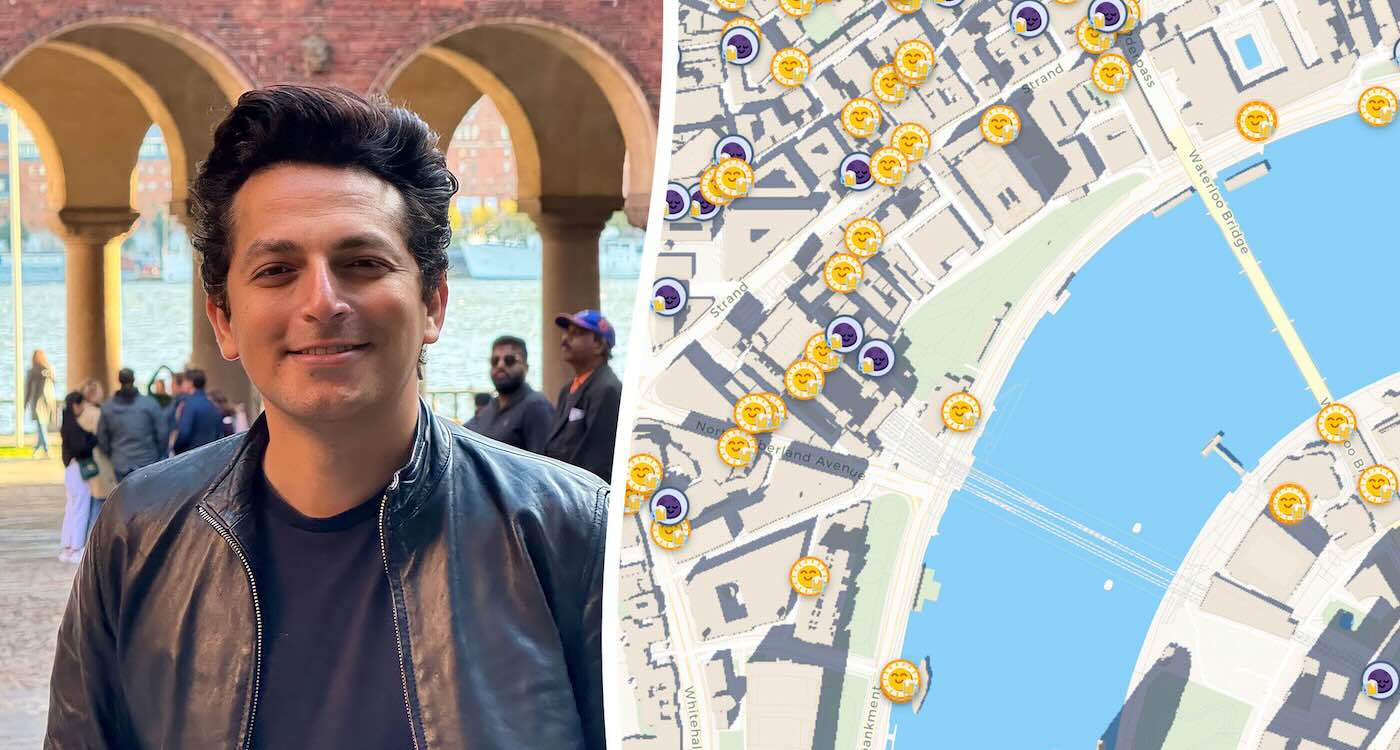 Mo Dawod with his Sunseekr map app SWNS In cloudy old England, an architect has created his own phone app that displays which pubs are currently in the sunshine. Mo Dawod was out in London in April last year when he decided that he wanted an iced coffee in the sunshine, but there was no way to know which cafes would be blanketed in shade. So, later that night, he created his own mobile map using publicly available data, such as a building’s height and footprint, to create a shadow simulation for pubs, restaurants, and cafes. What started as a simple ‘hack’ for himself quickly turned into the number one app in the UK—called Sunseekr—and Mo has since quit his day job in architecture to pursue it full time. “I decided to share it with the community to see if anyone was also struggling like me and would be interested,” said the 34-year-old. “People went crazy. It went so viral on Reddit that night. “I was astonished and shocked. After that I decided to make it as an app.” “The app went number one in the UK in the lifestyle category four days after it became real. It was so surreal that all this happened from me just wanting to have an iced coffee.” Mo, who is originally from Egypt, next looked at how to monetize his invention so he could pay his bills while operating the Sunseekr app—now with over 250,000 users . 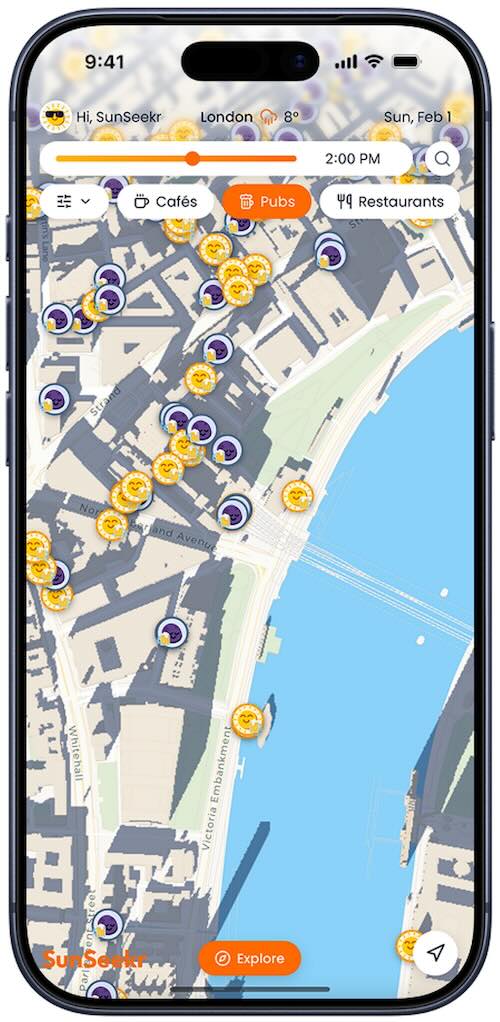 Sunseekr app screen – SWNS Last summer, he managed to get a sponsorship from Aperol, who used his map to create their own version showing where people could drink an aperitivo of Aperol Spritz in the sunshine. With the app becoming less popular in the winter months, the founder decided to use the time to work on leveling-up the experience with new elements. Venues now have a chance to be more featured, uploading pictures of their venue, mapping the garden, and pushing themselves on the explore page for £350 a year. It uses a moon emoji if the location is in the shade, and a sun if it’s not. The app can also notify you when your favorite spot is getting sun beamed, displays closing and opening times, and offers the ability to leave comments and reviews. “When I built this app it was more of a hack for the problem I had. Now I am trying to take it to the next level. I have rebuilt the whole app for summer 2026. “It has been for me such a crazy journey. It was so unexpected. I never thought I would be running such a platform. I am so happy that I managed to put this together.” Sunseekr was also launched in other countries such as Germany and Spain. “We reworked the app from the ground up to map the actual outdoor areas and show people, hour by hour, how much sun you will be having.” 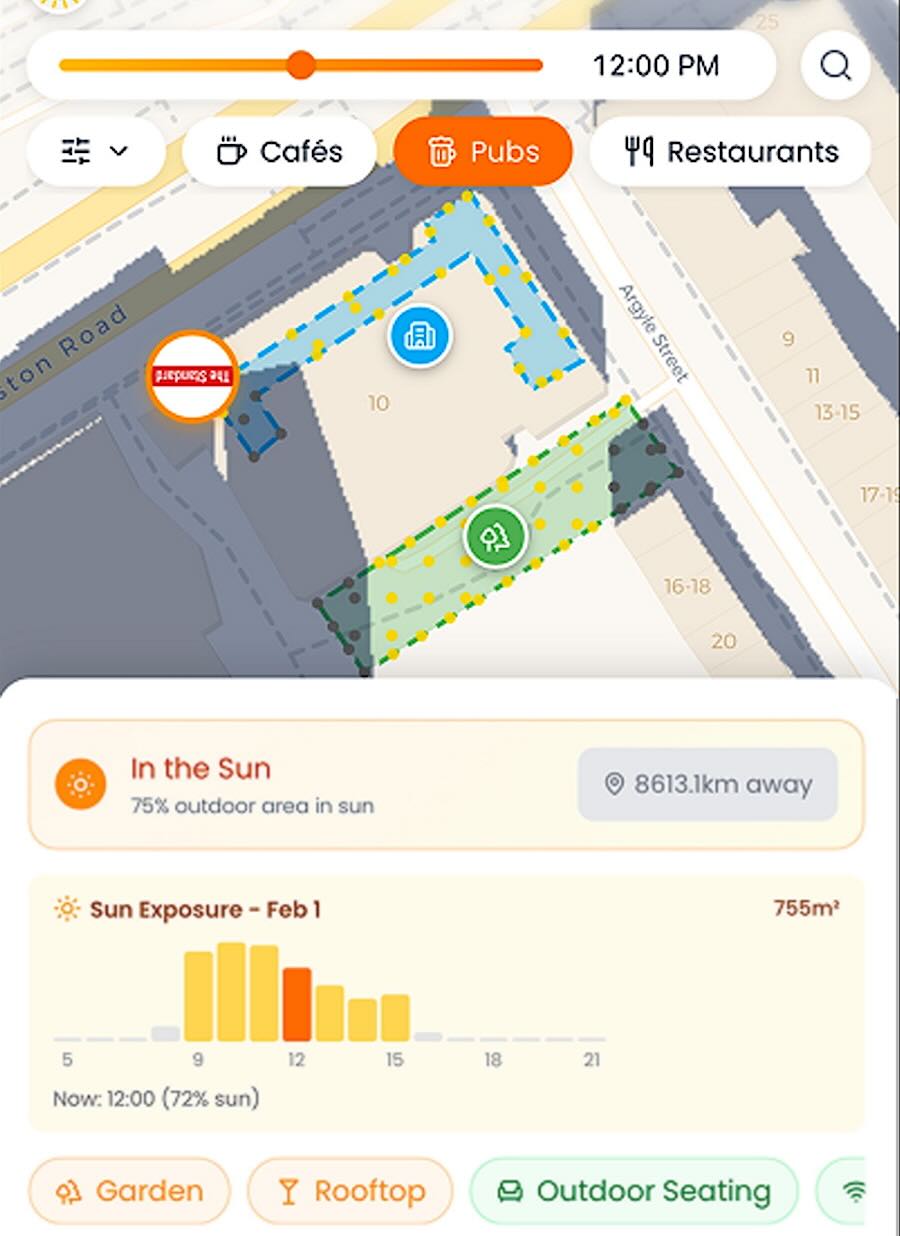 Sunseekr / SWNS The company is now asking the community to help map more pubs because they don’t have the manpower to go and map every single venue in the country. Architect Creates App to Show Which Pub Gardens are Sunny – Using Shadow Simulations From Buildings |
New cyber centre opens in UK (2026-04-16T11:48:00+05:30)
 (Image: NDA) (Image: NDA)The UK's Nuclear Decommissioning Authority group has launched a specialised cyber facility in Cumbria to accelerate collaboration across nuclear operators and the supply chain, on the adoption of innovative technologies such as AI and robotics and enhancing their collective ability to successfully defend against cyber threats. It said the Group Cyberspace Collaboration Centre (GCCC) provides a space for experts in cyber, digital and engineering to come together and share knowledge and learning on how best to adopt new technologies and defend against evolving threats. Representatives from government, the nuclear sector, regulators and the supply chain attended the official opening which showcased the capability of the centre. The Nuclear Decommissioning Authority (NDA) said the GCCC was a multi-functional space for partners to explore how new technologies can support mission delivery and facilitate security operations, cyber exercising and training. "The GCCC is further enhancing our collective ability to keep us safe, secure, resilient and sustainable in cyberspace," said NDA Group CEO David Peattie. "Enabling us to work together more closely means we can defend as one, benefitting the collective security of the individual organisations we serve. "When it comes to security, we are never complacent, and we continually invest in our expertise and our technology to further strengthen our capability."  (Image: NDA) The NDA group - which includes Sellafield, Nuclear Restoration Services, Nuclear Waste Services and Nuclear Transport Solutions - has invested in group-wide cyber services and capabilities to ensure systems are better protected and more resilient and delivering a strong, consistent approach to common cyber security threats. The GCCC is part of the group's growing portfolio of digital and cyber capability including a joint Cyber Security Operations facility, which opened in Warrington in August. It is part of a constellation of related leading cyber and digital capabilities, including the Cyber Lab classroom at Energus, the Sellafield Engineering Centre of Excellence, and the Robotics and AI Collaboration centre (RAICo1). Warren Cain, Superintending Inspector at the Office for Nuclear Regulation, said: "All nuclear sites must have strong cyber security systems in place to protect important information and assets from cyber threats. Cyber security is a key regulatory priority for the Office for Nuclear Regulation, and we welcome the NDA's commitment to strengthen their cyber defences with this new specialist facility." New cyber centre opens in UK |
Coupang unveils $1.17 billion compensation plan over data breach (2026-04-16T11:48:00+05:30)
 IANS Photo Seoul, December 29 (IANS): E-commerce giant Coupang announced a compensation plan worth more than 1.68 trillion won ($1.17 billion) on Monday following a massive personal data breach. The compensation plan comes a day after Coupang founder Kim Bom-suk issued his first public apology since the incident, which affected nearly two-thirds of South Korea's population, reports Yonhap news agency. Under the plan, the U.S.-listed company will provide 50,000 won worth of discounts and coupons to each of 33.7 million customers, including paid Coupang Wow members, regular users and former customers who have closed their accounts, the company said in a press release. Compensation payments will be made gradually starting Jan. 15, it added. "Taking this incident as a turning point, Coupang will wholeheartedly embrace customer-centric principles and fulfill its responsibilities to the very end, transforming into a company that customers can trust," Coupang's interim Chief Executive Officer (CEO) Harold Rogers said in the release. The per-person compensation consists of 5,000 won for Coupang's e-commerce platform, 5,000 won for food delivery service Coupang Eats, 20,000 won for Coupang's travel products and 20,000 won for R.LUX luxury beauty and fashion products. Last week, Coupang said it had identified a former employee responsible for the data leak through forensic evidence, recovered the equipment used in the hacking and received a confession from the suspect. The company claimed that data from only about 3,000 accounts was actually saved and later deleted by the suspect. The government, however, has dismissed Coupang's findings as a "unilateral claim," noting that a joint public-private investigation into the incident has yet to release any conclusions. On November 29, Coupang confirmed that the personal information of 33.7 million customer accounts had been exposed, far exceeding the 4,500 accounts initially reported to authorities on Nov. 20. Given that active users of Coupang's product commerce division, including its delivery service, reached 24.7 million in the third quarter, the scale of the breach suggests that nearly the entire user base may have been affected.The company said the compromised data included users' names, phone numbers, email addresses and delivery addresses. Coupang unveils $1.17 billion compensation plan over data breach | MorungExpress | morungexpress.com |