Asian Indian Chamber of Commerce and WBEC Metro NY host AI and Cybersecurity Summit (2025-06-14T12:25:00+05:30)

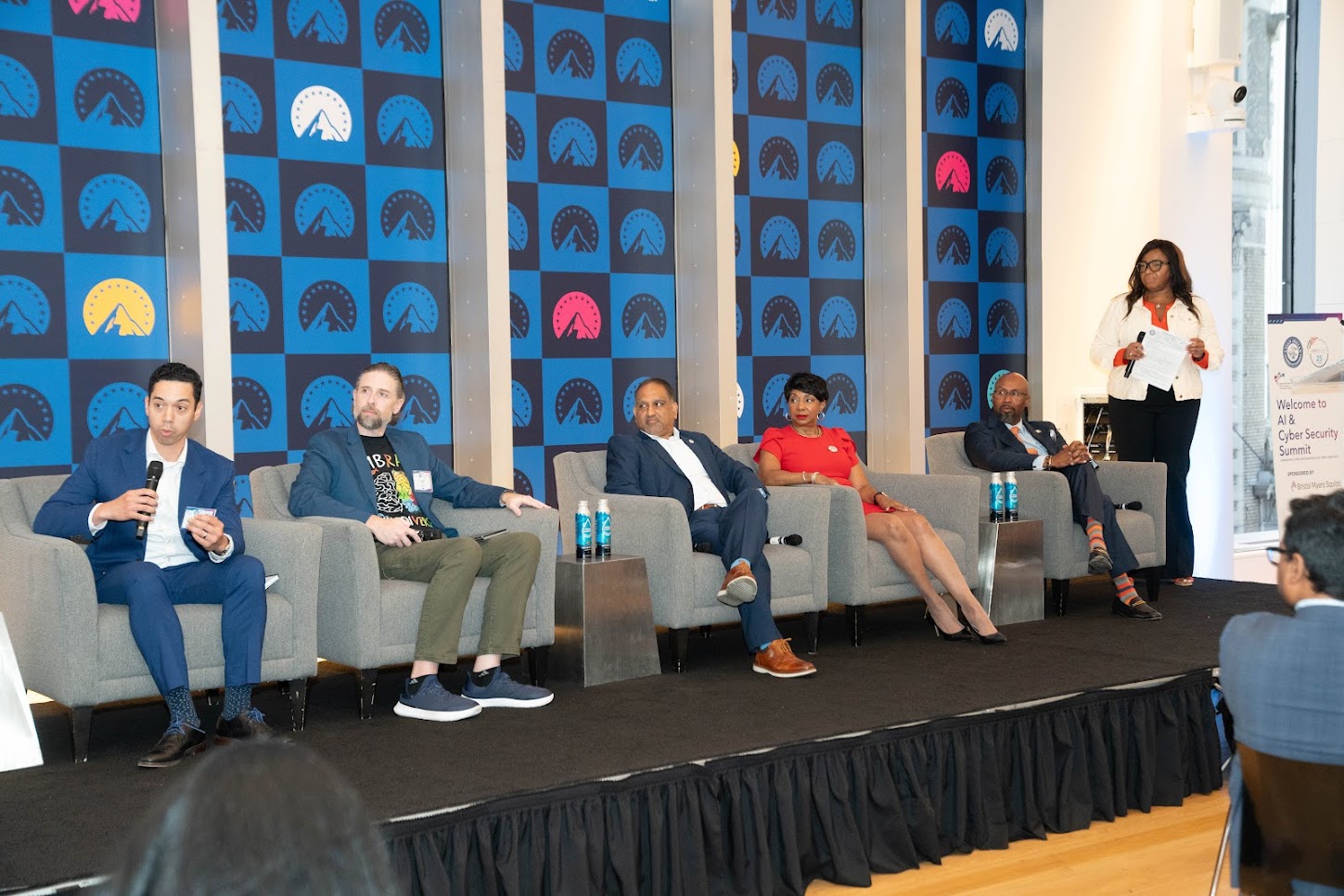
Cyber panel at AICC event June 7, 2024. From left, Joshua Moses – JP Morgan Chase Executive Director, Global Head of Client Engagement Management, Cybersecurity & Technology Controls, David Wild – Amazon Principal Tech Advisor – Procurement Technology, Bhavesh Patel – Sanofi Senior Director of Security Services & Technology, Angela Dingle Ex-Nihilo Management/ WIPP President & CEO, Steven Jones – EY Executive Director, Advisory Services, Charlene Vickers Johnson & Johnson Director, Supplier Diversity & Inclusion. PHOTO: Deval Parikh

The Asian Indian Chamber of Commerce (AICC), in collaboration with WBEC Metro NY, recently hosted a sold-out AI and Cybersecurity Summit at event host, Paramount’s headquarters in Times Square, June 7, 2024. Organizers called it a “resounding” success.

Themed “Harnessing AI and safeguarding our cyber landscape” the summit brought together industry leaders, experts, and diverse and small businesses from around the globe, a press release from AICC (AICC.net) said.

The daylong event, sponsored by Bristol Myers Squibb featured distinguished guests including Deputy Commissioner for Trade, Investment and Innovations at the NYC Mayor’s Office for International Affairs Dilip Chauhan, and Amruta Fadnavis, Second Lady of Maharashtra and VP of Axis Bank, India.
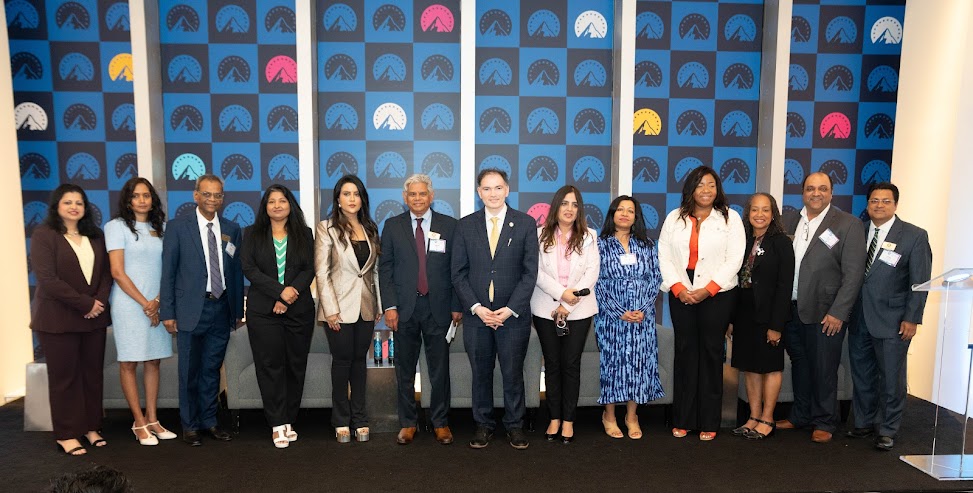
Board of Directors and Advisory Board at AICC event June 7. From left, Sundari Pai Luts Bristol Myers Squibb Advisory Board Member, Rekha Parthasarathy AICC VP Operations, Chetan Wattamwar AICC Board Member, Rakhi Agarwal Sanofi Advisory Board Member, Amruta Fadnavis Axis Bank Second lady for Maharashtra, VP at Axis Bank, Rajeev Krishna AICC President, Dilip Chauhan New York State Deputy Commissioner of Trade, Investment & Innovation, Komal Dangi AICC VP Growth & Strategy, Shachi Rai Gupta AICC Board Member, Charlene Vickers Johnson & Johnson Advisory Board Member, I. Javette Hines Citi Advisory Board Member, Harry Mehta AICC Board Member, Parag Nevatia AICC Secretary. PHOTO: Deval Parikh

A fireside chat featuring Chauhan and Fadnavis was moderated by I. Javette Hines, global head, Supply Chain Development, Inclusion & Sustainability, Citi. The conversation highlighted AI and cybersecurity’s impact on New York City and India’s economic growth with a focus on supporting women owned businesses in rural areas and their cyber hygiene.

Chauhan spoke about New York city’s investment in cybersecurity and the establishment of the AI advisory committee in 2023. Fadnavis emphasized empowerment of small and women owned businesses especially those in local rural areas and protecting their earnings through proper securities and AI supported programs.

The cybersecurity panel was moderated by Charlene Vickers, director, Supplier Diversity at Johnson & Johnson and included panelists: Angela Dingle: President & CEO, Ex-Nihilo Management/ Women Impacting Public Policy, Bhavesh Patel: Senior Director of Security Services & Technology, Sanofi; David Wild: Principal Tech Advisor – Procurement Technology, Amazon; Steven Jones: Executive Director, Advisory Services, EY and Joshua Moses: Executive Director, Cybersecurity, JPMorgan Chase & Co..
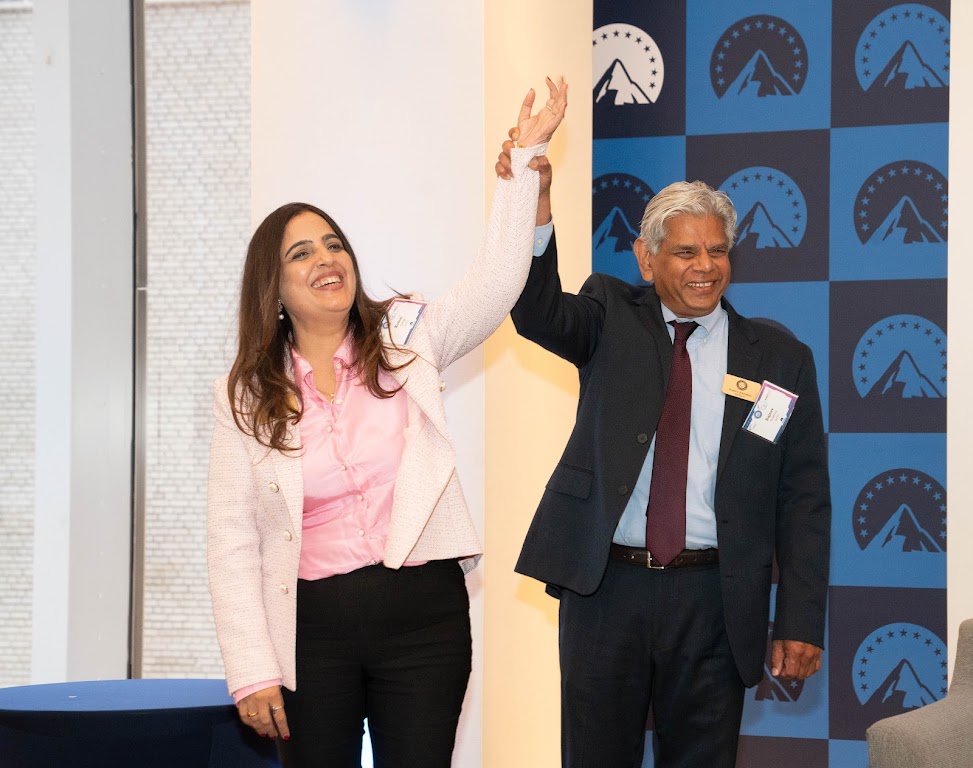
Komal Dangi AICC VP Growth & Strategy, Rajeev Krishna AICC President. PHOTO: Deval Parikh

The panel on artificial intelligence was moderated by Brooke Dito, senior director, Business Partner – IT for Enterprise, Bristol Myers Squibb and included panelists, Avinob Roy: VP, GM – Analytics and Information Management, Commercial Solutions, IQVIA; Jennifer Oakes: SVP Global Sourcing, Technology and International Sourcing, Paramount; Jordon Morrow: SVP, Data & AI Transformation, AgileOne and Tonya Edmonds: Director, Procurement Digital Services, Johnson & Johnson.

The panels provided a platform for insightful discussions on the latest advancements in AI and cybersecurity, emphasizing their growing importance in today’s digital economy, transformative impact on various industries, as well as opportunities for small and diverse businesses.

Exhibitors showcased their innovative and technology solutions related to the summit topics to attendees and executives at the event.

“The overwhelming response to the summit underscores the importance of AI and cybersecurity and the power of collaboration between advocacy groups such as AICC and WBEC Metro NY,” Rajeev Krishna, president of AICC is quoted saying in the press release.

Komal Dangi, event co-chair and Vice President of AICC, said, “We look forward to many such collaborations to empower our diverse and small business communities as we continue to grow globally.”Chauhan presented Citations from Mayor Adams honoring the achievements and contributions of supplier diversity champions and advocates including Sandra Eberhard, President & CEO, WBEC NY, Rose Hatcher, Director Supplier Diversity, Paramount and Rondu Vincent, Executive Director Global Supplier Diversity & Sustainability and Sundari Pai Luts, Senior Manager, Global Supplier Diversity, both from Bristol Myers Squibb. Asian Indian Chamber of Commerce and WBEC Metro NY host AI and Cybersecurity Summit

Cyber pandemic looming large as new crisis on the horizon (2024-03-01T15:01:00+05:30)

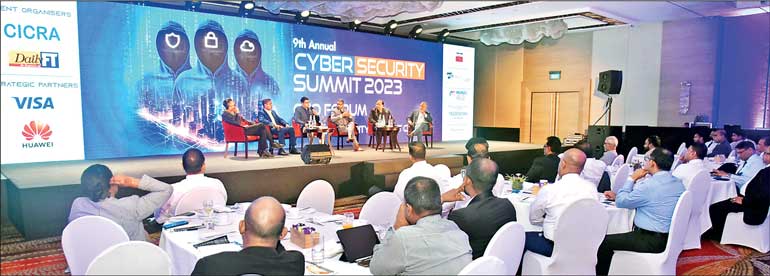
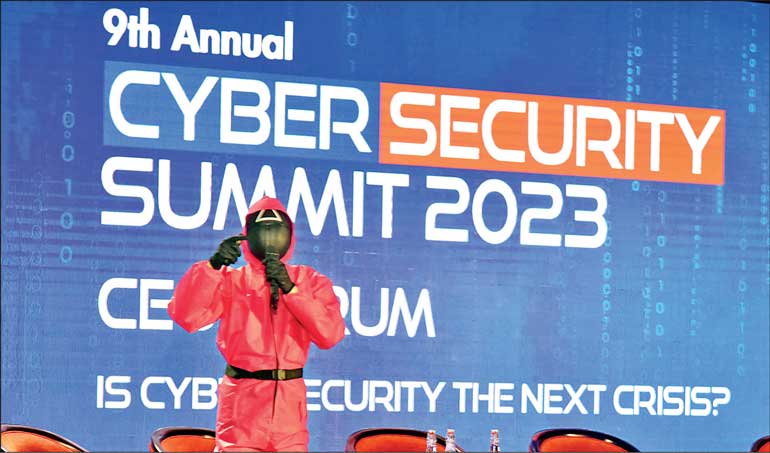
By Hiyal Biyagamage: In a world that is rapidly embracing digitalisation, the recent Daily FT-CICRA Cyber Security Summit CEO Forum shed light on why cybersecurity is poised to become the new crisis of the modern world. In an era marked by the rapid advance of technology, the digital revolution has become an unstoppable force. From how people communicate and work to how individuals shop and entertain, people’s lives are increasingly reliant on digital systems and networks. The widespread adoption of smartphones, the Internet of Things (IoT), and the migration of essential services to online platforms have all played a pivotal role in this transformation. The domino effect: Growing reliance on digital systems: Delivering the keynote address, Cybersecurity Evangelist and EC Council Master Trainer Belly Rachandianto said as people delve deeper into the digital age, they are entrusting more aspects of their lives to technology. “Personal data, financial transactions, healthcare information, and even critical infrastructure, like power grids and transportation systems, now depend heavily on digital networks. These digital systems’ convenience and efficiency are undeniable, but they come at a cost: our growing vulnerability to cyber threats.” “The inherent paradox in this digital age is that as our reliance on digital systems increases, so does our exposure to cyber threats. Malicious actors, ranging from state-sponsored hackers to cybercriminal organisations, continually evolve tactics to exploit vulnerabilities in our digital lives. Cyberattacks can range from data breaches and ransomware attacks to the compromise of critical infrastructure, and the consequences can be devastating, both on an individual and societal level,” said Rachandianto. Cybersecurity will be the next crisis: The convergence of these factors has set the stage for cybersecurity to become the new crisis that the world must grapple with, Rachandianto emphasised. Cyber threats pose risks not only to personal data and financial assets but also to the very fabric of the interconnected society. The potential fallout from large-scale cyberattacks on essential infrastructure, such as power grids or financial systems, can disrupt entire nations and compromise national security. “The call to action is clear. Business leaders, governments, and individuals must prioritise cybersecurity as essential to our digital lives. Investment in robust cybersecurity measures, education on digital hygiene, and international cooperation are all crucial steps to mitigate this impending crisis. Failure to do so could leave us vulnerable to a new form of warfare and chaos in the digital age.” “The time for action is now. The world is becoming increasingly digitalised, and our dependence on digital systems is growing. This, in turn, is making us more vulnerable to cyberattacks. If we fail to address this, we risk falling prey to a new form of crisis that can be just as destructive as any traditional threat. Let us take the responsibility today to secure our digital future and safeguard against the cybersecurity crisis that is knocking at our digital door,” said Rachandianto in conclusion. Insights from top panellists: Rachandianto’s keynote address was followed by an insightful panel discussion where several top cybersecurity experts from the region shared their views on what causes the cyber pandemic, the role of CEOs in an evolving world of cyber threats and the importance of cyber awareness. Google Cloud Security Regional Lead Anubhav Wahie said the cyber pandemic is becoming the perfect storm. He also said that it is compelling for organisations to realise how they define their postures within enterprises and how they have been running security operations if organisations still want to look at digital transformation. “We must understand how this cyber pandemic is becoming the perfect storm. For example, ransomware attacks are becoming a common issue for organisations. E-crime actors drive those. But there is something called the nation-state pivot, where nation-state actors bring down State infrastructure and focus on nation-state attacks. They are also interested in bringing down enterprises. We need to up our game and improve our security operations to handle those sophisticated attacks. Additionally, we need to accept that there is a whole data deluge and work towards it. With digital transformation, you will generate more data.” “Detection has always been an issue. You may go back to the world of security and look back at all the security controls you have; ask yourself how efficient you have been with your detection capabilities. Are you generating false positives? The answer is yes. Has it drastically changed? No. Imagine how this problem gets amplified when you are now looking at a data deluge in your organisation with so much data coming in. How will you scale and drive detections in that large data sphere created? It would be best if you had better analytics and better capabilities to scale with more data and syphon out those meaningful threats,” said Wahie. Regarding the importance of cybersecurity discussions at the board level, Visa India and South Asia Risk Services Head Vipin Suralia said, “More than ever, cybersecurity discussions at the board level are imperative for CEOs. First and foremost, it’s a matter of risk management. In today’s digital landscape, cyber threats pose significant risks to an organisation’s operations, finances, and reputation. Board-level conversations comprehensively understand these risks, their potential impact, and mitigation strategies. These discussions also address the financial implications, ensuring resources are allocated to safeguard the organisation and developing strategies to manage the financial fallout from a cyber-breach.” Suralia said, “Furthermore, cybersecurity is integral to an organisation’s strategic goals, and board-level discussions guarantee alignment between security strategies and broader business objectives. Decisions regarding resource allocation and investments are critical for boards, and cybersecurity necessitates investments in technology, staff training, and risk mitigation measures. By discussing cybersecurity at this level, CEOs ensure adequate resources are directed towards protecting the organisation against evolving threats. Emphasising accountability is also crucial, as board-level discussions underscore the responsibility of all stakeholders to prioritise security and risk management. Moreover, these discussions promote transparency, enabling board members to provide oversight and ensure the organisation takes necessary steps to protect itself from evolving cyber threats effectively.” PCI Security Standard Council South Asia and MEA Regional Director Nitin Bhatnagar said fostering cyber awareness within organisations and among employees is paramount in an ever-evolving landscape of cybersecurity threats. “Human-centric vulnerabilities make employees a critical target for cyberattacks, as they can inadvertently facilitate breaches. Cyber awareness programs play a vital role in mitigating this risk by empowering employees to recognise and respond to threats effectively. From phishing and social engineering to compliance and data protection, awareness training equips employees with the knowledge and skills to safeguard sensitive information and maintain legal compliance. Such training reduces the human factor’s susceptibility to cyber threats. It instils a culture of cybersecurity within the organisation, shifting it from reactive to proactive.” “Cyber awareness is instrumental in crisis preparedness, insider threat mitigation, and adapting to new technologies, ensuring that employees are well-prepared to respond to incidents and leverage digital tools securely. By fostering a cybersecurity-conscious culture, organisations create a dynamic, cost-effective line of defence that prevents data breaches and financial losses and builds resilience in the face of an ever-changing threat landscape. Continuous learning and adaptability are essential in this digital age. Cyber awareness is the linchpin that empowers employees to protect the organisation’s digital assets, making it an indispensable element in modern cybersecurity strategies,” Bhatnagar said further. During the panel discussion, CICRA Holdings Group Director/CEO Boshan Dayaratne said companies focusing solely on business continuity during the COVID-19 pandemic faced substantial challenges and risks without parallel attention to strengthening cybersecurity measures. “Rapid transitions to remote work arrangements, while essential for maintaining operations, created new vulnerabilities as employees operated from less secure home environments. These exposed organisations to a surge in cyberattacks, with malicious actors capitalising on the increased attack surface. Phishing, ransomware incidents, and data breaches became more frequent, especially targeting remote workers who were often less versed in cybersecurity best practices.” “The consequences of neglecting cybersecurity were significant. Data breaches, unplanned downtime, financial losses, and damage to an organisation’s reputation were among the outcomes. Companies grappled with the fallout of cyber incidents, often unprepared to respond effectively. Non-compliance with data protection and privacy regulations added financial penalties and legal complications. The lesson learned from this experience is that a holistic approach, encompassing business continuity and robust cybersecurity measures, is vital to navigate the challenges an evolving digital landscape presents, especially during extraordinary events like a pandemic,” opined Dayaratne. The CEOs Cyber Security Forum was followed by a full-day summit which focussed on three critical areas: Payment Card Industry Data Protection, Cloud Security, and Zero Trust. Strategic partners of the summit were Visa and Huawei. Official Payment Network was LankaPay, Official finance company partner was People’s Leasing and Finance PLC, Knowledge partners were PCI Security Standards Council and ISC2 Chapter Sri Lanka, Creative Partner was Mullenlowe and Hospitality partner was Cinnamon Grand. Pix by Upul Abayasekara  and Ruwan Walpola, Source: https://www.ft.lk/


GCW Udhampur organises lecture on cyber crime (2020-07-27T13:26:00+05:30)

UDHAMPUR: NSS units of Govt. College for Women Udhampur under the guidance of Prof. Subhash Chander, Principal Govt. College for Women Udhampur conducted the proceedings of 5th day of NSS Annual Special Camp. On this particular day a lecture was organized whereby Vijay Lakshmi, Senior Advocate, District Court Udhampur was the resource person for the session. She spoke on the topic "Cyber Crime vis-à-vis women." At the very outset she explained that cyber crimes are the crimes of similar intensity as other crimes happening in the society and therefore they should also be dealt with zero tolerance as far as women folk is concerned. The programme ended up with the vote of thanks was proposed by Prof. Sumita Rao, NSS programme officer, GCW Udhampur. In the late afternoon, volunteers paid a visit to Sial-Sallan, the adopted area of our NSS units whereby campers visited Govt. Middle School Sial Sallan. Besides interacting with Teachers and students of the school, volunteers also sensitized the stakeholders about the significance of Swachhta in our lives and presented a Skit on Superstition prevalent in our folk. Via the help of skit they propagated the message of non-believing in superstition and appealed the students to carry the same message to society. The session was coordinated by Prof. Sanjay Kumar, NSS programme officer, GCW Udhampur. At last the day was called off by reciting national anthem. Earlier the morning session began with light exercise, NSS clap, NSS song and drill in the college premises. Later, Dr. Pinky Sharma conducted sports session for the volunteers whereby they learned and practiced playing Volleyball, Kabadi and Kho-Kho in the college ground. Copyright © Jammu Links News, Source: Jammu Links News


Over 700 laptops given to students in Oman (2020-07-16T11:42:00+05:30)


Muscat: Al Rahma Association has distributed more than 700 laptops to students to help them with their educational needs after the decision to suspend studies due to the coronavirus pandemic.

Al Rahma Association for Motherhood and Childhood said in a statement: "The association has completed the distribution of more than 500 computers as a second stage of the education initiative to reach a total of 785 computers distributed to all governorates of the Sultanate."

The devices are delivered by the team to Oman Post offices in the various governorates of the Sultanate, after which the devices are distributed by mail to all students covered by the initiative, and an internet connection has been provided to all students with the contribution of Omantel.

"The association would like to inform all institutions and individuals that it is ready to receive donations for used and new computers, and it also receives cash amounts for purchasing computers for students," Al Rahma association added.Source: https://timesofoman.com

Sunset Vine delivers Lord’s cricket for social media (2016-12-08T15:40:00+05:30)

By Lord's Cricket Ground [Public domain], via Wikimedia Commons
Sunset+Vine, the UK independent TV sports production and media company, has confirmed its appointment by Marylebone Cricket Club (MCC) to deliver the Lord’s Cricket Ground YouTube channel as well as content across the Lord’s Facebook and @ Home of Cricket Twitter feed.

Sunset+Vine will be creating new content several times a week using a mixture of newly shot original content and by repurposing MCC’s extensive archive. YouTube specialist digital agency Diagonal View has been brought in by Sunset+Vine to handle channel management and optimisation requirements.

The new content is already offering ‘never seen before’ insights into cricket, which is proving massively popular for users. A GoPro camera was attached to Australian batting legend Adam Gilchrist’s helmet as he opened the batting in the recent MCC versus Rest of the World match at Lord’s.

Andrew Piller, Commercial Director at Sunset+Vine, commented: “There is nowhere more special to watch sport than at Lord’s Cricket Ground. The history and prestige associated with the ground is unmatched in sport. To have the opportunity to bring cricket enthusiasts from around the world closer to the spiritual Home of Cricket is a wonderful opportunity. Through the Lord’s Cricket Ground YouTube channel, not only will fans be able to unearth a treasure chest of archive footage but they will also have unprecedented access and insight from the stars of the game, both past and present. In the soft launch period we have had to date, we have seen that the new approach is being very well received.”Source: http://advanced-television.com/

The Leadership on a Safe and Secure Cyberspace (2015-06-14T17:07:00+05:30)


Kang Seong-ju, Director-General of IT Strategy Bureau at the MSIP
By Kim Yu-Na The first installment of “Leadership on a Safe and Secure Cyberspace” series The Korea IT Times will run the series “ Leadership on a Safe and Secure Cyberspace” from April to December. The first installment sets forth shortcuts to arming the SouthKorean cyber security industry with international competitiveness,and explores ways towards intentional cooperation. The installment revolves around an interview with Kang Seong-ju,director-general of the IT Strategy Bureau at the Ministry of Science, ICT and Future Planning, to shed light on the Korean government’s policy directions following the passing of amendments of the Personal Information Protection Act.  The building of a virtuous cycle in the Korean data protection industry necessitates the nurturing of talent, developing technology,amending laws and institutions. Recently, red flags have been raised about South Korea’s handling of cyber security. Korean banks, credit card companies,and telecommunications operators have had stolen customer personal information in the recent massive data leaks, caused by either web hacking or managerial negligence or both. New cyber security solutions have been initiated following such large-scale cyber security breaches, but shown to be ineffective by another round of data breaches. Fears of data leaks damaging national defense, in addition to individuals, have intensified. Yet, there is an upside: they served as a wake-up call to the government and the private sector. This very expensive lesson has prompted the nation to come to grips with cyber “security”before a potentially much worse cyber attack occurs. Kang Seong-ju, director-general of the IT Strategy Bureau at the Ministry of Science, ICT and Future Planning, takes a three-pronged approach towards information protection. First: nurture talent. “Experts on data protection technology are in high demand. Universities need to set up departments related to data protection to ensure a steady supply of cyber security experts to the market. And the nation’s cyber defense command needs to recruit more experts on protecting military data,” said Kang. The private sector also offers programs designed to train experts on data protection. For example, the Korea Information Technology Research Institute (KITRI)’s BOB (Best of best) program aims to produce cyber security leaders. BOB graduated 120 counter white hackers this year. BOB, the nation’s leading cyber security expert training program, was launched last year to produce quality cyber security experts with a sense of duty and a positive view about national security. Under the guidance of renowned cyber security experts, both domestic and international, those admitted to BOB are taught key technologies in each information protection area and go through cyber security awareness training. Second: develop technology. With studies on ubiquitous cyber threats like wiretapping, spamming,and smithing ,endeavors to develop new solutions to foil the latest evolving cyber threats should be urgently made. Governmentlevel efforts are underway in the country. The government is thrashing out ways to scale up budgetary support for the Electronics and Telecommunications Research Institute (ETRI),a government-backed agency, and for KAIST, and to assist universities and companies in nurturing talent and developing data protection technologies. Third: reform legal bodies and institutions. Moves to revise the Personal Information Protection Act are again afoot at the National Assembly in order to impose tougher penalties on companies and organizations guilty of negligent data protection. Above all, Director-General Kang underlined the importance of adopting an “information protection rating system,” whereby companies are rated based on their data protection level. The information protection rating system, based on voluntary self-regulation, is devised to encourage private companies,prone to cyber attack,to enhance their cyber security systems
Once this rating system is put in place, protected companies can use their high cyber security scores as a consumer marketing tool, thereby boosting sales and market share. On the whole, this rating system is expected to significantly improve Korean companies’ data protection levels. Taking on the global market by narrowing the gap with cyber security powerhouses and collaborating with developing nations. Varied missteps, such as technical limitations and personnel mismanagement, can be blamed for the previous data leaks. Despite continued monitoring, the leakage of specific traffic went undetected for a year. Furthermore, employees at cyber security contractors, hired to manage the customer databases for large companies, were poorly supervised. In response to continued public outcry about shoddy management of customer databases, affected companies’ top management bowed low in apologized to their angry customers. From a long-term perspective, South Korea must learn something from such bitter experiences in order to take the domestic data protection industry and technologies to the next level and to nurture the industry into one of the nation’s key export industries. To that end, domestic companies that specialize in data protection technology and home-grown technologies related to data protection must stay competitive. As global cyber security companies become notable names around the world after the investiture of time and energy to underscore their competitiveness, domestic cyber security companies have to strengthen their competitiveness;and the Korean government has to aid them in entering overseas markets through the provision of government assistance and global cooperation projects.  Preparations for global cooperation projects have occurred. A number of projects are occurring to help Korean cyber security companies make forays into overseas markets - for instance, a Korean-Kazak joint project for data protection and support for domestic companies’ participation in global data protection exhibitions. Such efforts will help reduce the gap between South Korea and advanced nations well prepared for cyber attacks,expediting the growth of domestic cyber security companies. At the Declaration Ceremony for Mutually-beneficial Cooperation on National Informatization, held in March, Director-General Kang mentioned, “Today’s declaration ceremony is designed to offer all participants in national informatization an opportunity to focus their minds before setting about the building of an ICT industry ecosystem and the advancement of national informatization.” In other words,the government, clients, suppliers and the public should communicate with one another for close cooperation at a critical juncture when the nation’s data protection industry is in bad need to make a stride forward. Hopes are pinned on the possibility that the South Korean data protection industry morphs into one of the nation’s key economic growth engines, which can lead the global market and enhance national competitiveness. KISIA actively supports Korean information security firms that advance into newly emerging markets The Korea Information Security Industry Association (KISIA) will place its 2014 focus on helping Korean information security companies advance into newly emerging markets, including Israel and the African continent. "With the importance of overseas projects by domestic information security companies growing, KISIA strives to expand their overseas markets from existing Japan, the U.S. and Southeast Asia, in to Israel and Africa this year," said KISIA chairman Shim Jong-heon. In an interview with Korea IT Times, Shim said, "In particular, domestic firms' entry into overseas markets is indispensible this year, considering the sluggish domestic market that resulted from the current economic slump. "Related to this, KISIA plans to participate in such global information protection exhibitions as the Security Show 2014 (Japan), ISC West 2014 (U.S.), IST 2014 (Japan) and Security China this year, while dispatching market exploration teams to Vietnam, Malaysia, Singapore, and Israel," he said. Noting that Korea's information security-related exports to Southeast Asia are steadily growing, Shim said, "I expect the domestic information security industry to achieve tangible results this year. "Through expansion of exchange cooperation between Korea and Israel, two leaders in information security, we plan to seek joint business
Shim Jong-heon, Chairman of the Korea Information Security Industry Association(KISIA)
opportunities and find bilateral cooperation models in the global market this year." Operation of a monitoring center to keep information protection KISIA plans to operate a monitoring center this year to help domestic information security companies receive due payment for maintaining information protection by strengthening monitoring activities for bidding offered by government agencies and public institutions, Shim stressed. "In line with this, KISIA will develop a guideline to calculate a proper ratio to maintain information protection and prepare a standard contract for information protection products and services," added Shim. In a separate move, KISIA is moving to expand skill-enhancing education and mentor school programs this year. "Last year, about 80% of graduates of the KISIA-operated mentor school succeeded in getting a job and over 400 incumbent workers in the information security sector finished the skill-enhancing education program, upgrading their skills and knowledge in the sector," he explained. KISIA plans to start the 2014 skill-enhancing education and mentor school programs on June 1 after developing on-the-spot curricula that reflect current technology trends. "Fostering talent in the information security field is very important as manpower shortage is serious for smaller, domestic, companies at present, despite the fact that information protection is emerging as a promising area," he noted. Steps to prevent security accidents. As a measure to prevent security accidents, Shim said, "As we acknowledged from the 2013 Korea Credit Bureau (KCB) case, enterprises should strengthen their supervisory function on staff members and enhance employees' ethics, while preparing institutional tools such as the bolstering of punishment against those who steal data, and compensation for damages." An employee from personal credit ratings firm KCB was arrested and accused of data theft from customers of three credit card firms while working for them as a temporary consultant last year. "For prevention of important data leakage, users' rights and responsibilities should be defined exactly and such rights and obligations should be managed through documentation and systematization," he pointed out. Mentioning that financial companies tend to excessively collect customers' information and manage them poorly, Shim said that they need to minimize the gathering of customers' information by removing unnecessary items and destroying information on personal affairs instantly, except those necessary for storage for a certain period. "Actually, most general companies are poor at investment and management in information security. Accordingly, if they pay more attention to basic facility investment, including firewall and virus vaccines, the ratio to prevent hacking will go up," he said. "The most important matter is the mind of all executives and staff, considering the fact that most information leakage has been made not on the outside but by in-house staff. As a result, a persistent education on information security is necessary," Shim said. Measure for development of domestic security software industry. "For development of domestic information security technology and software industry, securing enough of a budget related to information protection is very important. For instance, the U.S. has invested over 9% of the budget for informatization into the security field since 2007. In particular, the U.S. has increased the cyber security budget by a factor of six in 2013, from a year earlier," said the KISIA chairman "On the contrary, Korea's budget for information protection has so far witnessed no significant change from ₩270 billion in 2010. To develop information security technology, a drastic hike in the budget is essential," he said. Meanwhile, domestic information security companies exported products and services worth ₩70 billion in 2013, according to a KISIA survey. The breakdown is 70% or ₩49 billion to Japan; 7% or ₩4.9 billion to China; and 5% or ₩3.5 billion to the U.S. KISIA's role for international cooperation. "To secure leadership in the information security sector of a global society, KISIA has concluded a memorandum of understanding with information protection public institutions of many countries since 2009 including Malaysia, Japan, Vietnam, Thailand, the Philippines, Indonesia, Taiwan, and Singapore" he said. "Through close cooperation with such foreign institutions, KISIA plans to hold consultation meetings and help domestic information security companies expand business-to-business projects this year as part of its efforts to enhance their global competitiveness," he mentioned. Commenting that a growing number of Korean companies are showing a strong will to exchange technology and products with their counterparts in Israel, Shim said, "They seem to advance into the European market through close cooperation with Israel, not simply aiming at the Israeli market. The association plans to dispatch a market exploration team for information protection to Israel for the first time this year." Asked about his policy direction as a new KISIA leader, Shim said, "I plan to make KISIA an association covering not only member companies but also general information security firms. To this end, we will activate various section gatherings, including meetings of information protection-specialized companies, control specialists, export-oriented departments and common criteria certification councils." Source: Article

Delhi University to monitor social media campaigns (2015-03-20T11:48:00+05:30)


Ahead of the elections on September 12 for the Delhi University Students’ Union (Dusu), the Delhi University is gearing up to monitor the social media campaign and activities of students’ wings of various political parties to keep track of any violations of the Lyngdoh committee recommendations. For proper monitoring of the social media campaigns during the union polls, the university will set up a special committee to monitor social media and online campaigns on a daily basis. A report will be sent to the chief election officer for the Dusu election. “A team of senior DU officials will be helping the CEO’s team in its endeavour to monitor and check breaches of the model code of conduct recommended by the Lyngdoh committee. Photos and any content posted online against the spirit of the Lyngdoh committee will be considered as violations and authority will take action as per the rules,” said a DU official. However, the DU has admitted that it seems impossible to keep a check on each political activity on the Internet as Twitter handles and user IDs on public discussion forums could be changed easily. The university officials will directly monitor official posts by candidates and students’ wings on social media and will also depend on complaints by individuals to take action against the violations during election campaign. “For instance, on Facebook, you can restrict people from viewing your account. So we can only monitor what is there in the public domain,” said the DU official. For this purpose, a special team will be formed once the nomination process ends on September 5. Apart from social media, the special team will also monitor blogs and messages. Meanwhile, with several candidates making use of messenger apps such as WhatsApp and other messaging apps, the Delhi University is planning to rope in students to monitor them. A source in the university administration said that monitoring of messages is not possible they were sent to a specific audience, “so we are going to make students help identify messages which violate code of conduct described by the Lyngdoh committee.” As per the rules, the Delhi University can lodge a FIR against candidates or students’ wings found violating the election code of conduct or cancel the election if a candidate wins the election before the completion of inquiry. Source: The Asian Age, Image: flickr.com

Alia Bhatt goes digital with Maybelline New York (2014-10-18T18:39:00+05:30)


.Subscribe
Hosts India's first multi-city integrated Google Hangoutto interact with her fans on beauty trends for the season National, 30th July 2014: Alia Bhatt loves her fans and this time around she put together an innovative method to spend a fun evening with them talking about the things she loves most – make-up and her films! Staying true to its core values of being fun, edgy and fashionable,Maybelline New York, the world’s No. #1 make-up brandhosted India's first multi-city integrated Google Hangout with the Bollywood diva and brand ambassador, Alia Bhatt. Pioneering the digital space with groundbreaking initiatives and launches, Maybelline New York once again proved itself to be a front runner in innovation, beauty and youth connect. Visitors at Shoppers Stop in Delhi and Mumbai were in for a treat as they got the chance to interact with Alia Bhatt LIVE via a Google Hangout. Since Alia’s latest make-up favorites from Maybelline are the new Color Show nail colors, she quizzed her fans on the names of the shades and had a fun session with them sharing make-up and beauty tips. In addition to this, a few lucky shoppers were handpicked by Alia Bhatt from the crowd and received nail art tutorials from an artist present during the Hangout. Commenting on this fun way to interact with her fans, Alia Bhatt, brand ambassador of Maybelline New York, said, “I’ve always loved Maybelline New York not only for the innovative products they launch, but also for the initiatives they take up to engage with their consumers and fans. The experience of talking to so many fans in two different cities at the same time and sharing some of my thoughts on beauty was fantastic. It was such an interesting way to brighten up a regular Friday evening and at the same time get some amazing feedback from the fans on my work and Maybelline’s new launches.” Leena Shoor, Marketing Manager, Maybelline New York India, said, “As a tech savvy make-up brand, Maybelline New York has always aimed to engage with its consumers and fans in a very innovative manner. In order to continue representing the essence of the brand of being fun, edgy and fashionable, Maybelline introduces various novel initiatives with new product launches. Taking the brand to a next level of engagement, Maybelline decided to host India's first multi-city integrated Google Hangoutwith Alia Bhatt who is the face of the brand and represents the brands core values.” Across India, over 92,121fans tuned-in LIVE to the Hangout which received an overwhelming 92 Millionimpressions across Facebook, Twitter, Google+ and Instagram.The popular make-up brand represents the young, contemporary cosmopolitan girl who is attuned to fashion and loves to experiment with make-up products. Hence, all of its campaigns have been clutter breaking in the cosmetics industry. Over the years, Maybelline New York has pioneered various brand engagement strategies through innovative use of the digital platforms to get fans and consumers to sit and take notice, get educated and eventually use the unique products on offer by the brand. Source: Article

Deepika Padukone voted in as the Number 1 Bollywood heroine (2014-10-15T22:52:00+05:30)

It serves as evidence that Deepika Padukone has stolen the hearts of countless Bollywood fans across the nation, as she got voted for the top spot on India Today’s Mood of the Nation: Bollywood’s Heroine No. 1 Poll. India Today holds the Mood of the Nation Poll, a comprehensive annual poll to gauge mass opinion on a variety of topics. The poll is conducted online on topics ranging from politics, sports and entertainment. In the ‘Bollywood’s Number 1 Heroine’ category, Katrina Kaif and Kareena Kapoor earned 10% vote each to come in after Deepika Padukone, who received 13%. Sonakshi Sinha and Priyanka Chopra secured 9% and 6% votes respectively. Deepika Padukone received rave reviews for her very first performance in Om Shanti Om in 2007. She won 4 Best Female Debut Awards and was even nominated as Best Actress for the same. Delivering hits after hits with ‘Cocktail’, ‘Yeh Jawaani Hai Deewani’, ‘Ram Leela’ and ‘Chennai Express’, she has won several esteemed awards for her performances in her acting career of 8 years. Deepika Padukone also leads the way on social media with the most number of followers on social networking websites Facebook and Twitter as compared to the rest of the film industry. Humbled by the massive fanfare, Deepika even engaged in a live chat with her fans on Facebook to celebrate hitting 15 million followers. The graceful actress is also among the few Bollywood personalities who have an account on photo-sharing website Instagram. Apart from wowing audiences with her skill as an impeccable actress, Deepika Padukone has also turned heads as a style diva, having received awards for her wonderful fashion sense. Practically every look she has donned has worked for the ever graceful Deepika Padukone. She was also voted as the sexiest woman in the world in a poll conducted by FHM Magazine in July this year. Source: ArticleImage: flickr.com

little girls at the Barbie and Hot Wheels show at LFW (2014-10-10T20:44:00+05:30)


Barbie and Hot Wheels in association with Hamleys hosted a first of its kind fashion show at the Lakmé Fashion Week Winter/Festive 2014, where 29 kids aged between 6-12 years from across India walked the LFW ramp. To be a part of the grand finale, children from across India went through the Hamleys Ramp Camp workshops which helped them from confidence building exercises to posing on the ramp, followed by a Facebook contest and final auditions. 25 lucky kids from across locations were selected on the basis of their confidence, enthusiasm, poise and overall personality. Accompanying the regional winners on the LFW ramp were the celebrity kids Kuhu Singh, Kashvee Barjatya and Mark Raut, while the showstopper for the evening was the beautiful Ruhanika Dhawan. The show was choreographed by the talented Rashmi Virmani. At the Lakme Fashion Week, the girls walked the ramp in the mesmerizing latest collection from Barbie signifying the brand message ‘With Barbie, Anything is Possible™’. The collection highlighted Barbie’s signature style through its themes which are pink, playful, iconic, luxe and full of sparkle-shine called Fab Icon, Sweet Socialite, Pink is the New Black. The range includes party wear, casual dresses, tops, tees, denims, trousers, leggings, skirts, jumpsuits in addition to season specific apparel like jackets & sweaters. The latest addition to the range is skeggings (Skirt + leggings), a perfect amalgamation of fashion & comfort for girls. This range is readily available at Barbie Stores across the country. The edgy collection by Hot Wheels comprises stylish jackets and t-shirts for little boys that display the brand attributes of speed, performance and power. The themes, The Boy in all of us and Pit Crew are inspired by dynamic cars and racing. The range includes cool graphics with cars in action combined with Hot Wheels logo play and racing and stunt cars with chequered flags & badges. Speaking about the event Manu Sharma, Business Manager for Hamleys said, “Hamleys has always aimed at providing a magical experience for all its customers and we are pleased to have given the kids from across India a platform to showcase their talent at the Lakme Fashion Week. We are heartened by the amazing response we have received from both children and their parents and are happy to be able to reiterate the promise of being world’s finest toy stop” Speaking about the event Rahul Bhowmik, Marketing Director, Mattel India said, “We are pleased to have associated with Hamleys and Lakme Fashion Week and reach out to young Barbie and Hot Wheels fans in India. This LFW collection combines the latest trends in international fashion and blends it with Barbie’s signature style, which any fan can easily buy at their nearest Barbie store. The kids truly gave a spectacular performance today and we are thrilled to have given them this chance to walk the LFW ramp. With this Barbie and Hot Wheels event, we want to give the kids an opportunity to believe that they can dream big in any part of their day whether it is school time, play time, bedtime, sports time or lunch time. Source: http://www.page3bollywood.com

Twitter launches e-commerce 'buy it now' button (2014-09-11T13:44:00+05:30)


.Subscribe
Social networking and micro-blogger platform Twitter is venturing into ecommerce and will unveil a new 'buy' option that will appear alongside a brand's tweet. This will allow its users to click and buy directly from a tweet. Burberry one of select partners during tests: Tests with a "small percentage of US users" and a limited number of commercial partners are due to begin imminently. Burberry has been confirmed as the only luxury fashion company that will take part during this development phase. “When you’re talking about a consumer’s payment info and commerce in general, we’re going to wade very cautiously into those waters, so when larger brands jump in they can feel great about the experience,” Nathan Hubbard, head of commerce at Twitter, told WWD, citing Burberry as a brand that is innovative in its use of the social medium. “We’re testing with them, and I think we’ll break some ground with them and set some examples of other ways brands can follow.” The first time a user clicks the “buy” button, they will be prompted to enter payment and shipping information. Subsequently all they have to do is confirm the purchase and that product will be sent, all without leaving the Twitter app or platform. The first items to be sold via the button are likely to be time-limited, such as event tickets or other limited edition goods, said Nathan Hubbard, Twitter's e-commerce boss in an interview with the New York Times. Source: Fashion UnitedImage: flickr.com

Salman Khan aka the 'Devil' goes missing (2014-09-02T03:54:00+05:30)

.Subscribe
The creative team for Salman's upcoming film 'Kick' has definitely taken digital innovations to the next level. Salman the 'Devil' went missing yesterday and an extensive search was carried out on the various social networking platforms to get a hold of the evasive superstar. The hunt was carried out to grace the special launch of the much awaited Yo Yo Honey Singh number titled 'Devil'. This never heard before activity was just one of many pioneering steps taken by the producers to launch their new song. The makers have left no stone unturned to give the fans a chance to be a part of the experience of 'KICK'. Since the song is about the handsome 'Devil', it was vital for the Devil himself to be present at the launch making the event a memorable one. In order to ensure this FindTheDevil activity was started on the movie?s Twitter and Facebook where clues were handed out to fans through the various social properties of Jacqueline Fernandez, Salman Khan,Nargis Fakhri, UTV Motion Pictures and Nadiadwala Grandsons. Fans eagerly participated in this quest to find their superstar following all the clues to the T. Finally, it was revealed that the Devil was found and had been convinced to make his grand presence felt. The hashtag FindTheDevil was trending on Twitter receiving huge number of responses from fans all across the globe. The top lucky 10 winners who answered all the clues are also getting a chance to interact with the Devil himself at the song launch event, releasing digitally at 10 pm today. This film has been breaking records even before its release and with this ground breaking idea it aims to garner more public interest, thus eventually shattering all the existing records in Bollywood. 'Kick' marks the directorial debut of well-known producer Sajid Nadiadwala and also stars Jacqueline Fernandez, Randeep Hooda and Nawazuddin Siddiqui. Produced and Directed by Sajid Nadiadwala and presented by UTV Motion Pictures and Nadiadwala Grandson Entertainment Pvt. Ltd. Kick releases on the 25th of July 2014. Source: News Track IndiaImage: flickr.com

Current Situation of Cyber Security and Challenges in S. Korea (2014-08-20T10:55:00+05:30)

SEOUL, KOREA - South Korea is called a test bed for information technology (IT) on the grounds that the country is packed with well-established infrastructures, a wide range of cutting-edge IT devices and tech-savvy users with a discerning eye. Thus, companies that have been successful in the domestic market are deemed capable of making a good showing in overseas markets. Then, what about South Korea’s cyber security? South Korea has been no stranger to varied cyber attacks and therefore has steeled itself for cyber threats. Yet, cyber attacks have tirelessly evolved into slier forms, such as APTs (Advanced Persistent Threat), one of the recently-detected advanced malicious codes that are equipped with remote control and command functions. In response to such APTs, the Korea Internet Security Agency (KISA) monitored nearly 1,700 websites operated by major institutions for every 8 to 3 hours in order to identify any signs of malicious code infections. On top of that, KISA distributed anti-APT vaccines via KISA Bohonara 118 (www.bohonara.co.kr). The number of cyber attacks on public institutions that were detected for five years from 2008 to 2012 reached 73,030. Some of them originated from countries that were hostile to South Korea. However, South Korea’s investment in cyber security appreciably pales in comparison with cyber security power houses like the US, China, Russia and Israel. Since hackers have continued to evolve and horn their hacking tactics, building a cyber security system cannot serve as a one-off event. Consistent management and updates are required to keep cyber defense systems up-to-date. An incessant outpouring of new variants of computer viruses and malicious codes makes updating security programs a must. Our cyber security field is where highly-alert cyber security officers go to great pains to thwart every-increasing cyber risks from one second to the next and where so many thorny problems remain intertwined (e.g. ever-evolving hacking tactics; the cyber security market churning out myriads of new security patches day by day; insufficient budgets; a lack of skilled human resources; a lack of cyber security education and programs designed to raise awareness of cyber security threats; and cyber security officers’ lack of relevant expertise and professionalism). Therefore, South Korea has to thrash out a comprehensive cyber security roadmap that includes scaling up the nations’ responses to cyber attacks and promoting the cyber security industry that guarantees the continued provision of anti-cyber attack support. Specifically speaking, emergency response systems should be put in place in ordinary times to ensure prompt responses to cyber attacks. And protecting major infrastructures and conducting studies on private IP usage are required. A new anti-cyber attack response system should encompass the expansion of major national facilities, speedy, effective early-stage response systems, closer collaboration among relevant institutions and legal foundations such as cyber security legislation. On top of that, the foundation for fostering a cyber army should be laid and research and development (R&D) plans designed to take big data analysis technologies to new heights should be drawn up to ensure swift responses to ever-evolving hacking threats and online violations. On the other hand, national cyber security reinforcement measures, which cover private companies and the public, as well as national institutions, should be drawn up. Cyber security awareness-raising programs are also needed to teach the public the importance of cyber security and how to keep their own personal computers out of harm’s way. Above all, when it comes to cyber security, providing the public with easy-to-follow, simple guidelines on cyber security is important. For example, as evidenced by recent cyber attacks, users using easy-to-break passwords like aaaa and 1111 easily fell victim to cyber attacks. When LulzSec hackers responsible for the Sony PlayStation Network outage, in which personal details from approximately 77 million accounts were stolen, were arrested in April 2012, they said they did it simply for fun. As such, cyber ethics education designed to turn ethically immature hackers into white hackers who can make a contribution to society is also needed. As of now, South Korea’s responses to cyber attacks are made by the National Cyber Security Center (a public institution under National Intelligence Service (NIS)) in the public sector and KISA’s KISC (www.krcert.or.kr) in the private sector. However, as hackers indiscriminately mount cyber attacks and as there is no clear line between the public and private sectors in cyberspace, the need for setting up a cyber security control tower that covers both the public and private sectors has been consistently discussed. The foremost solution to cyber crisis is to make investments in raising awareness of cyber security and in toughening up cyber security systems. Investing in cyber security means raising the amount of budgets and the number of cyber security officers to a degree that tallies with the significance of cyber security. Dragged down by an economic slowdown, insufficient tax revenues and the continuation of limited budget allocations for cyber security, the cyber security budget for the next year is projected to be similar to this year’s. In particular, as for research and development (R&D) projects for cyber security, 2.2% of the total R&D budgets are allocated to R&D projects for cyber security in the US while only 0.34% of the total R&D budgets go to cyber security R&D projects in South Korea. When the level of the US’s cyber security technologies is set at 100, South Korea scores 80. Closing the gap is estimated to take South Korea approximately two years. There should be a breakthrough in South Korea investing time and efforts in nurturing cyber security experts. Government-level investments should be made to shield South Korea’s cyberspace from cyber attacks and whether the nation’s anti-cyber attack systems work properly should be monitored on a continuing basis. The goal of enhancing cyber security is to create a cyber environment that is safe from cyber threats. Eventually, the key to maintaining cyber security boils down to heightened interests and reinforced investments. I hope South Korea’s cyber security to be substantially beefed up by growing interests in the importance of cyber security leading to raised awareness of cyber threats, to efforts for fostering cyber security officers and to increased budgets for cyber security. Source: Korea TimesImage

Google’s doodle features independent India’s first stamp (2014-08-15T08:54:00+05:30)


The blue colour stamp with the Indian tricolour is the doodle that comes up when you open the Google's India homepage.
Celebrating India’s 68th Independence Day, Google on Friday posted a doodle on its homepage featuring the independent India’s first stamp. The blue colour stamp with the Indian tricolour is the doodle that comes up when you open the Google’s India homepage. The stamp, which was issued on November 21, 1947 depicts the Indian flag with the slogan ‘Jai Hind’ on the top right hand corner. Priced at three and one-half annas, the stamp was meant for foreign correspondence. The logo of Google starts with a ‘G’ but with the saffron colour, the colour of the top stripe in the Indian flag. The next two letters are covered by the stamp and the last three letters are in the green shade of the Indian flag. “Doodles are the fun, surprising, and sometimes spontaneous changes that are made to the Google logo to celebrate holidays, anniversaries, and the lives of famous artists, pioneers, and scientists,” the global internet giant said. Source: The Indian Express